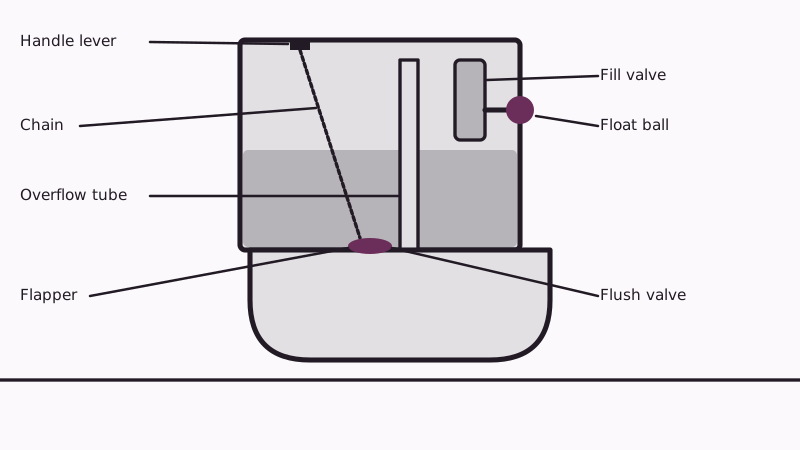
Four moving parts run the flush. A lever tugs a chain, the chain raises a rubber stopper, the stored water pours into the bowl, and a float-driven valve tops the tank back up. Whichever part tires first decides the symptom. This page walks the flush in that order, written for Anaheim homes with hard water, and it sits under our toilet repair hub, which covers the rest of the fixture.
Why does my toilet flush weakly or only halfway?
Weak flushes happen when the tank empties too slowly or too little water leaves it. Suspects, from most to least likely: a stopper lifted only a short distance by a slack chain, a water level set too low, scale partly closing the openings under the rim, or a drain blocked somewhere past the bowl. Lift the lid, press the lever and watch what the stopper does.
Rank your checks by effort:
- Watch the stopper. If it barely rises, the chain is too loose. If it drops back at once, the chain may be too tight or the stopper too light.
- Compare the waterline. A mark inside the tank, or the manufacturer's stamped line, shows the target. Water well below it means a short flush.
- Look at the rim. Mineral crust can plug the small jets under the bowl's lip. Anaheim's utility reports about 18 grains of hardness per gallon, high enough to do exactly that over a few years. A small mirror and a stiff wire, or an overnight vinegar soak, usually opens them up.
- Test the drain. If the bowl climbs toward the rim before sinking, plunge first, then see unclogging a toilet.
How do I fix a handle that sticks, wobbles or does nothing?
Start inside the tank. The lever is held by a nut that threads on counterclockwise to tighten, and the chain should hang with a touch of slack. If the lever feels loose, snug the nut. If the arm is bent or the plastic cracked, buy a replacement lever sized for your tank and swap it. This is a ten-minute repair with no plumbing skills needed.
How it goes:
- Set the lid on a folded towel, away from the edge of the counter.
- Pop the chain off the arm of the lever.
- Back the nut off, pull the old lever out through the front of the tank and slide the new one in.
- Spin the nut on by hand, clip the chain back so a link or two of slack remains, and flush five or six times.
In older Anaheim and Fullerton bathrooms an aged lever may snap rather than bend. A handle that moves freely but flushes nothing points elsewhere: chain unhooked, or the chain snagged. For a related fault, see fixing a leaking toilet tank.
What makes a toilet run on after the flush?
A toilet that runs on never reaches its full level, so the refill valve keeps feeding the tank. Most often the stopper has stopped sealing and water creeps into the bowl. Other culprits: a float set so high that water spills into the standpipe, or a refill valve that will not shut. Tint the tank with food dye, wait ten minutes, and color in the bowl proves a leak.
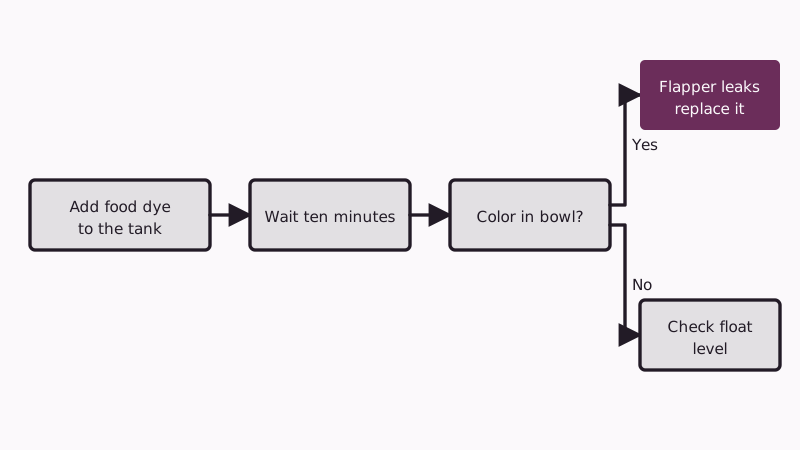
This is the dye test EPA's WaterSense program recommends, and the agency blames tired flappers for many leaks. Add up every fixture and the typical home loses upward of 9,300 gallons a year, which makes a silent trickle worth chasing. Flush once the test is over, or the dye can stain the tank.
When no color appears, check the level: water slipping over the standpipe rim means the float needs to come down. If you hear hissing long after a refill, the fill valve is worn or gritty and needs cleaning or replacement. The longer walkthrough sits on repairing a running toilet.
Does the flush valve itself ever wear out?
Look at the tank floor: the wide outlet there is the flush valve, sealed by the stopper against a ring-shaped seat. A slimy or warped stopper is the cheap fix, and EPA's advice is to replace the flapper about every five years at the outside. When the seat is pitted or the plastic standpipe cracked, a new stopper cannot seal, and the whole valve assembly comes out.
The stopper has to match your valve's size and style, which is why a wrong one drips. Notes on stopper and flapper types explain how to read the brand and opening size, and the basic flapper swap is the first attempt most people should make. If the seat itself has failed, a retrofit kit may bolt over it; the page on a flush valve swap that leaves the tank in place explains how. Where hard water has eaten the seat, the cure takes more than a new part, because crust returns.
How does a float or fill valve repair work?
A float tells the fill valve when the tank is full. Raise or lower it with the adjustment screw, clip or sliding cup, depending on the design, until the waterline sits just under the top of the standpipe. If the valve keeps hissing, shuts off weakly or leaks, replace it: close the stop valve, empty the tank, loosen the supply nut, spin off the locknut beneath, and drop in the new unit.
Take the new valve's height from the package instructions: set low, it gives a poor flush; set high, it spills into the standpipe. After the refill, run a dry finger around the connection under the tank. Designs vary, and the walkthrough on replacing a toilet fill valve shows each one.
When does the job outgrow a weekend repair?
Pick up the phone if fresh parts change nothing, if dampness spreads out from the bowl's base, if the porcelain is cracked, or if clogs return soon after plunging. Seepage at the foot can mean a failed wax seal or a damaged flange, and it soaks the subfloor if ignored. An old toilet that keeps needing work is sometimes cheaper to replace.
Plan on a few minutes of description when you reach us through the quote page: what the toilet does, how old it is, whether anything leaks onto the floor. For replacement pricing, compare what a new toilet installation costs against the cost of another repair.
Common questions
Can I wipe down the inside of the tank myself?
Yes. Close the stop valve, flush the water out, then wipe walls and parts with vinegar and a soft brush. Skip tablets that sit in the tank, because strong chemicals tend to age rubber stoppers faster. Rinse, refill, and flush twice before using the toilet. Wear gloves, and keep the vinegar away from natural stone floors beside the toilet.
What does a no-flush toilet cost to put right?
Quotes differ by shop, so ask for the figure on paper. Swapping a tank part is a short visit; many plumbers charge a service fee plus a little time and the part. The plumber cost guide shows how small jobs get priced, and a full replacement costs more than a repair.
Why does it fill itself every hour or so?
Water seeps past the stopper, the tank sinks a notch, and the refill valve answers. It is quiet and wasteful. Do the dye test; color in the bowl with no flush points at the stopper or its seat. A wiped seat and a fresh stopper usually settle it.
How do I flush when the handle breaks?
Pour roughly a gallon of water into the bowl in one quick motion, from waist height. The sudden volume starts the siphon. Do this only as a stopgap, and replace the lever soon. Never reach for the chain with a wet hand near an outlet, and keep children away from an open tank.
For the wider picture, start with the plumber guide for Anaheim.
Sources
Last updated