Water rising toward the rim? Hands off the handle. Reach into the tank, drop the flapper shut, and the refill stops. After that, a flange plunger pressed over the outlet with firm, even strokes clears most blockages inside a few minutes. A closet auger handles the stubborn ones. And if both lose, a plumber is one request away through the Citrus Belt home page.
How do I head off a spill in the first thirty seconds?
Cut the incoming water. Lift the tank lid, push the rubber flapper down over its hole, or turn the small shutoff valve near the floor clockwise until it stops. Spread towels around the base and resist flushing a second time; the bowl has nowhere new to send the water except your floor.
A bowl already full can be left alone for a quarter of an hour, since soft clogs sometimes drain slowly by themselves. Ladle out the excess into a bucket so the plunger has room to move without splashing sewage up at you.
Which plunger suits a toilet, and what technique works?
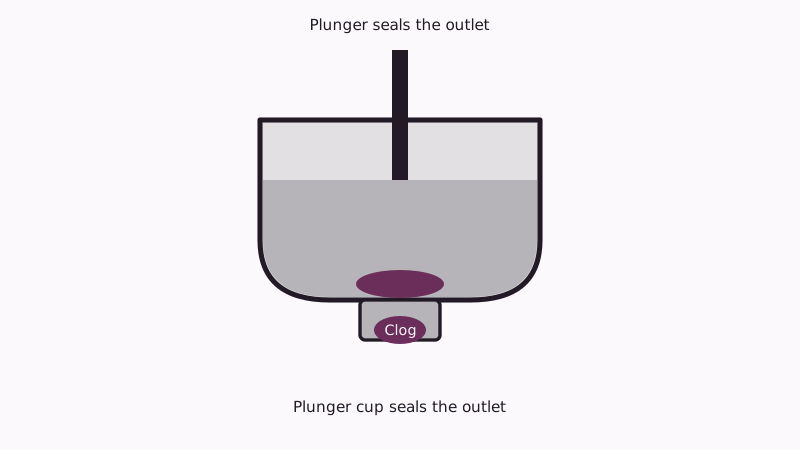
The flange type, with a soft rubber sleeve that drops out below the cup, is the one built for toilet bowls. A plain flat cup meant for sinks seals badly. Fit the sleeve into the outlet, press slowly so the air is forced out first, then pump about ten times with the seal unbroken.
The upstroke matters as much as the downstroke, since it pulls the blockage back toward you. Hear a gulp and see the waterline sink, and the blockage has shifted. Tip in a bucket of water to confirm the flow before using the handle. If the level hardly budges, pump again before switching tools.
Does dish soap and warm water really help?
On soft clogs of paper and waste, often. Squeeze in a generous slug of dish soap, then pour in about a gallon of hot tap water from hip height. Skip boiling water, because porcelain can crack from the shock. Wait ten to twenty minutes and plunge again; the soap lubricates, and the warmth loosens.
Baking soda with vinegar fizzes but seldom shifts a real obstruction. Neither mixture helps with a toy, a wad of wipes or a rag, because those need something mechanical to hook or break them up.
When is a closet auger the better tool?
Reach for a closet auger after plunging fails, and certainly if a hard object may have gone in. It is a short cable inside a rigid, curved tube made for the toilet bend. Feed the tip into the outlet, crank the handle until you feel resistance, then twist and tug until the blockage breaks or hooks onto the tip.
Long drum snakes and bent coat hangers are the wrong choice here, since they scratch porcelain and can jam in the trap. If the auger finds nothing yet the bowl still drains sluggishly, the stoppage probably lies beyond the toilet, in the drain.
Is it ever wise to pour a chemical cleaner into the bowl?
Not as a first move, and generally not at all. Liquid cleaners can sit in a bowl of standing water without reaching the blockage, splash skin and eyes, and leave whoever works on it next dealing with hazardous water. Read the label, never combine products, and mention any product you have used to the plumber.
A plunger and an auger avoid that risk altogether. Whatever you choose, gloves and eye protection are sensible when working over a bowl that has been clogged.
Could the blockage be somewhere deeper in the sewer line?
Check the rest of the house, because a blocked branch or main shows up elsewhere: a shower that gurgles on each flush, a floor drain that bubbles, a washer standpipe that overflows, or sewage welling up in the lowest drain. No plunger reaches that far.
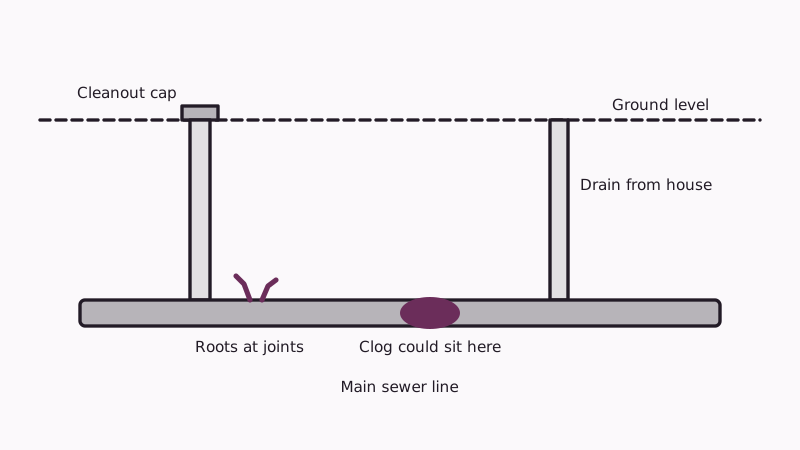
Many older homes in Anaheim, Fullerton and Old Towne Orange have clay or cast iron drain lines that roots can invade at joints, so a camera look is wise before any heavy cleaning. For typical charges, the price guide for unclogging a toilet lists published ranges.
Why does my toilet keep clogging?
Usual suspects: too much paper at once, wipes sold as flushable, toys, and sanitary items. A weak flush from a worn flapper or a partly blocked rim jets also contributes, and so can a drain that is slowly narrowing with scale or roots. Hair and soap are the usual story at sinks and tubs; toilets mostly suffer from what is flushed.
Repeat clogs every few weeks call for a plumber to look at the line. Read the toilet repair overview for other toilet faults, or slow sink drains if it is the basin misbehaving.
What should stay out of the toilet to prevent the next clog?
Anything that is not human waste and toilet paper: wipes (flushable on the label or not), cotton balls, dental floss, sanitary products, paper towels, diapers and cat litter. These do not break down like paper, and they catch on a rough joint or a root in an older clay line, building into a mass over weeks.
Use less paper per flush, and flush twice rather than once for a big load. Replace a worn flapper that lets the tank run short, since a weak flush leaves waste sitting in the trap. A small wastebasket next to the toilet saves many clogs, and it costs almost nothing.
Common questions
What is a sensible plunging time?
About ten minutes, in rounds of ten strokes with brief rests between them. A bowl whose waterline never moves needs the auger instead. A clog that comes back a few hours later means something is lodged, or the line itself is narrowing, so have a plumber check it.
Can I flush to test it?
Only after a full bucket of water has drained away steadily. A flush delivers more than a bucketful, so a bowl that is only half clear can overflow. Keep one hand near the tank, ready to drop the flapper if the level starts to climb, and have towels ready.
Is a sink plunger interchangeable?
Not really. Flat cups suit sinks and tubs, and the sleeved flange type suits toilets, so keep them apart for hygiene as well. For basins, clearing a bathroom sink lists the right tools and the order to use them in.
At what point should I call for help?
After an auger gets nowhere, once a second fixture runs slow, when sewage surfaces, or if the toilet blocks again and again. Use the quote form, and a written price comes before any work. Published 2026 guides put a plain clearing at a few hundred dollars at most.
Sources
- EPA WaterSense, Fix a Leak Week (toilet dye test)
- Published 2026 cost guides for toilet and drain clearing, compared November 2026
Last updated