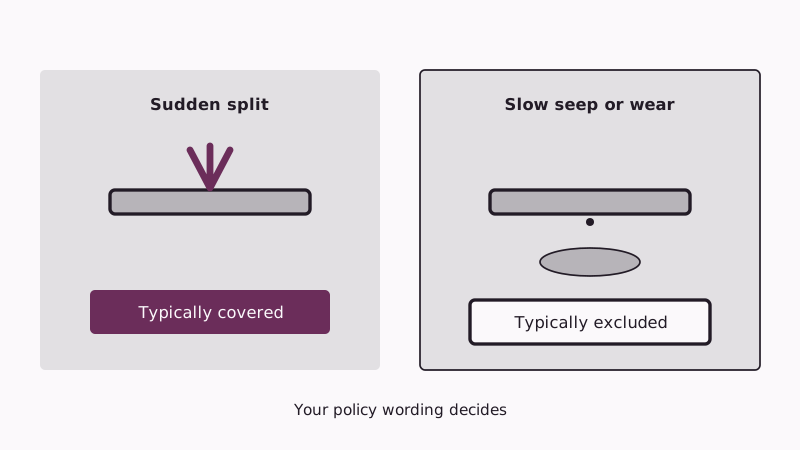
Short answer: for the damage, often yes, though your policy wording rules. In the state insurance department's homeowners guide, abrupt and unintended water damage sits in the generally covered column, while seepage, slow leaks and wear sit in the generally excluded one. Nobody here sells insurance or decides claims, so the final say belongs to your policy and your insurer. The plumbing side is described on our burst pipe page.
Does a California homeowners policy respond to a split pipe?
Frequently the resulting water damage is, provided the pipe failed suddenly. The state guide treats abrupt, accidental water damage as typically covered and slow seepage, mold and wear as typically excluded. Wording differs from one insurer and policy to the next, which means the real answer for your house sits in your own policy and in what your insurer tells you.
Two lessons come out of that guide. How the pipe failed counts for more than which pipe failed: one that splits and floods a room is sudden, whereas a pinhole weeping behind drywall for months is a leak. And the guide separates the broken item from the mess it causes. Its example is a heater that bursts and wrecks a wall, where the policy answers for wall and floor and a home warranty, which is not insurance, answers for the heater.
Where does coverage usually stop?
At wear, maintenance neglect, gradual leaks, mold and flood. All of those appear in the state's list of perils that homeowners policies generally leave out, and flood is described as separate from a standard policy. Some policies also refuse ensuing damage when the owner never took reasonable steps to limit it.
That last point is practical. The department advises stopping a leak at its source straight away and notes that delay in cleanup lets mold grow. An aging supply line that corrodes through is a wear question, so a claim might be approved or denied depending on how the adjuster reads the cause. Older homes in Anaheim, Fullerton and Orange with galvanized steel or original copper lines are where that argument tends to arise.
Remember the deductible too. The state guide describes it as the slice of a loss you absorb before the insurer pays anything, so a small leak can cost less than the deductible.
What belongs in the first sixty minutes?
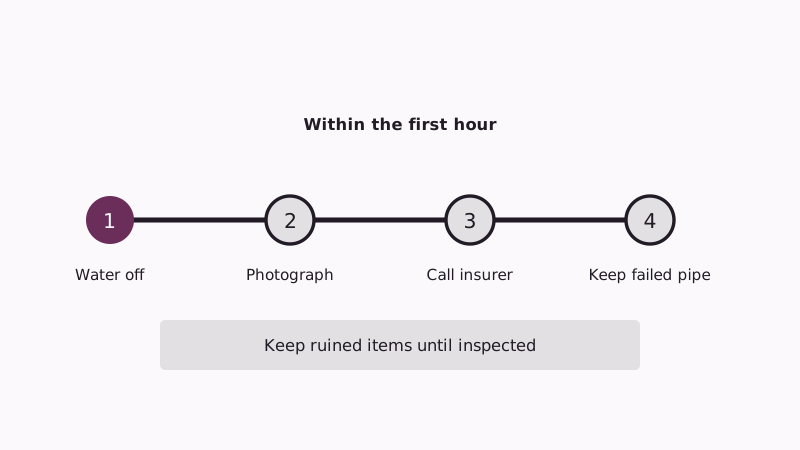
Water off first: the main shutoff, or the heater's cold inlet when the heater is the source. After that, protect people and electronics, photograph everything before it moves, and tell your insurer. Hold on to ruined items until the adjuster looks, and postpone big permanent repairs until that inspection.
A workable order:
- Turn the main shutoff, then crack a low faucet so the lines empty.
- Cut power to soaked areas solely when the switch is reachable from dry ground. If not, wait for the plumber and an electrician.
- Film and photograph the room and the split pipe, wide and close.
- Ring your agent or the insurer's claims line to open the file.
- Mop up and set fans going. The state guide says insurers reimburse reasonable protective costs, so save the receipts.
- Hang on to the failed section of pipe.
Which paperwork helps a claim?
Dated photos, an itemized list of damaged belongings with brands and models, receipts for emergency steps, a log of calls, and the plumber's invoice saying what failed and why. The state claims guide suggests recording every conversation and letter. A plumber's note on the cause, for example corrosion or a failed fitting, gives the adjuster something concrete.
We can set up a visit by a local plumber who stops the leak and notes what was found, but coverage is not ours to decide. Request an invoice naming the failed part, where it sat and what was done, and keep the old part. For urgent cases, see emergency burst pipe help.
What if the insurer denies or lowballs the claim?
Request the refusal in writing along with the reasons, since the state guide says denials must be written, and set it beside your policy. If you disagree, send your supporting papers to the claims manager. The insurance department staffs a Consumer Hot Line, 1-800-927-4357, can start a claims review, and runs free mediation for some residential losses.
A contractor can price the repair, but a coverage argument is yours and the insurer's alone. If the offer looks short, collect a second estimate, keep each receipt and note the dates. When it drags on, the state's resources are a better next stop than the plumber.
How do I lower the odds of a burst pipe?
Repair small leaks early, retire aging supply lines before they split, and find your main shutoff before you ever need it. The EPA cites more than 9,300 gallons a year lost to leaks in a typical home, which makes an unexplained water bill worth investigating. Freezing is rare in Orange County; here bursts tend to come from corrosion, pinholes, failed fittings or pressure.
Our guides on preventing a burst pipe and how to tell a pipe has burst cover the signs. If your policy covers sudden events only, early repairs also keep a problem from turning into the slow kind of leak that policies exclude. For slab-related water, read whether homeowners insurance covers slab leak repair.
Common questions
Does a home warranty pay for a burst pipe?
A home warranty is a service contract and not insurance. The state insurance department says it pays for breakdowns of systems and appliances from ordinary wear, something homeowners insurance typically does not. Whether a given burst qualifies hinges on the contract's exclusions and limits, so study yours and phone the provider.
Will my premium go up after a water claim?
That is up to each insurer, and we cannot say what yours will do. Ask your agent how a claim is likely to affect your policy before you file. The Department of Insurance lists accepting a higher deductible as one way people lower premiums, which is a choice made before a loss rather than after.
Is the broken pipe itself covered, or only the damage it causes?
Policies vary, and many handle the failed part differently from the damage it causes. Ask your insurer outright what it will pay toward the pipe, the wall, the floor and the cleanup. Try to get the answer in writing, and file the plumber's invoice with it.
What if nobody answers at my insurer?
Secure the house, record the damage, line up a plumber, and keep retrying the claims line. The insurance department's Consumer Hot Line at 1-800-927-4357 can step in when an insurer goes quiet, and the date you first reported the loss is worth having ready. How a visit gets started is outlined on the Citrus Belt Plumbing home page.
Sources
Last updated