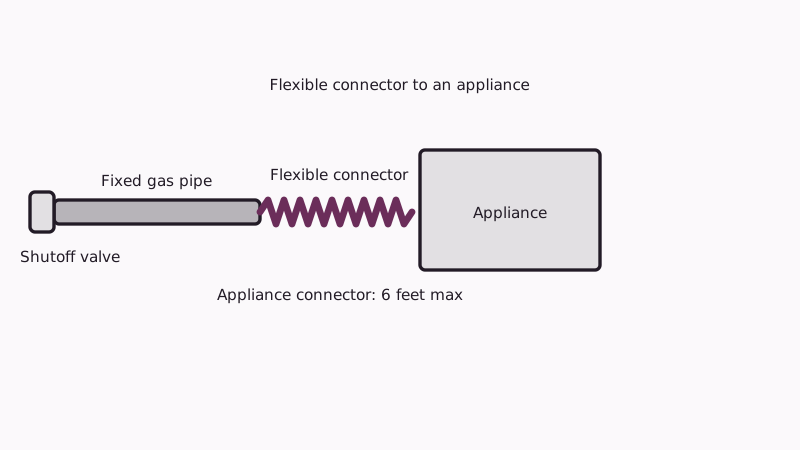
A flexible half-inch gas line is contractor work, not a do-it-yourself part. It is either a short appliance connector joining a hard-piped stub to a range, dryer or heater, or a run of corrugated stainless steel tubing (CSST) inside the house. Both carry natural gas and fall under the plumbing code and a permit. Citrus Belt Plumbing arranges visits, and the gas line plumber page explains the process.
What job does a flexible half-inch gas line do?
It is used to connect a gas appliance to the house piping, or as CSST to run gas to the appliance from a manifold. A half-inch size suits a single small load, such as a range or dryer. The connector or tubing must be rated for the appliance's gas demand and listed for natural gas.
Size depends on the appliance's BTU rating and the length of the run, read from tables in the code. Too small a line starves the appliance. A flexible connector cannot stand in for fixed piping, and published code text limits appliance connectors to six feet, so they never run through walls or floors.
What pipe carries natural gas inside a house?
Residential natural gas piping is usually black steel pipe, copper tubing in some places, CSST, and polyethylene plastic pipe for underground runs outside the building. The code text lists steel, copper tubing, CSST and plastic, and says plastic pipe is limited to outdoor underground use.
Black iron is the usual rigid choice in older Anaheim, Fullerton and Orange houses. CSST is popular in newer work because it bends around obstacles, though it has its own installation and bonding rules. Which one suits a job depends on the run, the load and what the city inspector accepts, and a plumber sizes and selects it.
What are the CSST rules?
CSST goes in through a qualified installer working from the maker's instructions. Under the published code text, a system with any CSST segment has to be bonded to the electrical grounding electrode, using a copper jumper of at least 6 AWG, within length limits. The gas pipe itself may never serve as a ground.
Bonding protects against lightning and electrical faults that can puncture thin-walled tubing. It is a reason the job is not for a handyman. A permit and inspection normally check it.
What is the code for exterior and underground gas lines?
Published code text sets 12 inches of earth cover for buried piping where damage is unlikely, and 18 inches where outside damage is likely, with conduit when the depth cannot be met. Local handouts can be stricter for some materials, so ask your city. Underground steel needs corrosion protection, and plastic needs a tracer wire.
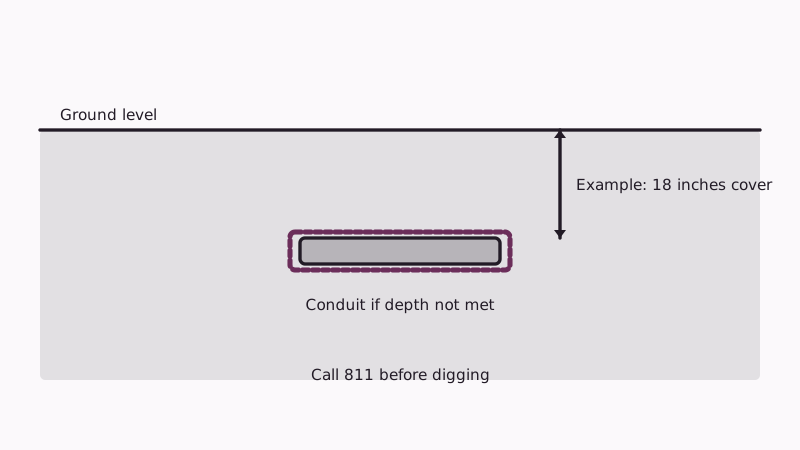
Isolation fittings are also called for where steel pipe comes out of the ground. Editions and local amendments differ, so verify depth and material rules with the Building Division before digging. Call 811 two full business days before digging so SoCalGas can mark its own lines, which stop at the meter.
Who is responsible for the gas piping on my property?
SoCalGas maintains the lines that carry gas to the meter. Property owners, managers, tenants and occupants are responsible for the customer-owned lines on their side of the meter, including piping from the meter to appliances and underground runs to pool heaters or barbecues. SoCalGas advises having a qualified contractor inspect them.
Meter set, seal and turn-on belong to the utility, not to a contractor. SoCalGas encourages fixing unsafe conditions promptly and checking metal pipe for corrosion. Older hillside lots around Anaheim Hills and Yorba Linda can have long outdoor runs to pools or grills that merit inspection; local notes are on the Anaheim Hills plumber page.
Does gas work need a permit and a contractor?
In most cases, yes. New gas piping, rerouted lines and many replacements need a plumbing permit and inspection in Orange County cities, and a permit means a contractor license in California. Gas piping is plumbing contractor territory. Your city's Building Division confirms what applies.
Do not count on an owner-builder route; the rules are narrow and permits and inspections remain in force. Since a gas error can bring fire, carbon monoxide or an explosion, a contractor who takes out the permit is the safe path. Pricing is covered under gas line costs.
What about gas lines for a mobile home?
Manufactured homes and mobile home parks set their own gas connection rules, and the park, the city or the state housing agency may inspect. Flexible connectors are common at the home itself, yet the park's service line and the permit route differ from a standard house.
Ask the park management and the Building Division who inspects before you hire anyone. A plumber who works on manufactured homes can price the job after a look. This is one case where we recommend asking the authority first, since the rules vary by park and city.
What if I smell gas?
Leave the structure straight away. SoCalGas says to evacuate, then phone 1-800-427-2200 from a safe distance, using 911 if lives are at risk or the utility is unreachable. No switches, flames or electrical appliances. Never try to stop the leak or mend a pipe yourself.
Smell is not a reliable detector, since odor can fade. After any leak, have a plumber check the line before gas is restored.
Common questions
Can I replace a flexible gas connector myself?
In California, gas piping is a contractor trade, and an error risks a leak, fire or carbon monoxide. Even a connector swap means closing the valve, leak testing and following the maker's directions. Cities differ on what homeowners may do, so ask the Building Division, and if you are unsure, hire a plumber.
How long can a flexible gas connector be?
Published code text caps appliance connectors at six feet, each sized for the appliance it feeds, and bars them from passing through walls, floors or ceilings. A longer run needs fixed pipe or CSST installed to the code. Editions change, so look at the current plumbing code and your city's amendments.
What is the usual timeline for gas work?
A connector swap is a brief visit. New lines through a house take longer, with permit and inspection adding calendar days, and trenching plus the city inspector often set the schedule. The quote should carry a timeline before you commit.
Should an adult be home for the work?
Usually someone should be, to give access and to be there for any shutoff and relight. Gas service to the appliance may need to be turned off during the work, and appliances relit afterwards. Meter work belongs to the utility, not the plumber, so that visit is arranged separately with SoCalGas.
Where do I find someone for gas work?
Pick a contractor with a plumbing license, confirm the number with the state board, and make sure the quote lists the permit and the inspection. One route is the quote form, and a local plumber gets arranged for a visit.
Sources
Last updated