Union Oil bought 1,200 acres west of Olinda in 1894, derricks went up across the Brea-Olinda field by 1898, and the town incorporated in 1917 as Orange County's eighth city. At about 360 feet, it sits against the hills that border Chino Hills. Today 61.5 percent of Brea's occupied homes are owner-occupied. We serve it as one of the communities along North Orange County's northern edge, and what follows is specific to Brea.
Why does Brea's water supply matter to your pipes?
Brea buys nearly all of its water instead of pumping its own. Its 2015 water plan names the Main San Gabriel Basin, whose groundwater is piped in, as its biggest source, then imported Metropolitan Water District supply through MWDOC. A third-party summary of the city's recent report suggests very hard water, around 13 to 14 grains per gallon.
Because the blend changes with purchases and the seasons, the mineral level changes too. Scale is the visible result: a chalky film on shower glass, shower heads that spray sideways, a heater that gets louder each year. Other water details, like treatment of the purchased supply, are in the city's annual report, which is the place to check current numbers instead of relying on a web summary like ours.
Ways to blunt the effect are covered in hard water scale prevention, and tankless heaters, which scale up faster, are discussed under water heater repair.
What do Brea's older and newer homes have in common, and where do they differ?
Pipes differ by era more than by street. Cottages near the original oil-town core, laid out in the 1910s, tend to carry galvanized supply pipes above iron or clay waste lines. Mid-century tracts have copper. The 2020 census counted 17,881 housing units against 14,785 in 2010, so a lot of Brea's housing is new enough to have modern pipe.
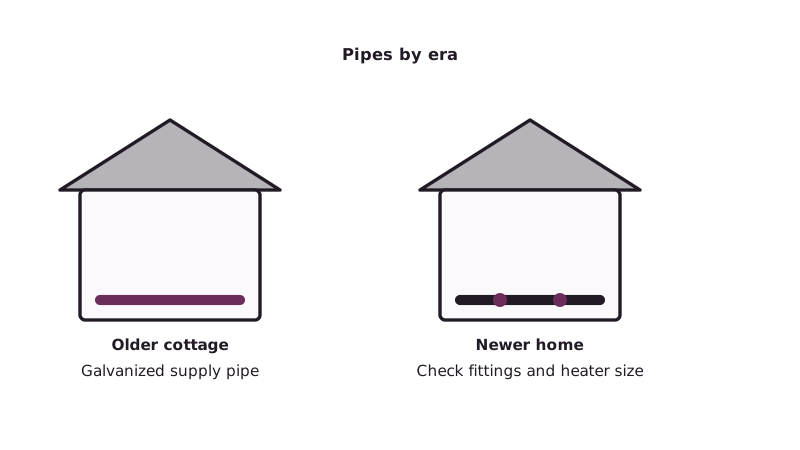
For an older house, the usual calls are rusty water, low flow and drains that back up. For a newer one, they are workmanship issues: loose fittings, an undersized water heater, a leaking supply stop, or a regulator that is working harder than it should. Know your house's age, and tell the plumber, because the likely fault list changes with it.
If an older house needs wholesale replacement, how to repipe a house explains the steps, and PEX versus copper helps you weigh the two main materials.
Does the canyon and hillside setting change anything?
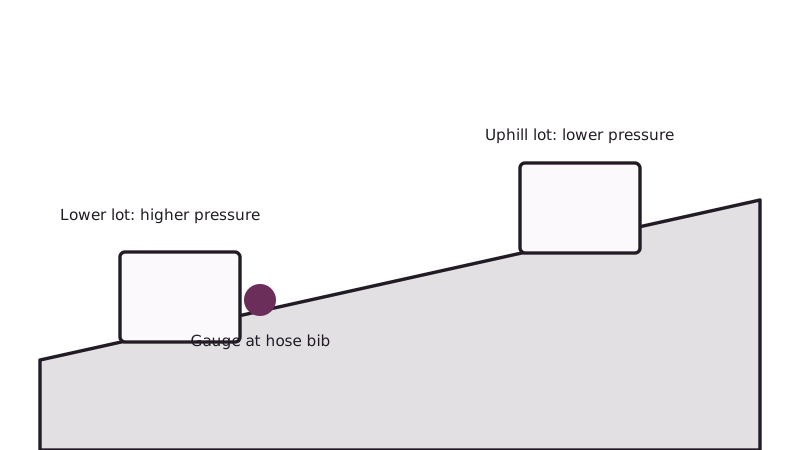
Some, yes. Brea backs onto hills, and houses on slopes can experience more water pressure than flat-lot neighbors. A cheap gauge threaded onto a hose connection will tell you, and a reading over 80 psi means the regulator needs service. Slopes also mean drains that run long distances, and roots that follow them.
Canyon areas such as Carbon Canyon, where the old village of Olinda once stood, have their own access limits: narrow roads, steep driveways and older private lines. Tell the plumber how the property is reached, because a long drive or a gate affects timing. On a hillside lot, water pressure regulator replacement is the place to begin.
What is a normal price for plumbing work in Brea?
Expect a trip charge and an hourly rate, with parts and permit fees on top. A pressure regulator swap or a PEX repipe is priced to the house, so the written quote sets the figure. Ask for the trip charge and the hourly rate in writing before the visit.
Prices climb with difficulty: walls that must be opened in an older cottage, a long run to a back bedroom, or a steep driveway. The plumber cost page breaks down the pieces, and the repipe cost page covers whole-house jobs.
Who regulates plumbing work in Brea?
The City of Brea's building division issues permits inside city limits. Replacing a water heater, running gas pipe and repiping normally require one plus an inspection. The state contractor board sets a license threshold at $1,000 and applies it to any permitted job, and its website has a lookup tool. The city's fee schedule was not readable to us online, so call for today's charges.
Gas piping is not a homeowner job. Suspect a leak and you should get outside, and from there the number to call is SoCalGas, 1-800-427-2200. Emergencies go to 911. The city is in earthquake country, so a gas shutoff valve is worth knowing about, and earthquake gas shutoff valves shows how they work.
How do I book someone in Brea?
Fill in the quote form: street, fault, a rough age for the house, or phone the number shown at the top. Our enquiry hours are weekdays, 9am to 5pm. Someone local inspects the house and quotes the job on paper, and you decide whether to proceed. The home page lists the other services.
Common questions
What are typical plumbing prices in Brea?
Most plumbers charge a trip fee plus hourly labor, parts excluded. Older cottages with plaster walls may cost more. The written quote is your price. Expect a trip fee and an hourly rate, and ask for both in writing before the visit. Ask for parts and permits too.
Does plumbing work in Brea need a permit?
For major work, yes. Replacing a heater, changing gas lines or repiping generally means a City of Brea permit plus inspection, and under state rules a contractor license comes in at $1,000 or for any permitted job. Minor repairs like a dripping faucet usually need no permit, but confirm with the city.
Is Brea's water hard?
Very. A third-party summary of the city's recent annual report points to roughly 13 to 14 grains per gallon, and the city's water plan shows it buys imported groundwater and Metropolitan supply. Values vary by year. Expect scale on fixtures and inside heater tanks, and read the city's own report for current numbers.
Do hillside homes in Brea need a pressure regulator?
Often. Homes lower on a slope receive higher pressure, and anything above 80 psi can damage valves and appliances. A plumber can test it with a gauge in minutes. Warning signs include knocking pipes, faucets that spit, and toilets that fill and refill. Replace the regulator rather than adjusting it if it is old or leaking.
Sources
- Wikipedia, Brea, California (oil field, incorporation, 2020 census, elevation, downtown)
- City of Brea, 2015 Urban Water Management Plan
- California Contractors State License Board, what kind of contractor you need
- Published Orange County plumbing prices and cost guides, checked November 2026
Last updated