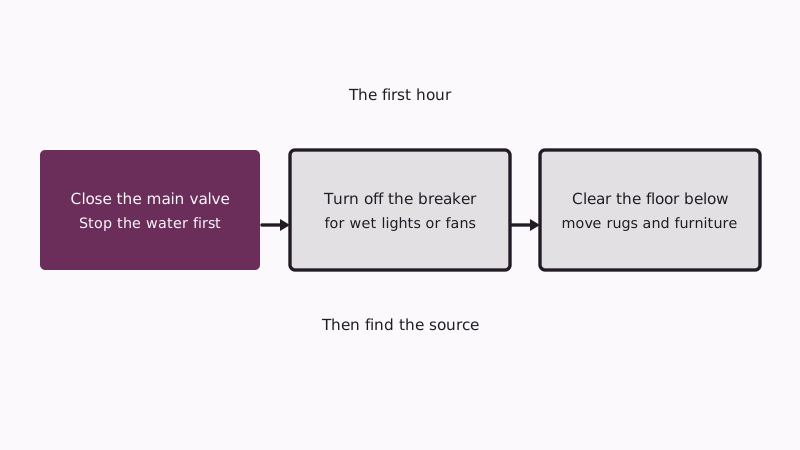
Shut the main valve, flip off the breaker for any light or fan near the wet spot, and clear the floor beneath it. Those three moves prevent most of the damage. Then decide whether the source is a burst pipe, a slow drip, a drain line, the air conditioner or the roof. Alongside the burst pipe plumber page, this guide walks through the first hour, tracing the source, and handling stains and mold.
What do I do the minute the ceiling starts dripping?
Close the main valve, kill the breaker for any wet ceiling light or fan, and set a bucket under the drip. Stay out of the room if the ceiling sags, because soaked drywall is heavy. Take photos, then phone a plumber. Water around light fixtures or outlets is an electrical hazard.
People sometimes relieve a water-filled bulge by puncturing it at the lowest point, over a bucket, with the power off, so the whole panel does not drop. Attempt that only when you can stand clear of fixtures and the sagging section. Unsure? Leave it alone and call for advice.
In a two-story house the water often comes from the floor above, such as a bathroom, so ask anyone upstairs to stop using it. Slide furniture and rugs aside, and point a fan at the area to begin drying.
How can I tell what is leaking above the ceiling?
Match the clue to the likely source. If it appears only after someone uses the upstairs bathroom, suspect a drain or toilet seal. A constant drip suggests a supply line under pressure. Drips after rain suggest the roof, and drips on hot days with no plumbing use may come from the air conditioner's condensate line.
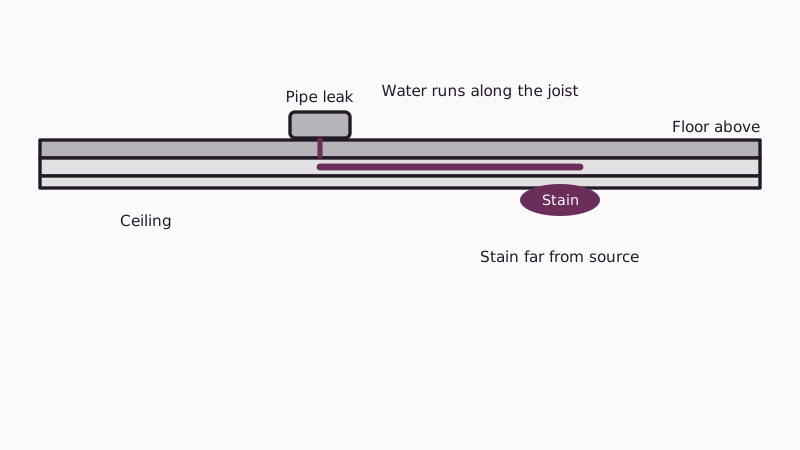
The stain's location matters, but not by itself. Water in a ceiling can run along a joist and come out many feet from the true source. Look for a wet spot directly above the stain, in the attic or the floor above. The page on water stains on a ceiling with no active leak helps separate an old stain from a new one.
The water meter can settle it. With every fixture off, watch the flow indicator. Movement means a pressurized line is losing water; a still dial points toward a drain, the roof or an appliance. Further warning signs are listed under how to know if a pipe burst.
Can a pipe really burst above my ceiling, and how long is the fix?
It can. Supply pipes run through attics and between floors, and a split there can flood a house fast. Repair time depends on access: an exposed attic pipe can be done in a few hours, while a pipe buried between floors takes longer because surfaces have to be opened first.
The usual job goes: water off, split located, damaged section cut out, new pipe and fittings in, pressure restored and tested, room left ready for drying and drywall. Patching and paint are generally separate work, done afterward. If the line is galvanized, pitted copper or polybutylene, the plumber may propose replacing more than the split. More on this in leaking water pipe repair and pinhole leaks in copper.
In North Orange County, attic supply lines and old hot water pipes are common sources. Many Anaheim and Fullerton homes built before 1970 have galvanized or early copper lines, and each can fail without warning.
What actually fixes a small ceiling leak?
Only fixing the source works: a fitting, a seal, a length of pipe or a drain connection. Patches, tape and sprays applied to the ceiling surface do not repair a pipe, and Flex Seal and similar products are made for surfaces. On an exposed pipe a repair clamp can slow a drip while you wait for the plumber.
If the leak is small and slow, dry the area, place a container, and note when it drips. A pinhole in copper can seep for months. A bathroom upstairs with a worn wax ring or a leaking shower pan can look like a small ceiling stain below. Call a plumber when you cannot see the source, and ask whether Leak Detection equipment is needed to trace a hidden pipe. See plumber leak detection cost for what that costs.
The right sealant for a pipe joint depends on the joint, and the hub page covers it. Do not rely on a coating where a replacement is the proper fix.
How worried should I be about mold?
Dry the area quickly and fix the source. The EPA's advice is to repair plumbing leaks quickly and dry everything completely, and it warns that mold does more damage the longer it grows. Moldy porous material such as ceiling tile often has to be discarded. Once mold spreads past roughly 10 square feet, the EPA directs readers to its remediation guidance.
Small spots on a hard, painted surface can be cleaned with detergent and water, then dried. Wet drywall or insulation that stays damp may need to be cut out. Wear gloves, a mask and eye protection, and ask a professional if you have health concerns or if the water was contaminated, such as from a sewer line.
Dry weather helps but does not cure hidden dampness. If you see peeling paint, brown rings or a musty smell weeks after the leak, something is still wet. Our page on what causes pipe bursts explains why hidden damp is common after a slow leak.
Whose job is it if the leak is in my rental?
Write to the landlord or property manager at once, photograph the damage, and close the water valve only if it is safe to reach. Under Civil Code 1941.1 in California, working plumbing and hot and cold water are basics of a habitable rental, so plumbing repairs generally fall to the landlord. Your own belongings are normally for renters insurance to handle.
If water is coming from the unit above you, the landlord or building manager needs to hear about it today, not tomorrow. Keep dated photos and copies of messages. For repairs where the landlord does not respond, rules on rent withholding or repair and deduct are set out in the Civil Code, and a tenant-rights organization can explain your options.
Who pays for ceiling water damage?
Homeowners policies commonly respond to sudden, accidental water damage like a burst pipe, and may not respond to a long, slow leak or poor upkeep. The insurer wants prompt notice, photos and an effort to limit damage. Read your policy, and ask what it says about the plumbing repair versus the resulting damage.
The usual split is explained in insurance and burst pipes. If a climbing bill came first, why a water bill runs high can help you trace it.
Common questions
Will Flex Seal stop a ceiling leak?
No, not dependably. A spray or coating on the ceiling does not stop water at the source, and trapped moisture can make mold worse. A clamp or sleeve can slow a leak on an exposed pipe. The lasting fix is repairing or replacing the leaking part.
Is a dripping ceiling an emergency?
Yes while water is flowing, above all near lights, outlets or a sagging ceiling. Close the main, cut power to the area and phone a plumber. Even once the dripping stops it remains urgent, because moisture keeps doing damage inside the ceiling cavity.
Is any of this a do-it-yourself job?
Surface work is: drying, cleaning small mold spots and repainting once the leak is fixed. The pipe repair depends on its location and material, and anything touching gas, permits or a pipe inside a wall should go to a contractor.
What about a leak in a basement or garage ceiling?
The same steps apply. Find out what runs above it: a bathroom, a kitchen, a water heater or a supply line. In houses on raised foundations, crawlspace pipes can drip onto what is below. Shut off the water and look from above.
Why does my ceiling have a stain but no drip?
A stain can be old, from a leak that has stopped, or from a slow seep. Outline the stain in pencil and recheck it daily. If it grows, treat it as active and get a plumber. Our notes on older stains cover this case.
Need a hand? Describe it on the quote page, and the Citrus Belt Plumbing home page has the rest.
Sources
Last updated