A yearly test of one home backflow assembly in California runs roughly $75 to $250, with most quotes falling between $100 and $200. A failed test can add $150 to $500 or more for the repair. Prices below are published guides, not Citrus Belt quotes. Backflow work often sits alongside gas and water heater jobs, which is why we also cover plumbers for gas lines.
How much does a backflow assembly test cost?
For Southern California, 2026 guides list roughly $75 to $150 for a standard residential device and $125 to $250 for a reduced pressure zone assembly. The fee usually includes the report and the filing with the water utility. If the quote does not name the report and filing, ask what is included before the test is booked.
The spread depends on the device, the water district and how much paperwork the district demands. Pricing styles differ: a flat fee per device, a minimum visit charge, or a separate line for the filing. Always ask what is included. Several of these figures come from tester websites, so treat them as marketing estimates.
| Item | Typical published range |
|---|---|
| Annual test, one residential device | $75 to $250 |
| Repair after a failed test | $150 to $500 or more |
| New device, unit only | About $300 to $600 |
What is a backflow assembly, and why is it tested?
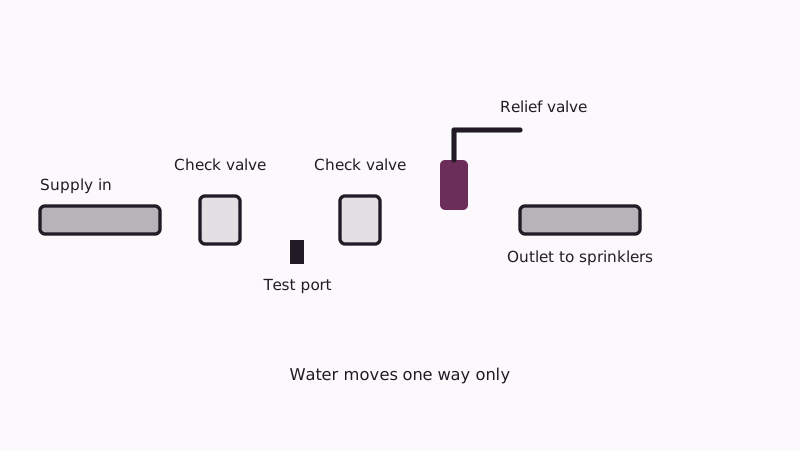
It is a valve assembly that stops water, and anything in it, from flowing backward into the public water supply. Lawn sprinklers, fire lines, pools and some commercial equipment can contaminate the pipes if pressure drops. The assembly works only while its internal parts are sound, so it is tested to prove that.
The hazard has a name, cross connection, and the water utility runs a program to control it. The Anaheim utility operates its own cross connection control program. Its page says state rules, the city code and the program itself require a backflow device to be tested annually. The State Water Board handbook agrees: test when installed, after any repair or relocation, and at least once every year.
Which devices a house has depends on the property. Irrigation systems tied to drinking water commonly need one, and a yard with chemical injection or a fire line may need a more protective type. Your water bill, the utility's notice or the device's tag will tell you.
Who is allowed to test it in Anaheim?
Only a tester with the program's certification may do it. According to the city page, that means certification issued through the county health agency, plus a valid City of Anaheim business license, and the page links an approved tester list and a report form. A homeowner cannot test their own assembly and file the result.
Do not hire anyone you cannot check. Ask for the certification and the city business license, and look the person up on the utility's approved list. Reports must go through the utility's reporting system, and a tester who files it for you is part of what the fee pays for. Other cities and water districts, such as Fullerton, Orange and Brea, have their own lists and rules, so check with your supplier.
What if the assembly fails its test?
A failed test means a part inside is worn, usually a seat, a spring or the relief valve. The tester can often fix it on the spot with a rebuild kit, then retest. Repairs commonly run $150 to $500 or more. If the unit is old or damaged beyond repair, replacement is the next step.
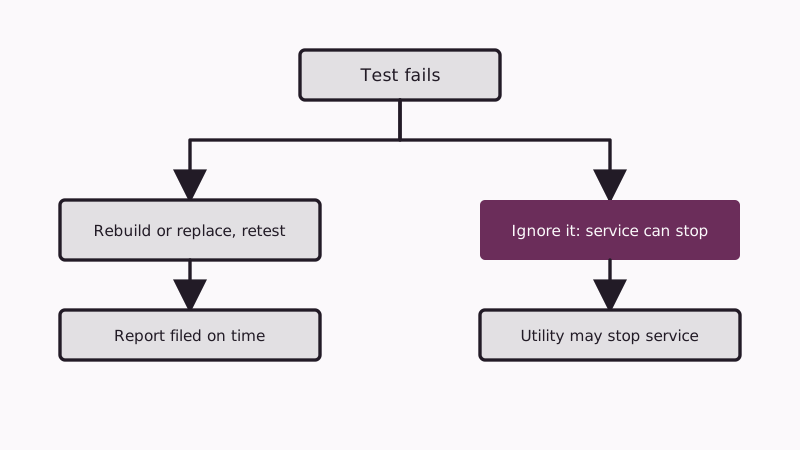
The water user is responsible for fixing the device and having it retested. A utility can act when a required test is missing or the device fails: Anaheim's water rules allow it to refuse or discontinue service if required backflow protection is not installed, maintained or tested, or if the reports are not provided. That is the strongest reason not to ignore a notice.
Do permits and inspection apply?
Often yes for a new or replaced assembly. Putting in or moving a backflow device normally brings a permit and an inspection by the Building Division in your city, and the water utility may have to approve the model. A yearly test of an existing device is a utility compliance item and not a building permit.
Code decides placement too. State plumbing code and the utility's own rules fix where a device may sit, how high, and with what clearance. A plumber who works regularly with your utility will know the local specifics. Find out who applies for the permit and whether inspection is in the price.
For how plumbers price visits in general, see the plumber cost guide, and for a general check of a home's pipes, the plumber inspection cost page. Our home page lists everything we arrange across North Orange County, and you can send a request through the quote page.
What keeps the bill low?
Book the test well before the deadline so you can compare quotes. Put every device on one visit, because published guides show extra assemblies cost less than a separate trip. Keep the device reachable, with no weeds, mulch or locked gate in the way. Ask whether minor repair parts are included in the test fee or priced separately.
Keep your reports. A copy of each year's test is your proof if the utility asks, and it helps when you sell the house.
Does a home really need a backflow test?
Many homes do not have a testable assembly at all. Where one exists, usually on an irrigation line, a pool fill or a fire sprinkler system, testing is a legal requirement and part of keeping your water service. Check the utility letter or the device tag, and call the utility if you are unsure.
Residential irrigation details differ by supplier, and the city's own page does not list every case, so confirm with Anaheim Public Utilities, or your own supplier if you live in another North Orange County city, before paying for a test you may not need.
Common questions
What is the testing interval?
At least once a year, according to California's cross-connection policy, and Anaheim's program requires annual tests. Testing is also required after installation, repair or relocation. Keep the date of the last report and book the next one before the anniversary.
May a homeowner do the test personally?
No. The person testing must hold a certification the program recognizes and, in Anaheim, a city business license. The results are filed with the utility, and a homeowner's own gauge reading does not count. Hire someone on the utility's approved list.
Who pays for a backflow repair?
The property owner or water user does. If the device fails, the owner must repair it and have it retested. A tester can quote the repair after finding the fault, and you can compare that with a replacement price before agreeing.
Is this the same thing as a plumbing inspection?
No, the two are different. A backflow test checks a single safety device on behalf of the water utility. A city plumbing inspection covers permitted work, and a home inspection looks over the whole house. Each has different people, different paperwork and different fees.
Do I need a backflow preventer on my lawn sprinklers?
Commonly yes, since irrigation can pull soil and chemicals back into drinking water. The exact device and rules depend on your supplier and the system. Check with the utility, and if a device was installed, keep it tested every year.
Sources
- Pacific Backflow, backflow repair and installation cost guides, 2026
- City of Anaheim, cross connection control program
- California State Water Resources Control Board, Cross-Connection Control Policy Handbook
- Published 2026 backflow testing price guides for Southern California, checked November 2026
Last updated