Smelling gas at this moment? Leave the building first and read later. SoCalGas answers gas emergencies on 1-800-427-2200, so use it once you are far from the building; a person who is hurt or threatened needs 911 instead. The rest of this page deals with planned work only.
Plumbers can install, mend, cap or reroute gas piping, provided whoever does it holds a current contractor license from California in the proper class. We set up visits in Anaheim, Fullerton, Orange and the cities around them, and you see a price in writing before a single pipe is touched. Other trades we cover sit on the Citrus Belt Plumbing home page; this page stays on gas.
Is a plumber even allowed to work on gas piping?
Yes. The state's contractor board sorts gas piping, flues, gas appliances and their connections into classification C-36, the one that also takes in water heater installation. Anyone without it should stay away. When materials and labor add up to $1,000 or more, the law wants a contractor holding the right class of license on site, not a general handyman.
The dollar line matters less than it sounds. New gas work normally goes to your city's Building Division, which issues a permit and sends out an inspector, and each city writes its own owner-builder rules. We would point you to a contractor anyway. One poorly sealed fitting may seep for months with nobody the wiser, and the downside is a fire rather than a repeat visit.
Whose pipe is it, the gas company's or mine?
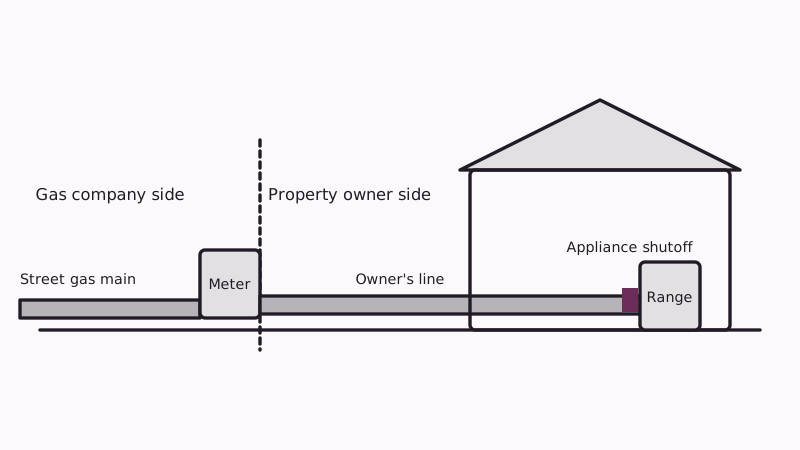
SoCalGas looks after the lines that bring gas to your meter. Everything from the meter onward belongs to the property owner: the yard line to a barbecue or pool heater, the run to the house, and every branch to an appliance. Tenants and occupants share the duty to keep those lines safe.
Where the pipe sits decides who answers the phone. Trouble at the meter or upstream of it belongs to SoCalGas. Trouble downstream is a plumber's job, after the gas is off and the area is safe. SoCalGas does not mark customer-owned lines when you call 811 before digging, so a buried run to a backyard fire pit is invisible to the utility locators. A pipe-locating specialist, or the plumber who ran the line, has to find it. A pipe's location relative to irrigation and drainage trenches is worth confirming before a shovel goes in.
Which gas jobs can we arrange?
Requests tend to land in six groups. Each begins by tracing the pipe already in the house and working out how much fuel the added appliance will pull. Sizing follows the combined demand of everything on the line, not only the newcomer.
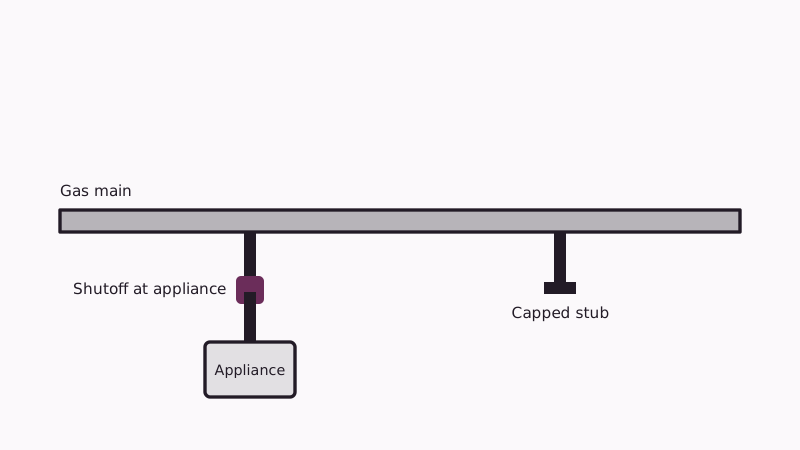
- A stove or range. Going from electric to gas means a fresh branch, a separate shutoff at the appliance and a leak test. A flexible connector sometimes finishes the last stretch; our note on half-inch flexible gas line explains where that fits.
- Gas for a fireplace. Log sets and inserts need their own branch and a shutoff in reach. Venting rules differ by appliance type.
- Repairs. Corroded fittings, a failed flex connector, a joint that smells. The plumber finds the fault, shuts that branch off and rebuilds it.
- Capping. Retiring a gas dryer or an old wall heater means a proper cap, not a closed valve alone.
- Moving a line. Kitchen remodels often shift the range. That is a relocation, with a new route and a new pressure test.
- A line for an outdoor feature. Barbecue, fire pit, heater. These run underground, so the route and depth need planning.
Earthquake shutoffs are a related job. Two guides help you decide whether to fit one: how to reset an earthquake valve after it trips and the emergency gas shutoff valve piece.
What happens when a plumber hits a gas line?
After a strike the work stops, people and anything that could spark move away, and someone reports it to SoCalGas via 1-800-427-2200. No one should try to plug, bend or patch the damaged pipe or meter. SoCalGas also wants a report of any gouge or dent, even when nothing appears to be escaping.
This is why the 811 call matters before any digging. Utilities mark their own lines at no charge, and hand tools are the rule within 24 inches of a marked line. Contractors should make that call themselves even when you have already placed one.
How much does fixing or adding a gas line cost?
Distance is the biggest lever, followed by pipe material, how much plaster or concrete has to come out, and the city's permit fee. A short branch near the meter is a small job next to a fresh run across the house. The gas line cost guide separates the pieces.
A figure quoted before anyone has walked the route would be a guess, so we do not offer one. What you should get is a written quote spelling out pipe size, route, fittings, permit and pressure test. A bid that is one line in a text message deserves a request for detail. Weighing a patch against a rebuild? The plumber can say what the extra spend buys and what waiting risks.
How do I tell a careful contractor from a dodgy one?
Early on, write down the contractor's license number and search it in the CSLB's online lookup before anyone enters the house. Under the board's rules a home improvement contract carries the contractor's name, street address and license number, and a deposit may not top ten percent of what the job costs, or $1,000 if that is less.
Other warning signs for gas work:
- No mention of a permit, or a suggestion that you skip it to save money.
- A quote that cannot say what pipe size or material is going in.
- Pressure to start today with cash up front.
- Nobody offering a leak test after the work.
Titles mean little. The license class and a clean record are what to check.
Common questions
Will this eat my whole day?
Extending a pipe to a new range can fit in a morning, though the city inspection is booked on its own timeline. Trenching across a yard or rerouting piping during a remodel can stretch to a full day or beyond. Once the route has been walked, the plumber can quote a time range and mention what could stretch it.
Can I leave a key and go to work?
A grown-up should be home for the first knock and again at wrap-up: pointing out the meter and appliances, agreeing the plan, and listening to the leak test result. Gas appliances may be off for hours, which affects dinner and heat. A neighbor or property manager can cover if the plumber knows in advance.
Who relights pilots when the job is finished?
Pilots on new work are usually lit by the contractor once the pressure test passes. Where SoCalGas closed the meter itself, SoCalGas alone opens it again. Leave that valve alone however simple it looks, and ask the plumber what gets checked before service comes back.
Which checks come before saying yes to a contractor?
Begin with the contractor license number. After that: is the city permit inside the price, what pipe goes in the wall, and how is the finished line proven tight? Also find out who meets the inspector. Clear answers come fast and can be written into the quote.
More in this guide
- Gas lines
What a 1/2 inch flexible gas line is for, what pipe California homes use for natural gas, burial depth, permits and why gas work needs a…
- Earthquake gas shut-off valve
How an earthquake gas shut-off valve works, where it goes on the gas line, what the rules say in Anaheim and North Orange County, and how…
- Gas lines
What a tripped seismic gas valve means, the general reset sequence, why a leak check comes first, and who can install or replace one in…
- Gas lines
Gas line prices near Anaheim: roughly $15 to $25 a foot, $200 to $700 for a range hookup, plus permit, test and earthquake valve costs.
Sources
Last updated