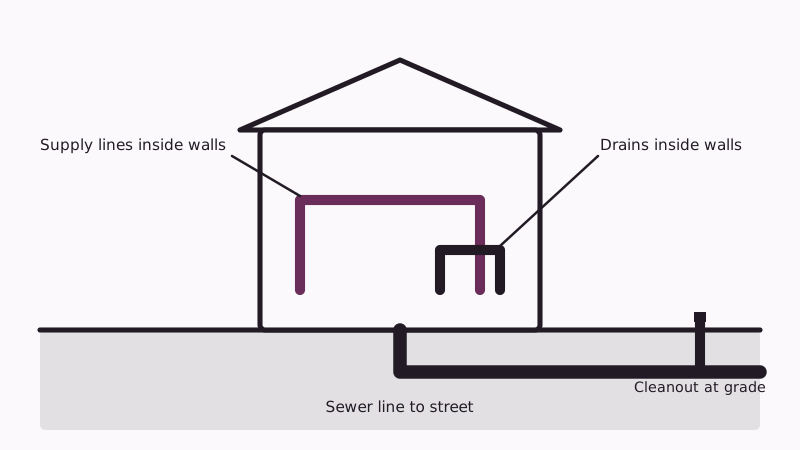
In published price guides, a supply repipe for a whole house sits near $4,500 to $15,000. The sewer line from house to street adds about $2,000 to $10,000 or more, and drains inside the walls are priced on their own. Put together, replacing everything in an old Anaheim, CA house can run to five figures, with drywall repair usually on top. Our home page lists the plumbing we arrange across North Orange County, and the sections below price each part.
What is the total for replumbing an older home?
Take a typical single-family house. The supply repipe is priced at roughly $4,500 to $15,000 in the guides. A new sewer lateral brings another $2,000 to $10,000 or more. Combining those two ranges gives roughly $6,500 to $25,000, before drywall, paint and any drain work inside the walls. Your own quote will differ.
Plumbers price the work in layers, so ask for each separately:
| Part of the job | Published guide range |
|---|---|
| Supply lines (repipe, PEX or copper) | About $4,500 to $15,000 |
| Sewer line to the street | From $2,000 to $10,000 on a short run, higher when long or deep |
| Interior drain lines | Priced by the foot, quote only after a camera or inspection |
| Permit | Often a few hundred dollars nationally, Anaheim publishes its own fee schedule |
| Drywall, plaster and paint | Often separate, $1,500 to $4,000 or more in some guides |
These are national guides, not Anaheim bids. Labor is the largest part of the bill, and walls, ceilings and floors that must be opened take most of it.
Why does an old house cost more to replumb?
Access, materials and surprises. Older houses bring plaster instead of drywall, cramped crawlspaces, a mix of pipe materials and past repairs nobody wrote down. Each makes routing harder and raises the chance of finding more work once walls are open. The pipe itself is rarely the main cost.
Age shapes what you find. Old Towne Orange is among the largest historic districts in California, with many houses from the late 1800s through the 1930s. Inside the walls you may meet galvanized or still older supply pipe, with cast iron or clay carrying waste. Anaheim and Fullerton have older neighborhoods with similar pipe. The postwar tract houses of Buena Park, La Habra and Placentia are likelier to have copper supply with cast iron or ABS drains. A plumber with a camera and a few access holes can tell you which you have.
Historic homes can add another layer. If the house has protected status, the city may review changes to the exterior or certain interior features, so ask the city's planning office before work that touches them.
What do new supply pipes cost in an old house?
Swapping galvanized or worn copper supply for PEX or new copper generally lands between $4,500 and $15,000 in the guides, PEX cheapest and copper about twice that. Slab houses can cost 25 to 50 percent more, and two-story homes and extra bathrooms add to it.
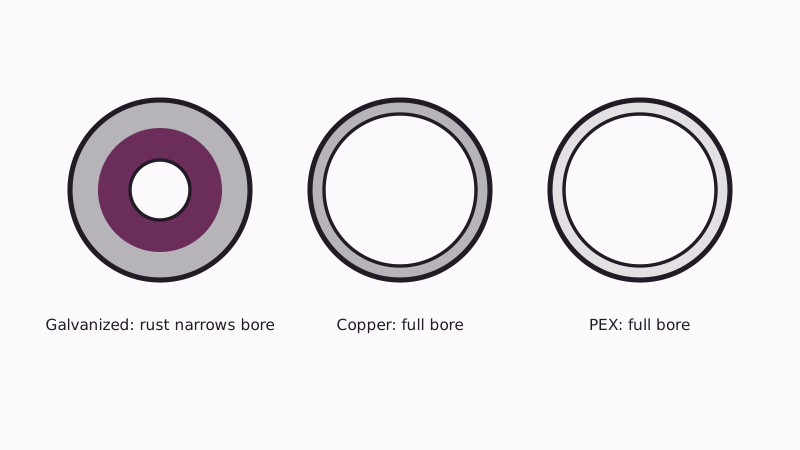
Supply pipes are the part most people mean by replumbing. Rust builds inside galvanized steel and narrows the bore, which explains the weak pressure so many old houses suffer. The work itself is described in galvanized pipe replacement and the repipe walkthrough, while repipe house cost breaks down the price in more depth.
In a house built before 1986, lead solder or older brass fittings may be present. EPA says homes built before 1986 are more likely to contain lead in plumbing. The water utility can speak to your service line and to testing. Until then, a filter rated for lead removal helps.
And the drains and sewer line?
One national guide prices a new sewer line at $50 to $250 per linear foot, and another works that out to roughly $2,000 to $10,000 for 40 feet. Trenchless options, pipe bursting or lining, are quoted from about $60 up to $250 per foot. Interior cast iron or clay drains are quoted after a camera inspection.
Old cast iron drains crack and corrode, and clay sewer pipes let in tree roots. A slow main drain, repeated clogs or a gurgle in the lines are clues. A camera inspection shows the real condition before you commit to digging. Trenchless options avoid trenching the yard but not every pipe qualifies.
The sewer lateral often runs under the front yard and parkway, so the city may want its own permit and inspection for the stretch in the public right of way. Raise it with both the city and the plumber.
What about the permit?
Replumbing needs one. Anaheim names re-pipes among work requiring a plumbing permit, and its published form showed a repipe fee of $106 and a minimum of $182 on the copy we read, though fees change. Other cities use their own schedules. Nationally, guides quote permits at $200 to $800 for larger jobs.
Where plumbing needs a permit, or labor and parts reach $1,000, California wants a contractor with a license. Confirm the license number with the state board prior to signing, and keep the deposit cap in mind.
If the plumber suspects asbestos in old pipe wrap, cement drain pipe or plaster, stop and have it tested before demolition. Asbestos work carries legal requirements, and the regional air district has notification rules for renovation and demolition.
Can you replace the plumbing in stages?
Yes for many old houses, and often the sensible route. Fix what is failing now, such as a seized main shutoff valve, a corroded riser or a collapsed drain, and plan the rest around remodeling. Bathrooms and kitchens are the natural stages because the walls are open anyway.
Staging spreads the cost but can cost more overall, since the plumber returns, patches multiple times and may repeat setup work. Already planning a remodel? Read plumbing for a bathroom remodel. Ask each plumber for a whole-house plan with the stages priced, even if you only do the first.
Where can the bill be trimmed?
Gather three written quotes for identical scope. Time the work with a remodel. Get the drains scoped with a camera before they are priced. Use PEX where it suits, and have drywall repair priced separately. Never pay ahead beyond the legal deposit cap.
A quote far below the rest may leave out the permit, the patching or the drain work. Start with a quote request. Before naming a price, a plumber from the area inspects the house.
Common questions
Should an old house be replumbed at all?
Usually when leaks keep appearing in separate places, rust has strangled the pressure, taps run brown, or polybutylene or galvanized lines are behind the walls. It can protect a house from water damage and insurance trouble. For one leak, a spot repair usually makes more sense. A plumber can show which case you have.
How long does it take?
Allow a few days of pipework plus inspection and patching for a supply repipe. A sewer line can need a day or longer, with digging taking more time than lining. Doing both in an occupied house means days without full water. Ask for a schedule and for what stays usable each day.
Will replumbing damage my walls?
Some wall opening is normal. PEX needs fewer and smaller openings than rigid pipe, and plaster walls are harder to patch than drywall. A good plumber plans routes through attics, crawlspaces and closets first. Ask whether patching and paint are in the quote, since they often are not.
Does insurance pay for replacing old pipes?
Usually not for worn pipes. Most policies pay for sudden, accidental water damage and refuse wear or corrosion, with terms varying. Ask your insurer, and check whether an older plumbing system affects your premium or eligibility. Your agent can explain what your policy does and does not cover.
Can I replace old plumbing myself?
Small repairs are one thing. A whole-house replacement brings permits, inspections and drain connections, and a contractor license is required at this size. A poor joint inside a wall can cause expensive damage. For this scale, hire a contractor and ask them to pull the permit.
Sources
- Published whole-house repipe price guides, checked November 2026
- Angi, sewer line replacement cost
- HomeGuide, sewer line replacement cost
- EPA, basic information about lead in drinking water
- Preserve Orange County, Old Towne Orange
- City of Anaheim, plumbing permit application
Last updated