Few cities in Orange County kept as many early houses as Orange did. The city incorporated in 1888 around a central plaza, which earned it the nickname Plaza City, and the blocks near that plaza were listed on the National Register of Historic Places in 1997 as the largest district of its kind in California. Anyone who owns a house there is dealing with plumbing older than most of the county. This page is about Orange itself, one entry among the communities we serve across North Orange County.
What is hiding in the walls of an Old Towne bungalow?
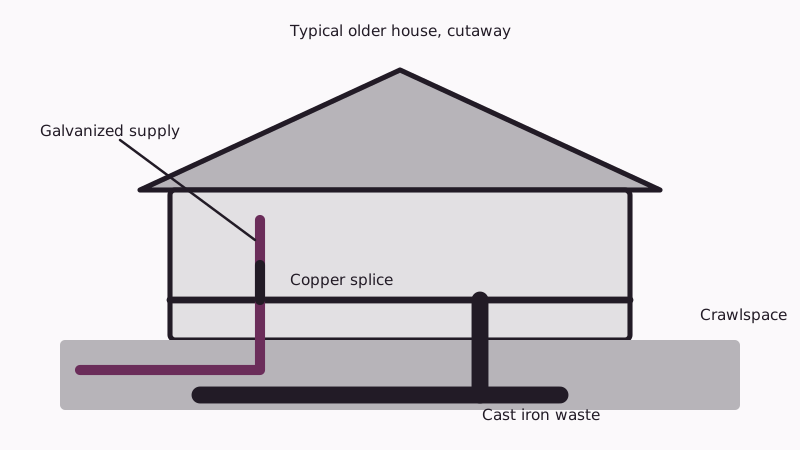
Zinc-coated steel water lines and iron waste lines from the original build, in many houses dating before 1920, with newer copper spliced in after past patch jobs. The steel corrodes inward and narrows, so pressure fades over the years. Iron drains flake and crack. Heritage houses get repaired more often than torn out, which keeps this old pipe in service.
The city retained these houses while others nearby cleared similar ones in the 1960s, and the result is a living museum with real plumbing headaches. Symptoms to watch for are brown water after a day away, a shower that has weakened over a decade, a slow main drain, or a stain on a ceiling below a bathroom. Ceiling stains in particular point to a leak that has been running a while.
Two paths exist. Spot repairs keep a house limping along, and they suit a pipe with one bad joint. A repipe makes sense when several sections fail. Galvanized pipe replacement lays out when each fits, and the question of what replacing old plumbing costs addresses the budget.
Do heritage rules change how plumbing work gets done?
They can. A job that stays inside the walls is ordinarily just a plumbing matter. Anything that alters the exterior or shows from the street, such as new vents, wall penetrations or visible equipment, may involve the city's design review for historic properties. We could not confirm whether swapping one water heater for another of the same kind triggers review, so phone the city first.
Planning staff are the people to ask in Old Towne. Seeking their view first costs a phone call, while undoing finished work can cost far more. Plumbers who know old houses plan routes through closets, floors and crawlspaces so new pipe stays out of sight and period details stay intact. When you send the quote form, say that the house is in the historic district so the visit can be planned around it.
What about the postwar tracts and the pockets outside the city core?
Large tracts rose from the 1950s through the early 1970s, and slower building has continued on the eastern edge. Those houses mostly have copper supply lines of their own age, so pinholes and failing fittings replace rust as the common complaint. Houses finished up to the 1990s can also hold polybutylene, a gray plastic that has a poor record.
Orange also wraps around unincorporated pockets: Orange Park Acres, El Modena, North El Modena and Olive. Lot sizes, service connections and which office handles permits can differ from the city core, so confirm who has authority over your address before a permit is applied for. Orange Park Acres in particular is known for larger properties, which usually means longer water and sewer runs.
If banging pipes are your clue rather than rust, read about the water hammer sound and what it points to.
Is Orange tap water hard?
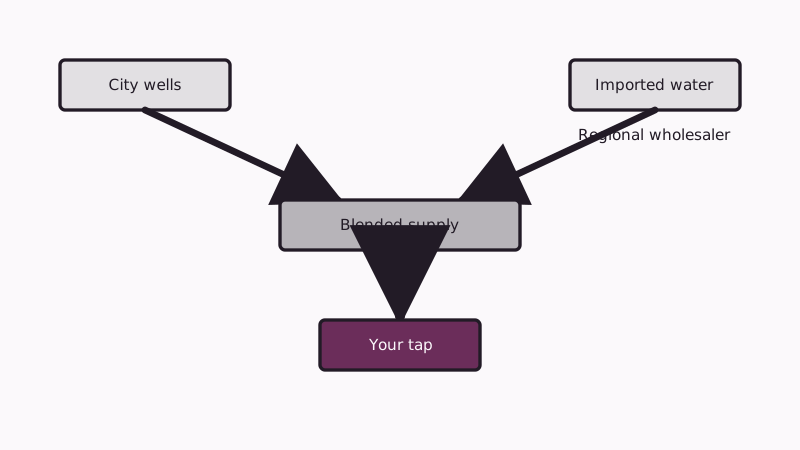
Hard. Orange runs its own water division, which pumps from city wells and also takes imported water from the regional wholesaler. Hardness figures for the city vary a great deal from report to report, from about 8 to 19 grains per gallon in the summaries we found, so we cannot give you one reliable number. Check the city's current annual water quality report.
The practical side is simple. Chalk on a faucet, scale in a kettle or a water heater that rumbles are signs of hard water wherever the exact reading lands. Hard water scale prevention walks through flushing, anode rods and softeners.
What do jobs in Orange usually cost?
As a guide, published service-call fees run $50 to $250 and hourly labor $75 to $150, sometimes up to $200, and the cost pages here cover bigger jobs. Old Towne work can run higher when plaster has to be opened, closed and repaired, or when access is limited.
Houses that predate 1920 also tend to need a few extra hours for the unexpected: pipe that will not unscrew, fixtures with obsolete connections, or walls with no clear path. See plumber cost for the full breakdown. Real numbers arrive with the written quote.
Who issues permits in Orange?
Its Building Division, which by one guide we read takes applications online only. A replacement heater, gas piping and a repipe normally call for a permit and a visit from an inspector. The state contractor board wants a license for any contract at $1,000 or above and for all permitted work, and it runs an online lookup.
For a protected building the order is planning questions first, then drawings if any, and the permit last. For a heater, the page on plumbing permits for water heaters goes further. Gas piping is a contractor's job. If gas ever smells in the house, step out first. The SoCalGas line is 1-800-427-2200, and 911 covers genuine danger.
What is the way in?
Begin with the quote form: your street, what the pipes are doing and the house age if you know it. Weekday enquiries are answered between 9am and 5pm. Afterward someone local visits the house and writes the job up with a price. Nothing is booked until you accept it. The Citrus Belt Plumbing home page lists the full set of services.
Common questions
What does plumbing cost in Orange?
Published guides show $50 to $250 to attend and $75 to $150 hourly, sometimes up to $200, parts extra, and a repipe is priced after a survey. Old Towne houses can cost more if walls must open. Your final cost is the figure on the quote you receive.
Does Orange have its own plumbing permit rules?
Yes. Water heater replacement, gas lines and repipes go through the City of Orange Building Division. Historic Old Towne properties may need design review for exterior changes. State law adds a contractor license requirement at $1,000 or for any permit. When unsure, phone the city.
Should I repipe or patch an old Orange house?
Patch when one section fails and the rest tests well. Repipe when leaks surface in several spots, the water runs brown or flow is weak everywhere. A plumber can inspect supply lines at the heater and under sinks and show you their condition. Cost and wall access often decide the answer, so ask for both options in writing.
Does Orange have unincorporated areas?
Yes. Orange Park Acres, El Modena, North El Modena and Olive are unincorporated pockets within the city's boundaries. Services and permit offices there can differ from the rest of Orange. Give your street in the quote form, and check with the city or county before any permitted work begins.
Sources
Last updated