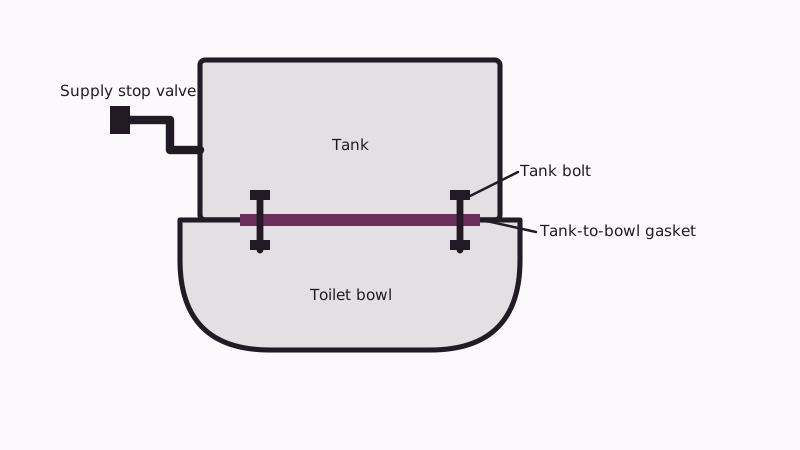
Water on the floor around a toilet is not always the tank, and the tank is not always cracked. Towel the toilet dry, turn the supply stop at the wall clockwise, and see which spot beads up first. Water at the tank's lower edge points to the bolts or gasket between tank and bowl, a drip at the wall connection points to the supply line, and a damp base points to the wax ring, a different job. This page belongs to the toilet repair section and covers the tank itself.
Is the toilet tank leaking, or is it just sweating?
Condensation forms on a cold tank when warm, humid air hits it, and it drips down the outside like a cold glass of water. Dry the tank, wait an hour or two, and check. If the outside stays dry, the water you saw was sweat. If water returns while the toilet is unused, a real leak is feeding it.
Sweating is common in warm weather, particularly in bathrooms with showers and little ventilation. It leaves a ring of moisture but no steady flow. A fan, a cracked window or a tank liner kit helps. If you see steady drops at one point, the cause is not condensation.
A good test: tuck a dry paper towel against each joint, one around the supply connection, one at each bolt, and one at the base. The towel that darkens first is your answer.
Which parts of a toilet tank leak most often?
Four places account for nearly all tank leaks: the two or three bolts that hold the tank to the bowl, the wide rubber seal sitting between tank and bowl, the fill valve's supply connection at the underside, and the flush valve seal around the overflow. A hairline crack in the porcelain is less common but possible.
A rough field guide follows.
| Where it drips | Likely cause | Usual fix |
|---|---|---|
| From bolt heads inside or nuts beneath | Worn bolt washers or loose nuts | Replace bolts, washers and tighten evenly |
| Between tank and bowl, along the seam | Gasket worn or tank not level | Replace the spud gasket |
| At the wall or underside connection | Supply line nut or fill valve shank | Tighten, or replace the line or valve |
| Water slowly into the bowl with no puddle | Flapper not sealing | Replace the flapper |
| Wet line down the tank wall | Crack | Replace the tank |
Hard water, common across North Orange County, can leave scale on rubber seals, and old metal bolts corrode, so check those first on an older toilet.
How do I repair a leak between the tank and the bowl?
Turn the stop valve off, flush until the tank drains, and sponge the remainder. Unhook the supply line, back out the tank bolts and lift the tank off. A kit supplies new bolts, washers and the big rubber gasket. Set the tank back level, then draw the nuts down a bit at a time, left then right. Stop at snug: porcelain cracks.
Tips that save a second attempt:
- Photograph the parts before you take them apart.
- Use the kit's rubber washers on the inside, under the bolt heads, and metal washers under the nuts.
- Do not crank. A turn past snug can crack a tank, and a new tank costs far more than a kit.
- Reattach the supply line, open the valve, let the tank fill, and check each joint with a dry paper towel.
- Flush several times and look again after an hour.
If the tank seems stuck or the toilet rocks, see our guide on repairing a loose toilet seat for the bowl side, and toilet flush repair if the flush feels weak.
What if the drip is coming from the fill valve or its hose?
A drip from the connection under the tank often stops with a snugger nut on the valve shank and on the supply line, using a wrench for no more than a gentle extra quarter turn. If it carries on, replace the valve or the braided line. Parts cost little, and the job is roughly an hour.
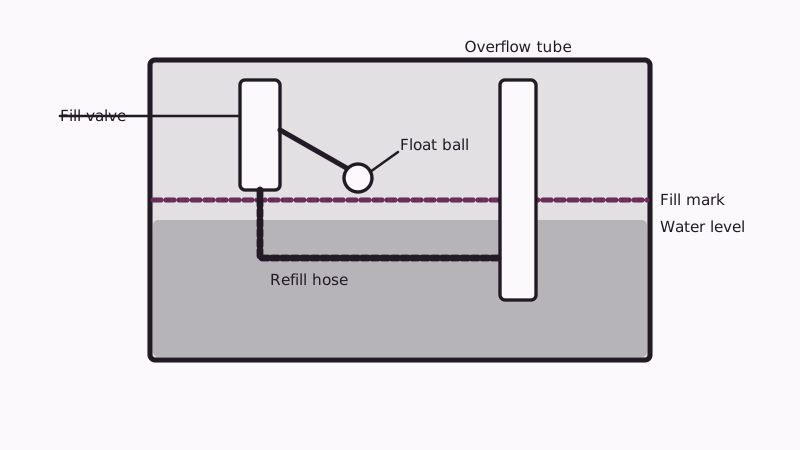
A fill valve that hisses or fails to shut off can also push water down the overflow tube. Compare the water level to the fill mark, usually stamped inside the tank or marked on the overflow tube. The swap itself is shown in fixing a toilet fill valve.
Why is water leaking into the bowl, and does it matter?
Water creeping into the bowl usually means a tired flapper, or a fill valve that delivers water past the overflow tube. You will not see it on the floor, but it wastes water silently and raises the household water bill. According to the EPA, a worn flapper can leak silently, and it advises checking it periodically and replacing it at least every five years.
Dye finds it. Squeeze a little food coloring into the tank, then give it ten quiet minutes. Tint in the bowl confirms it. Flush soon after, since the dye can stain the tank. The pages on toilet flapper repair, flapper valve types and the overflow tube will help you pick the part. With a sound flapper, the seat it closes on may be worn, and replacing the flush valve in place is an option.
When is the tank cracked, and what then?
A crack means replacement, not repair. Look for a thin wet line on the porcelain, especially near the bolt holes or the bottom corners, after drying and refilling. Epoxy or sealant on a crack is a stopgap at best, because the tank holds water continuously and the crack can open without warning.
If the toilet is old, a new tank may not match the bowl, and replacing the whole toilet is often the better path. See replacing a toilet for typical prices. A cracked bowl is the same story. Keep a bucket under it and turn the supply off until it is replaced.
Seepage around the base is a different job, caused by a worn wax seal or a loose flange. Do not keep flushing while water seeps, as it can damage the subfloor. In older homes in Fullerton and Orange, a soft floor around a toilet can mean long-term rot that deserves a plumber's look.
Common questions
Why does it only leak when I flush, and what does that mean?
Think of the gasket between tank and bowl, or the bolt washers, which flex as the tank empties and refills, or a failed flush valve seal. Dry the area and watch each joint during a flush. A gasket kit usually solves it.
Can I clean the tank while I repair it?
Yes, and the repair is a good moment for it. Empty and sponge the tank, rub scale off the seat the flapper closes on with a non-abrasive pad, and rinse. Many makers advise against drop-in bleach tablets, because they can age rubber parts and shorten a flapper's life.
When does a tank leak justify hiring someone?
That turns on the cause. A bolt kit is a small job, a new toilet is a bigger one, and kit parts are cheap. A plumber makes sense for a cracked tank, a stuck bolt or a soft floor, and the quote should itemize parts, labor and any trip fee.
Is a leaking toilet tank urgent?
Close the supply valve if water is reaching the floor, because water on a floor can damage flooring and a ceiling below. A slow bowl leak is less pressing, though it wastes water and lifts the bill. Aim to fix it within days, not months.
Would you rather have a plumber handle it? Start with the quote page, or visit the Citrus Belt Plumbing home page.
Sources
Last updated