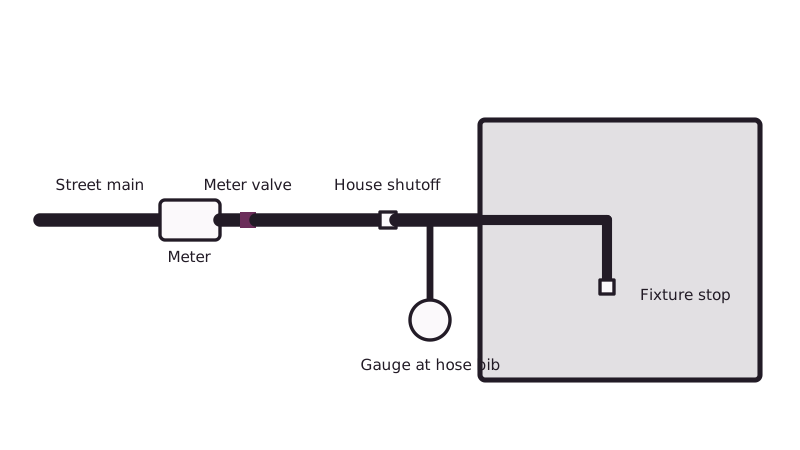
Start with the free fixes and move down the list only when one fails. Open every shutoff fully, clean the aerators and showerheads, look for leaks with a meter test, read pressure with a gauge, and then deal with the regulator or old pipe. A booster pump comes last, because it adds pressure but does not cure a clog or a leak. A plumber is worth calling when the gauge or the pipes point past what you can reach; the water pressure plumber page explains that visit.
Which fix costs nothing?
Open the valve at the house and the one at the meter completely, then clean the aerator on any weak faucet. Neither step costs a cent, and together they cure more cases than you might expect. A valve left half shut after plumbing or landscaping work starves the whole house, while a grit-filled aerator starves a single tap.
Do them in this order:
- Valves. Turn the house shutoff and the meter-side valve fully counterclockwise. A corroded gate valve may not open all the way; if it resists, do not force it.
- Aerators. Unscrew the cap at the tip of each weak faucet, rinse the screen, and soak a crusted one in vinegar.
- Showerheads. Give each an hour in vinegar. Crust in the spray holes is the top reason a shower feels weak.
- Fixture stops. The small oval valves under sinks and behind toilets should be fully open.
Local water is hard. The city's utility lists close to 18 grains per gallon, so plan to repeat the vinegar soak every few months on busy fixtures.
Is it low pressure, or just restricted flow?
Measure rather than guess. A cheap gauge on a hose bib returns a number worth more than any hunch. Low pressure at the gauge with all valves open points to the supply side or the regulator. Normal pressure at the gauge but weak flow at a fixture points to a restriction inside the house: scale in pipes, a clogged fixture or a partly closed valve.
Then hunt for leaks with the meter test EPA describes: copy down the meter reading, then keep the house dry for about 120 minutes and read it again. If the numbers differ, water is leaking before it ever reaches your taps. Finally, compare floors. Each 2.3 feet of height costs roughly 1 psi, so a second-story bathroom has a few psi less than the garage hose bib. That is physics rather than a fault, though a house on a slope can make it more noticeable. Hillside homes in Anaheim Hills face this, and the part of the lot near the street can have far more pressure than the top.
If your gauge reads very high instead, above 80 psi, the plumbing code treats that as a problem needing a regulator, which is a different repair from this one.
Can old, scaled pipe be choking the house?
Yes, particularly in older houses. Hard water leaves mineral crust inside pipes, and galvanized steel rusts from within, narrowing the bore over decades. Clues include weak flow that worsens slowly, rusty water after the house sat idle, and a gauge that reads fine at the spigot while fixtures dribble. A plumber can confirm by examining pipe in any exposed run.
You cannot flush this out. Vinegar and chemical cleaners do not reopen a heavily scaled pipe and can damage fittings. The lasting fix is replacing the affected pipe, which is why older homes in central Anaheim, Fullerton and Orange sometimes need a repipe. What that means in practice is spelled out in galvanized pipe replacement, and a water softener slows new buildup in the replacement lines.
Is the pressure regulator the problem?
When the gauge reads low although the street supply is healthy, a failing regulator becomes the prime suspect. Its internal screen can clog with debris or scale, and its diaphragm can wear until it restricts flow. Replacement is a short plumber job, and the valve must also meet California's 80 psi ceiling. Adjusting the screw on top can raise a regulator that has simply drifted low.
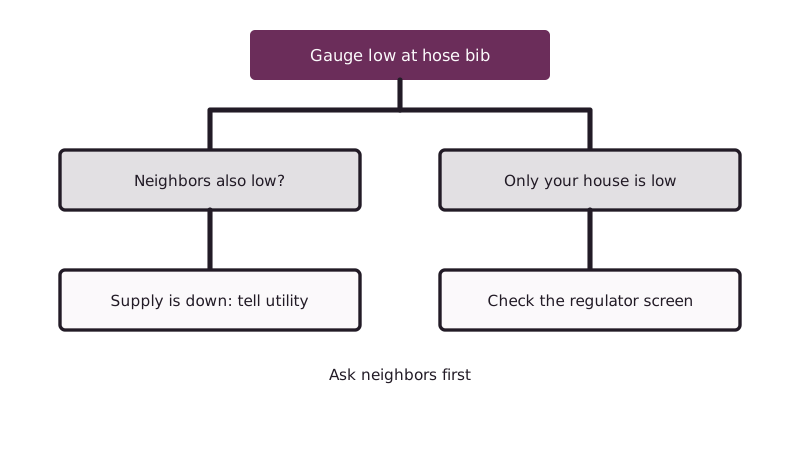
When the regulator seems healthy, ask the neighbors. If they are weak too, the supply is down, and the utility should hear about it. Details on the valve itself are in our guides on replacing a regulator and adjusting one.
Will a booster pump fix low water pressure?
A booster pump lifts pressure when the supply truly is too low, for example on a high lot or the far end of a long service line. It does not help when the cause is a clogged pipe or a partly closed valve, and it can make a hidden leak worse. Confirm the supply problem first, size the pump to the demand and ask a plumber to install it.
Before buying, ask your water provider and the city Building Division what they allow. Some systems restrict pumps that draw directly from the main, and installation can involve electrical work, a pressure tank, a bypass and backflow rules. Pumps are noisy and need maintenance, so treat them as a last step, after the cheaper fixes above.
Homes with their own well follow a different path, covered on low pressure from a well.
Common questions
What if only one faucet is low?
Treat that faucet on its own. Clean the aerator, test the little stop valve beneath it and inspect the supply hose for kinks. If the cartridge is old, it may be clogged with scale. A single weak fixture almost never means a whole-house pressure problem, so you can skip the regulator and the pump.
Why is pressure low in a condo or HOA building?
Shared plumbing can be the cause. In a condo or townhome, the main line and any regulator serving the building are often the HOA's responsibility, and pressure can drop when neighbors use water. Ask your property manager whether others report the same, and have the HOA's plumber check the building's valve before you spend money inside your unit.
Can an owner handle this alone?
Often, for the early steps: valves, aerators, showerheads and a gauge reading. Replacing a regulator, cutting pipe or fitting a pump is more involved, since permits and backflow rules can apply and mistakes cost more than the visit. If in doubt, a plumber can measure and recommend the next step.
How long does diagnosis take?
The valve check, gauge reading and meter test fit within about an hour. Chasing a cause inside the walls takes longer and can mean a return trip. You should receive a written estimate before repairs begin, so ask for it when you book through the quote page.
This guide is one of many on Citrus Belt Plumbing.
Sources
Last updated