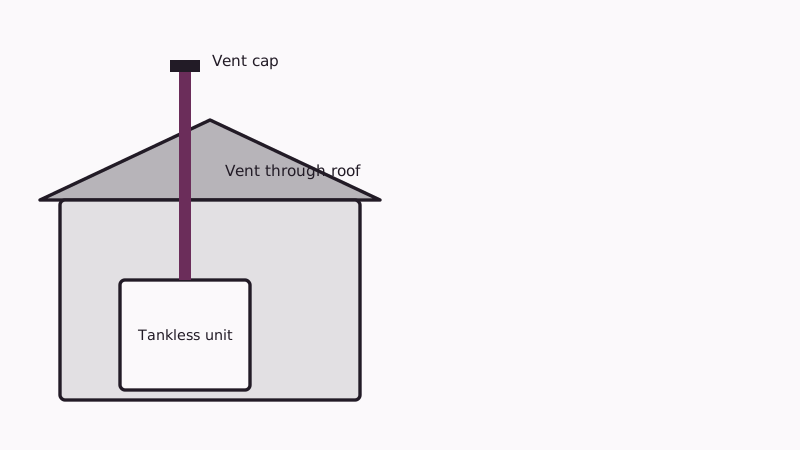
Most of the work in a gas tankless install is not the heater. It is the gas line that feeds it, the vent that carries the exhaust out and the drain that takes the condensate away. Get those three right and the unit itself bolts to the wall in an hour. If your tank is failing, our water heater plumber page covers the first call, and this guide covers the gas side of a tankless swap.
Why is the gas line the biggest question?
A tankless heater fires hard for the few seconds or minutes you run hot water, so its gas demand in that moment dwarfs a tank burner. A typical whole-house unit is rated near 199,000 BTU an hour, which often means a larger line than the half-inch pipe that fed the old tank.
Pipe size depends on the total load of every gas appliance, the length of the run and the supply pressure. Manufacturers publish tables, and installers commonly say three-quarter inch pipe suits a short run, with larger pipe for long runs or a line shared with a furnace and range. The meter has to deliver that volume as well, which can mean a question to SoCalGas.
Gas piping is regulated work. Moving or resizing it is not a homeowner task. Smell gas? Go outside first. Phone the gas company, SoCalGas, once you are standing in the yard or street. The number to dial is 1-800-427-2200. For anyone in danger, 911 comes first. Older Anaheim, Fullerton and Orange houses sometimes have a long run of small-diameter black iron from the meter to the garage, which is the usual reason this part gets quoted as an upgrade.
What happens on installation day?
A typical visit goes like this. Gas and water are shut off. The old tank is emptied and carried away. The new unit goes on the wall, the gas line is resized or extended, vent and condensate lines are run, and water connections go on with isolation valves. Everything is leak-tested before the unit fires.
Expect the water off for several hours, and the gas off for part of that time. A new gas line or vent through the wall can stretch the job into a second day. The plumber then walks you through the controller and temperature setting.
Prepare by clearing a path to the heater, keeping pets indoors and moving stored items away from the old tank. Then comes the permit inspection, which the plumber arranges. See water heater permits for how that works.
How does a tankless gas heater vent?
Venting depends on the type. Condensing units use plastic vent pipe, often PVC or CPVC, through a wall or roof. Non-condensing units need metal vent pipe rated for hotter exhaust. Either way the manual spells out the pipe size, the maximum length, the clearances to windows and combustion air, and the plumber has to follow it.
Room-air units draw air from the space they sit in, so a closet or garage corner must have enough opening for combustion air. Direct-vent units pull outside air through a second pipe, which solves that. Garages bring an extra rule for gas appliances, because ignition sources must be raised or the unit has to be listed for it.
Locally there is an air-quality angle. The regional district limits nitrogen oxide from gas water heaters and small boilers, so the models offered to you here are low-NOx. See our tankless installation requirements article for the code and permit view.
Where does the condensate go?
As exhaust cools inside a condensing unit it turns to mildly acidic water. It leaves through a plastic line pitched downhill toward a floor drain or laundry standpipe, with a little condensate pump as the backup. Many installers add a neutralizer cartridge. Do not connect it to the relief valve discharge, which must run on its own.
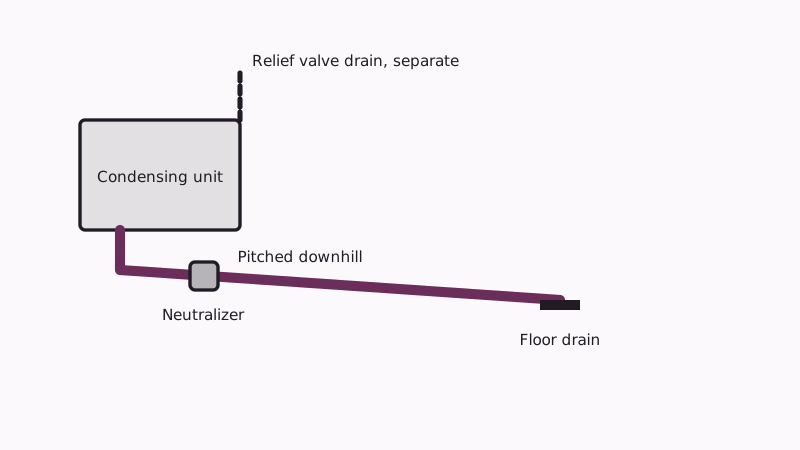
Your manual shows the connection size and drain rules, and a city inspector may check them. No drain close to the heater? A small pump normally solves it. Ask the plumber where the water will go before you agree to the quote. An unplanned condensate line is a common reason a job takes longer.
What about hard water and scale?
Hard water leaves scale on the heat exchanger, which cuts efficiency and can trigger error codes. The city's hardness page puts Anaheim water near 300 parts per million, about 18 grains per gallon, which makes scale a genuine maintenance item. Isolation valves let a plumber flush the unit with descaler, and many makers suggest doing it yearly.
Local water is a mix of groundwater from the Orange County basin and imported supplies, and the exact hardness changes with the source and year. A softener upstream reduces the load. Weighing one up? Prices for that are on water softener installation cost. Without a softener, put flushing on the calendar.
What does a gas tankless installation cost?
Cost depends on the unit, the gas line work, venting and the permit, and published ranges vary widely. Our tankless installation cost page puts numbers on it. The gas line upgrade and the vent route are the items that swing a quote the most, so ask for each as its own line.
Brand pages cover the specifics of common models: Rinnai tankless installation and Navien tankless installation.
How do you choose who does the install?
Pick an installer with a California contractor license who applies for the permit and writes down the gas, vent and drain plan before starting. Licensing is not optional at this scale: California sets the threshold at $1,000 for labor plus parts. A deposit has a ceiling as well, ten percent of the job or $1,000, whichever is the lower figure.
Ask what happens if the gas line or meter turns out to need work, and whether the quote includes hauling away the old tank. To ask for a price, use the quote page. A plumber nearby first examines the gas line, the vent route and the drain.
Common questions
Roughly how long does a swap last?
A straightforward swap with a big enough gas line often fits in one day. New gas pipe, a new vent route or a condensate pump stretches it. Water and gas are off for some of those hours, so ask for the expected schedule when you book.
Do you have to be around while the swap happens?
Ideally at arrival, so the heater can be reached, and again at the finish for a tour of the new setup. Ask the plumber whether you are needed in between. The permit inspection may also need access, so plan for that day too.
Will my existing gas meter be big enough?
Sometimes, sometimes not. A tankless unit adds a large load, and the meter and supply line must handle it along with your furnace, range and dryer. The plumber can total the loads and, if needed, ask SoCalGas about capacity. Do not change anything at the meter yourself.
Is a gas tankless water heater better than electric?
Gas units deliver more hot water per minute and need venting and a gas line. Electric units skip venting but need a large dedicated circuit, and many homes lack the capacity. Cost, existing infrastructure and flow needs decide it. See electric tankless installation.
What if the display shows an error code?
Find the code in the manual and run through the basics: valves open, power on, vent and condensate path clear, inlet screen clean. A code that keeps returning means a plumber should look. Gas odor changes everything, so leave first and call SoCalGas.
For the wider picture, start with Anaheim plumber.
Sources
Last updated