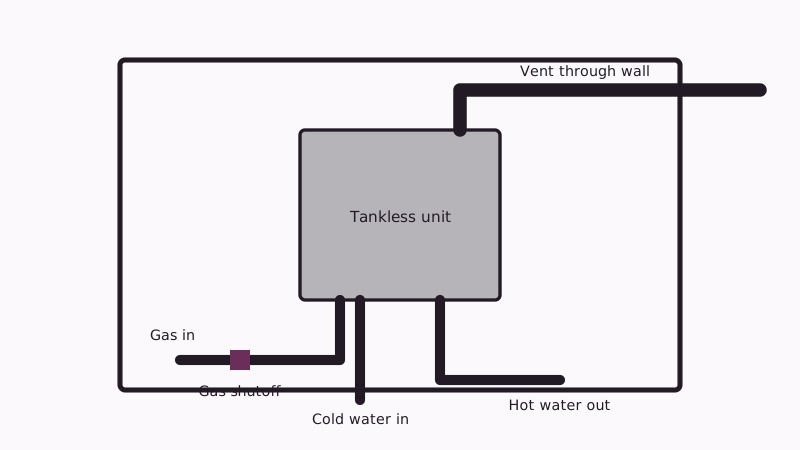
Installing a tankless water heater in California means a permit, a gas or electrical supply sized for the unit, venting that matches the model, a condensate drain for condensing types, and an inspection. Each city's building office enforces the plumbing code, and the manufacturer's manual rides along as a second rulebook on site. If a heater is failing now, the water heater plumber page is the place to begin.
Which rules govern water heater work here?
The state rulebook is the California Plumbing Code with the Mechanical Code beside it, adopted city by city. For water heaters the code touches many details: permits, how the relief valve drains, air supply for burning gas, pipe material, the vent, strapping on tanks, and thermal expansion on closed systems. Inspection happens at your city's Building Division.
The wording of the code is the same across the state, but each city issues the permit and does the inspecting. Anaheim, Fullerton, Orange, Brea and the rest each have their own counter and fee schedule. Tankless units skip the tank strapping rules, yet the other items stand. A unit that comes with the manufacturer's installation manual has a second set of rules that inspectors expect to see followed.
Is a permit part of a tankless swap?
Yes. Water heater work is regulated in California, so expect a plumbing permit, with gas or electrical items added depending on the unit. Labor and parts on a tankless job nearly always pass $1,000, the point at which a contractor license is mandatory.
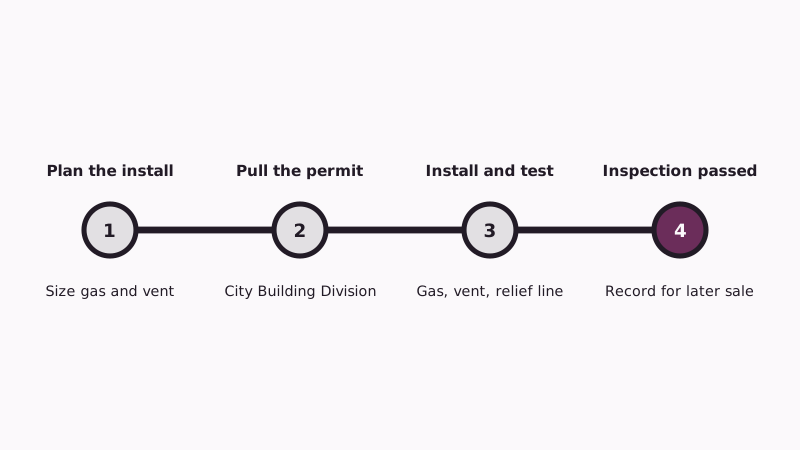
Think of the permit as protection for you. The inspector looks at the gas connection, vent, relief discharge and condensate line, and the permit record turns up when you sell. Ask who files it and whether its cost is in the quote. For the paperwork, see the water heater permit guide.
What does a gas tankless installation need?
Gas models call for: a line sized for the unit's full burner input; a shutoff valve and union at the heater; a vent that matches the model; a condensate drain on condensing units; isolation valves on the water side; plus electrical power for the fan and the controls. A tank burner fires modestly, whereas a whole-house tankless unit demands a big surge of fuel. An older half-inch line therefore often needs upgrading.
Specifics depend on the model. A typical 199,000 BTU unit has a three-quarter inch gas connection, and installers commonly say three-quarter inch pipe for short runs and a larger line for long runs or when the heater shares a line with a furnace and range. Gas pressure and the total load of every appliance decide the pipe size, and the manufacturer publishes sizing tables. The plumber has to run that math instead of guessing.
Leave gas piping to a contractor. If you detect gas, step outside before phoning SoCalGas; its emergency line is 1-800-427-2200. The gas side gets its own treatment in gas tankless water heater installation.
How does a condensing tankless unit change the install?
Exhaust heat is captured in a condensing unit, which raises efficiency and produces acidic condensate that needs somewhere to go. It vents through plastic pipe such as PVC or CPVC, often through a wall, and needs a condensate line, usually with a neutralizer kit before it reaches a drain.
Manufacturer manuals specify the vent pipe size, often three or four inch for twin-pipe layouts, the maximum vent length and the combustion air opening for room-air installs. The condensate drain connection is small, about half an inch on some models, and must slope away to a proper drain. Do not tie it into the relief valve line. The unit's manual, not a rule of thumb, governs these details.
Non-condensing units use metal venting and have no condensate, but they cost less and run a little less efficiently. Which is right depends on where the heater sits and where the vent can exit.
Are there air quality rules on gas tankless heaters here?
Yes. Local air quality is managed by the South Coast district, which covers North Orange County. Its Rule 1146.2 caps nitrogen oxide from gas water heaters and small boilers, a size class that takes in most tankless units. That is why heaters sold for this area are low-NOx models, and an installer should supply one rated for the district.
This is about the equipment you buy today, and a plumber who works here already handles it. The regional air board voted in June 2025 not to amend its water heater rules 1111 and 1121, so there is no new mandate to plan around for now. Found a model online and unsure it is approved for Southern California? Ask the seller before paying.
Why is there hot water but no heat?
Here the water heater and the home heating are usually two separate machines. Hot water with no heat therefore points at the furnace or thermostat rather than the tankless unit. Check the thermostat settings and batteries, the furnace filter and the furnace switch before calling anyone.
Combination boilers, which heat both, are rare here. If your home has a combination or hydronic system and the heat has failed while hot water works, a plumber or heating contractor needs to look at it. Ask who services the system, because they may be different trades.
Can you install a tankless water heater yourself?
For most homeowners, no. Gas connections, venting and a pressure test are regulated work, the permit and inspection are part of the process, and a wrong vent or gas leak is a safety risk. Some people install an electric tankless unit, but the circuit it needs is large, and the work can still require a permit.
A professional install can also protect the warranty, since makers often ask for a qualified installer. Before work starts, get the vent route and condensate drain shown to you. Where the water is hard, also ask about flushing the heat exchanger every year.
Local water is hard, groundwater from the Orange County basin plus imported supply, so scale buildup is a real concern for tankless units. See our pages on electric tankless water heaters, the cost of tankless installation and tank versus tankless.
What should a good tankless quote include?
Look for the make and model, the gas line size and any replacement, the vent and condensate plan, the permit, isolation valves for flushing, and the fate of the old tank. Three quotes compare fairly only when each lists the same things.
Ask the state licensing board to confirm the contractor license number. The deposit cap is $1,000, or ten percent of the price where that figure is lower. Begin by sending the quote request. We then arrange a plumber to visit.
Common questions
Does a tankless water heater need a special gas line?
Often, yes. Whole-house units draw much more gas than a tank, so the line has to be sized for the unit plus every other gas appliance on it. A three-quarter inch line is typical for short runs, but the plumber should calculate it from the manufacturer's table. Do not alter gas piping yourself.
Where in the house can the unit go?
Indoors in a garage, utility room or closet, or outdoors for models built for it, provided the vent, clearances, combustion air, gas and drain requirements are met. The manual lists the clearances. Outdoor units skip some venting work but have freeze protection concerns in cold spells.
Do tankless heaters need maintenance?
Yes. In hard-water areas the heat exchanger can scale, and the maker usually recommends flushing with descaler on a schedule. Condensing units also need the condensate path and neutralizer checked. Neglect can cut the unit's life and may put the warranty at risk. A plumber can flush it during a routine visit.
Does the old tank have to be removed?
The old tank is normally drained, disconnected and hauled away as part of the install, and its gas and water connections are capped or reused. Ask whether disposal is included in the quote. Leaving a disconnected tank in place is usually not the right choice.
What if the hot water stops working some time later?
Look for an error code, a closed gas or water valve, a blocked vent or condensate line and a clogged inlet filter. Some causes are simple and others need a plumber. The tankless no hot water guide goes through them.
This guide is one of many on plumber across Anaheim.
Sources
Last updated