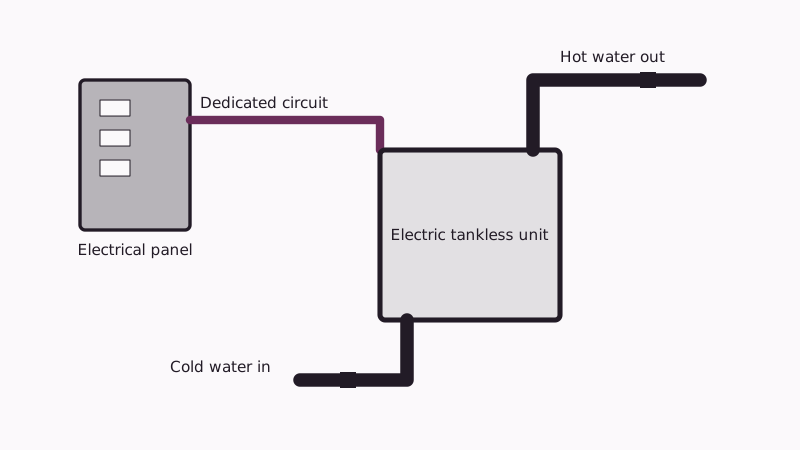
Installing an electric tankless water heater means two jobs: new plumbing connections, and a dedicated electrical supply that is often much larger than the tank heater it replaces. Per federal energy guidance, most electric tankless units need 208 or 240 volts and 50 to 200 amps depending on size, so the first question is whether your electrical panel can carry it. This guide sits under the water heater section and covers sizing, wiring, water quality, permits and price.
Can my house handle an electric tankless water heater?
Only if the electrical service has spare capacity. A whole-house electric tankless unit commonly draws 50 amps or more, and the same guidance says most need 50 to 200 amps at 208 or 240 volts, sometimes on several circuits or a larger service. Plenty of older homes have panels that are already busy, so a load check comes first.
A load calculation looks at what the panel already runs: air conditioning, a range or dryer, an EV charger, a pool pump. If the panel is short, the choices are a service upgrade, a smaller unit, point-of-use heaters at distant fixtures, or a different fuel. The heater's rating plate gives its kilowatts and amps. Match the figures against the panel before buying, not after.
Electrical work is regulated in California like plumbing. A contractor with an electrical license handles the circuit and panel work, and the city will want a permit and an inspection. A plumbing contractor can set the water side, and we can arrange the right trades for the visit.
What does an electric tankless installation involve?
The existing tank is drained and removed, the new unit is mounted on the wall, hot and cold lines are connected with isolation valves for flushing, a dedicated circuit is wired from the panel with the right breaker, and the unit is tested for flow and temperature. There is no gas or vent for an electric model, which helps placement.
Placement can be more flexible than a gas unit: indoor, closet, garage or near the fixtures it serves. The unit should be reachable for service, with clearances the maker specifies. Plan for drain space too, because flushing needs a path for water.
Other pieces that come up: relief arrangements as the maker requires, shutoff valves, and sometimes a new cold line. The DOE guideline says the existing cold supply should be evaluated, because the flow the unit delivers needs an adequate inlet.
Will an electric tankless heater give me enough hot water?
Sizing is by flow and temperature rise, measured in gallons per minute. An electric unit that suits a bathroom sink may not run two showers and a dishwasher together, and the DOE says very low flows may not trigger the sensor. Total up the fixtures you use at once, then ask the installer to size the heater for your coldest incoming water.
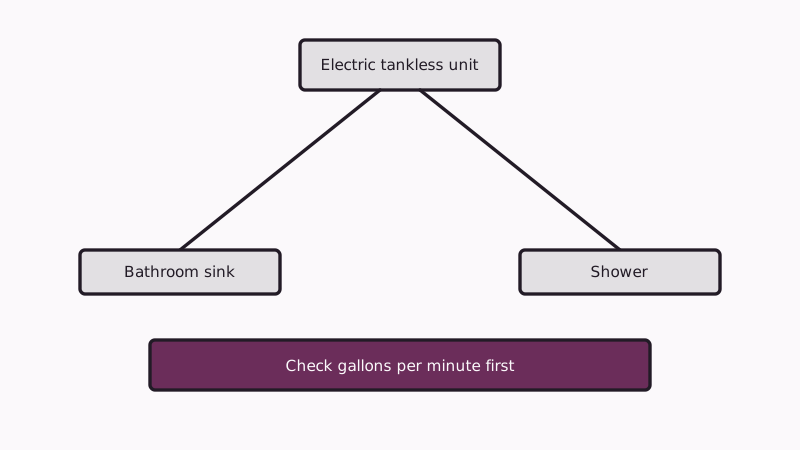
Be honest about the limit. Electric tankless units are good at point-of-use heating for one bath or kitchen. For a whole house with several bathrooms, the amp draw and the running cost often rise quickly, so a gas tankless or a heat pump heater may fit better. Our guides on tank versus tankless and gas tankless installation show the other paths.
If hot water arrives slowly at a far fixture, a recirculation pump can help; see tankless recirculation pump installation.
How does hard water treat a tankless heater?
Scale builds up on the heat exchanger and restricts flow, which shortens the unit's life. Tankless units need regular flushing, and the DOE guideline says manufacturers set intervals from twice a year to once every three years. Some manufacturers require a water softener once hardness passes roughly 8 to 14 grains per gallon, so check the warranty terms.
North Orange County water often runs hard because of groundwater and imported supply, so find the hardness figure in your supplier's annual water report before buying. If it is high, plan for flushing, possibly a softener, and read hard water scale prevention. If an installed unit goes lukewarm or cold, the page on tankless units with no hot water lists the usual causes.
How much does an electric tankless installation cost?
In 2026 price guides, an installed electric tankless unit comes to around $1,100 to $2,700, with tankless labor at roughly $1,500 to $3,000 once new wiring or a panel upgrade is involved. Panel work pushes it higher. These are rough numbers, and the electrical work found decides the written quote.
What moves the number: unit size, the distance from the panel, whether the panel or service must be upgraded, the permit, and any plumbing changes. Operating cost also matters. The DOE notes whole-house electric units often cost far more to run than a comparable gas-fired tankless unit, and at best an electric tankless saves about 12 percent in energy cost over an electric tank. Side-by-side figures are in tankless installation cost and the water heater price guide. For specific brands, see Rinnai and Navien.
Does the installation need a permit?
Yes, in most cases. A new water heater and new electrical circuit generally require permits and inspection from the city's building division. Anaheim's bulletin says its building division approves new or relocated water heaters, and each city nearby runs its own. Ask the installer who applies and confirm with your city.
Skipping the permit can cause trouble later, since a buyer or inspector may ask for it. What to expect is in the guide to water heater permits.
Common questions
Is an electric tankless water heater cheaper to run?
Not usually. Federal guidance says whole-house electric tankless units cost more to operate than a comparable gas-fired unit, and the savings over an electric tank are modest: efficiency of 0.98 to 1.00 versus 0.88 to 0.95, at best about 12 percent. Your electric rate and use decide it, so ask a plumber to estimate.
How long does an electric tankless install take?
It depends on whether the electrical service is ready. A like-for-like swap with a suitable circuit can be done within a day. Adding a dedicated circuit or upgrading a panel takes more trades and may involve inspections on separate days. The plumber should explain the schedule in the quote.
Does an electric tankless heater last longer than a tank?
Generally, yes: tankless units are generally considered to last up to 20 years, against 10 to 15 for tank-type heaters, according to the DOE guideline, provided you flush them as the maker directs. Hard water without flushing can cut that short.
What should the installer be able to tell me?
They should explain who handles the wiring and the permit, whether a load calculation was done, why this unit size was picked, and whether the quote covers isolation valves, the circuit and haul-away. Verify the contractor's license on the state board's site first.
Want numbers for your own house? Send the details on the quote page, or start at the Citrus Belt Plumbing home page.
Sources
- U.S. Department of Energy, Measure Guideline: Transitioning to a Tankless Water Heater
- Published 2026 national water heater price guides (several, checked November 2026)
- City of Anaheim, Water Heater Replacement or Relocation bulletin
Last updated