Four things split pipes: pressure set too high, corrosion eating the wall, shock waves from valves slamming shut, and ice. In Anaheim the first three are the usual suspects, and freezing is rare but possible in garages and attics. Already standing in water? The burst pipe plumber page explains how to get someone out.
Why do pipes burst?
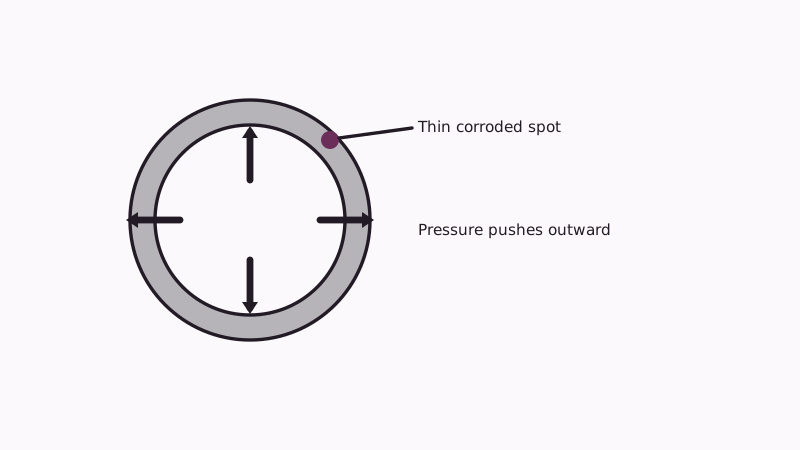
Failure comes when the load inside the pipe is more than the pipe or its joints can resist. That force comes from steady high pressure, sudden spikes, ice, or a wall weakened by rust or pitting. Usually it is a joint or a weak spot that gives way first, not the middle of healthy pipe.
Think of it as a load and a strength problem. Healthy copper or PEX can handle normal household pressure for decades. Raise the load with a faulty regulator, add a hammering washing machine valve, or let corrosion eat the wall, and the margin shrinks until a hot afternoon or a valve slam does the rest.
Homes of different ages fail differently. Some older houses in Anaheim, Fullerton and Orange still run on galvanized steel supply that corrodes from inside. Postwar tract homes in Buena Park, La Habra and Placentia often have original copper, which can develop pinholes. Newer homes lean toward PEX, where failures cluster at fittings.
Does high water pressure burst pipes?
Yes, and plumbers name it often. Household pressure is typically around 30 to 60 psi, and plumbing guidance generally flags anything above about 80 psi as stressful for fittings, valves and hoses. When a regulator fails, full street pressure reaches the house and the weakest joint takes the hit.
A gauge on an exterior spigot gives you the reading in under a minute. Check it overnight, when street pressure peaks. In the hillside parts of Anaheim Hills and Yorba Linda, elevation changes can mean higher pressure at lower lots, so a regulator matters there. If the number is high, see water pressure regulator replacement.
There is a second pressure trap. When a water heater heats a closed system, the water expands and pressure rises, which an expansion tank absorbs. A tank that has failed leaves the pipes to take it: read about water heater expansion tank replacement.
Can corrosion make a pipe burst?
Yes. Rust or mineral attack thins the pipe wall from inside, so the pipe fails under ordinary pressure. Galvanized steel rusts inward, so a pipe can look sound outside while it is nearly choked within. Copper can develop pinhole leaks. Brown water, low pressure and repeated leaks are the usual signs.

Water chemistry plays a part. Supplies here mix basin groundwater with imported water and run hard, which builds scale. Whether yours also attacks copper depends on the exact supply and the pipe, so ask a plumber rather than guess. If one section fails and its neighbors look just as tired, ask whether the entire line should go. See galvanized pipe replacement and how a repipe works for that decision.
Do pipes make noise before they burst?
Sometimes. Banging, rattling or a sharp knock when a tap or machine shuts off is water hammer, and repeated shocks stress joints over time. Hissing, a steady trickle behind a wall or a whistle can mean a leak already forming. But a burst can also happen with no warning at all, so noise is a clue, not a test.
Water hammer happens when flow stops suddenly, such as a fast-closing washing machine or dishwasher valve. The shock wave travels through the line. Air chambers, arrestors and a correct pressure setting tame it. The water hammer sound page lists causes and fixes.
Other warnings are easier to see than hear: a damp patch on a wall, bubbling paint, a musty smell, a water bill that jumped, or a meter that creeps with every fixture off. EPA suggests reading the meter, using no water for two hours and reading it again.
What makes a pipe burst in the summer heat?
Heat does not freeze anything, so summer bursts come from pressure and age. Hot afternoons raise demand for irrigation, thermal expansion pushes pressure up in a closed system, sun degrades exposed plastic, and dry soil shifts and pulls on buried lines. Pipes already weakened by corrosion are the ones that give out.
Check hose bibs, sprinkler risers and exposed irrigation PVC, since sun makes plastic brittle. Run a pressure check in the heat of the day and at night. A water heater in a hot garage or attic with a worn relief valve or dead expansion tank adds stress.
Can pipes freeze and burst in Anaheim?
It is uncommon but not impossible. Freezing needs sustained temperatures near or below 32 degrees, which is rare on the flat parts of North Orange County and a bit more likely in the foothill neighborhoods. The usual victims are uninsulated pipes in garages, attics, crawlspaces and exterior walls, and outdoor lines during an unusual cold snap.
Ice occupies more space than liquid water, and the rupture tends to appear between the plug of ice and a closed tap, not where the ice sits. Foam insulation on exposed runs, covered hose bibs and a slow trickle during a rare hard freeze are cheap protection. If a pipe is frozen, do not use an open flame on it.
How do you spot a leak in the ceiling or wall?
Look for a stain that grows, paint that bubbles or peels, a sagging patch of drywall, a musty smell, or a drip. A brown ring that spreads after the shower runs points at a pipe or drain above. A stain with no drip can be old, condensation or slow seepage, so test it by watching it for a day.
Water pooled in a bulging ceiling can bring it down, and wiring may be nearby. Keep clear, shut the water and phone a plumber. Checks are explained in the pieces on a ceiling stain with no obvious leak and a leaking ceiling. For hidden leaks a plumber uses listening gear and thermal tools, and prices appear on the leak detection cost page.
What is step one if a pipe splits?
Stop the supply at the main, drain the lines from the lowest tap, leave electrical switching to when it is dry and safe, lift belongings clear and phone a plumber. Photograph the damage before cleanup for your insurer. Full details are in the burst water pipe guide. To arrange a visit, send the quote page form.
Common questions
How do you stop pipes from bursting?
A working regulator keeps pressure in its normal band. Beyond that: replace corroded or ancient pipe before it fails, put an expansion tank on any closed system, wrap exposed runs and calm any water hammer. Closing the main before a trip helps. One look a year at hoses, shutoffs and the meter catches a lot.
Does a pipe always give notice before it fails?
It can. A fitting that gives way under a pressure spike may show nothing beforehand, while other failures build for weeks as damp spots, stains or a creeping meter. Your best odds come from glancing at the meter and looking under sinks and around the water heater from time to time.
Will home insurance pay for the damage?
Coverage often applies to sudden, accidental water damage and often excludes long-term leaks or neglect, but every policy reads differently. Phone the insurer before heavy cleanup and have photos ready. Questions to ask are on the insurance and burst pipes page.
How much water does a leak waste?
EPA estimates that leaks drain more than 9,300 gallons a year from a typical home. A burst pipe empties far faster, which is why the main valve comes first. Small hidden drips add up quietly on the water bill, so a meter check is worth the two hours it takes.
Who fixes a burst pipe?
A plumber cuts out the split section or failed fitting, looks for the pressure problem behind it and tests the repair. Check the contractor license before work begins. One is required once labor and parts reach $1,000, and for any job under a permit.
For the wider picture, start with plumber anaheim.
Sources
- Wikipedia, hydraulic shock (water hammer)
- EPA WaterSense, Fix a Leak Week
- Published plumbing guides on burst pipe causes (Roto-Rooter and others), checked November 2026
Last updated