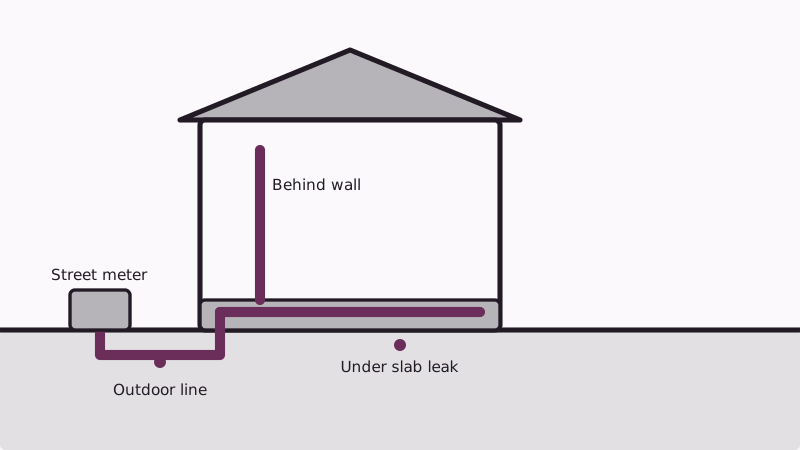
A hidden leak sends two invoices: one to find it, one to fix it. Locating costs about $100-$500 for a basic check in 2026 guides, and more when cameras or specialist gear are needed. Repair pricing follows geography. A weeping fitting in plain view is cheap; a pipe beneath a concrete floor can reach four figures. If water is pouring right now, the burst pipe plumber page is the better start. This one stays with the money.
What is the price of locating a leak that is hidden?
Most guides price a basic search, built on a pressure test, listening gear and a meter check, at $100-$500. Add a camera or thermal imaging and the figure climbs. Electronic slab leak detection is commonly $150-$400. The written quote lists which of those steps you are paying for.
The spread reflects accuracy. Pinpointing the spot spares you a trench or a wall opened in the wrong place. Detection is often its own line item, and some shops credit part of it if you continue with the repair. Ask before booking.
Try the EPA's meter test first. Jot down the reading with every fixture closed, wait two hours, and compare. A dial that has moved points to water slipping away somewhere; a dial that has not, paired with damp patches, hints at the drain side.
What will the plumber bill once the leak is found?
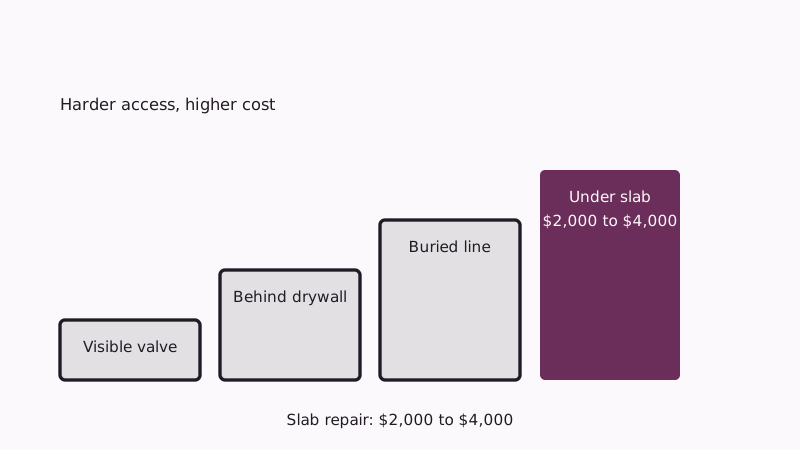
The answer tracks location. A worn fitting, supply line or valve beneath a sink is a quick visit, billed as an hour or two of labor plus parts. Pipe in a wall or crawl space takes longer, and a buried or slab leak takes longest. Figures below summarize published guides, and where no solid figure exists the table says so.
| Where the leak is | Guide range |
|---|---|
| Visible fixture, valve or supply line | short job, labor plus parts |
| Pipe behind drywall or a ceiling | labor plus opening and patching, quoted per job |
| Outdoor or buried supply line | trench length and surface decide it, estimate needed |
| Under a concrete slab, one leak | $1,000-$4,000 typical in Fixr's national guide |
| Whole-house repipe after repeated failures | Quoted after a survey |
Guides show hourly rates of $45-$200 and, at many shops, a trip charge on top; Southern California tends to run in the upper half. For the mechanics of each fix, read repairing a leaking water pipe.
Why does one leak repair cost far more than another?
Reach, pipe type and damage do the work. A leak behind a removable panel is cheap beside one under tile or a patio. Copper, PEX and galvanized lines take different fittings, and worn galvanized pipe is prone to fail again nearby. Water that ran for weeks also brings drywall, flooring and drying bills, which sit apart from the plumber's repair.
Specifics worth knowing:
- Number of leaks. Copper pinholes tend to arrive in clusters, so fixing one can expose its neighbors. See copper pinhole leaks.
- Pipe age. Many Anaheim, Fullerton and Orange houses from before 1960 have galvanized or early copper lines, where corrosion keeps producing new leaks.
- Location. Ceilings and finished walls need patching afterward, which ceiling water leaks explains.
- Timing. After-hours emergency calls cost more than booked visits.
And an outdoor or underground leak?
Digging makes these the most variable. A hose bib or irrigation valve leak is a small fix. A failure anywhere between the meter and your foundation means a trench, priced by length, depth and surface, whether lawn, concrete or driveway. Solid published figures are scarce, so expect an estimate once the leak is located.
Ownership matters. In many systems the utility looks after the service line up to the meter and you own the pipe beyond it, but boundaries differ, so ask your water provider before anyone digs. A meter that creeps with every fixture off is the usual sign that water is escaping, indoors or out.
What does slab leak detection and repair cost?
Guides put electronic slab leak detection at $150-$400 and the repair of a typical single slab leak at $1,000-$4,000. Many postwar homes in Buena Park, La Habra and Placentia sit on concrete slabs, so a leak in a line under the floor is a known risk in this area.
Three routes exist: dig through the floor at the leak, run a new line overhead through the attic or walls, or repipe. The last two cost more now but spare the concrete a second time. The pros and cons are weighed at slab leak repair cost and in the guide to finding and fixing slab leaks. Insurance may cover resulting damage in some cases; see homeowners insurance and slab leaks.
How do I pin a plumber down to a real number?
Request detection and repair as two lines, and the repair scope on paper. California wants home improvement work over $500 in a written contract that shows payment terms and the contractor's license number. Any deposit is limited to $1,000 or 10% of the job, whichever comes out lower. Ask whether the search fee rolls into the repair.
Bring these to each visit:
- How will the leak be located without opening walls?
- Does the search fee count toward the repair?
- Does the estimate cover patching drywall, flooring or concrete?
- Who handles any permit?
- What is the plan if a second leak turns up?
Common questions
How long does hunting for the leak take?
A pressure test and meter check can be quick, often under an hour. Electronic or camera work on a slab leak is a longer job, commonly a couple of hours, depending on access. The repair may be a separate visit if materials or a trench are needed. Water is usually shut off while the pipes are tested.
What should I check about a leak-finding company?
Learn which tools they use so walls stay closed, what the fee includes, and whether it counts toward a repair. Write down their license number and check its status with the contractors' board. A written scope that lists the work, the price and what is excluded protects both sides.
Should somebody stay in during the search?
Yes. An adult should show the plumber the meter, the main shutoff and the spot where you first noticed trouble, and allow entry to several rooms and the yard. The work is mostly quiet listening and testing, so you can step aside once the tour is done.
Does a slow leak really matter?
Yes. EPA says a typical home loses over 9,300 gallons annually to leaks, and about nine percent of homes lose at least 50 gallons daily. That lands on the bill, so run the meter test when the number jumps. A related page, reasons a water bill runs high, lists other causes.
Is a damp spot always a leak in the pipe?
Not always. Sweat on a cold pipe, a failed shower seal, a roof leak or a leaking appliance can also leave damp spots. A plumber checks pressure and the meter first, then narrows by area. If the water source is not a supply pipe, the fix may belong to a roofer or a waterproofing specialist.
For the wider picture, start with Anaheim plumber.
Sources
Last updated