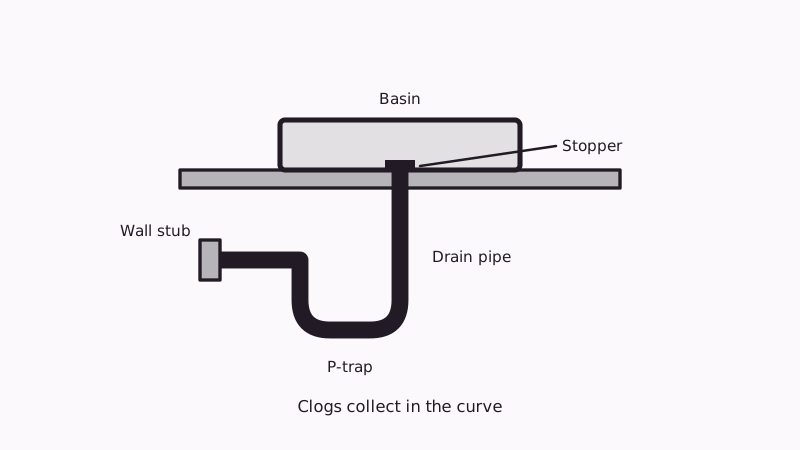
Think of a slow bathroom basin as a ladder with five rungs, and climb only as high as you must. Rung one is the stopper, two the plunger, three the trap, four a small hand auger, five the phone. Hair and soap film cause nearly all of it, and the first three rungs are free. Prefer to hand it off? Citrus Belt Plumbing can bring a local plumber out instead.
What is rung one, the stopper?
Start there, because hair loves it. The pop-up stopper has a rod and pivot just under the drain opening, and strands wind around it like thread on a spool. Lift the stopper out, or release the nut behind the tailpipe if it is the kind that unscrews, then hook out the sludge with a bent paperclip or a flat plastic strip.
Afterward, let the hot tap run a full minute. Many sinks perk up right then, since the plug sat exactly where fingers could reach. Park a towel by the basin, and set the stopper somewhere it cannot roll away.
How should a plunger be used on a basin?
Press a damp rag firmly into the overflow slot, leave about two inches of water standing in the bowl, center a small rubber cup on the drain opening, and work it briskly a dozen times before breaking the seal. Skipping the overflow block is the classic failure, since pressure leaks out of the slot instead of shoving at the plug.
Try three or four rounds and watch whether the level starts dropping faster. Plungers shift soft mats of hair and soap. A dense wad or an object lodged in the bend rarely moves, so if nothing improves, go to rung three instead of pumping away for twenty minutes.
Are baking soda, vinegar and store-bought cleaners any good?
Baking soda then vinegar fizzes and may loosen a thin film, though it seldom beats a genuine hair clog. Chemical cleaners rely on strong acids or alkalis, and the Wikipedia overview cautions that heavy use can damage pipes. Hand tools and enzyme products are milder choices.
Should you reach for a bottle anyway, read the label first, pull on gloves and goggles, open a window, and never combine two products. Tell any plumber who comes afterward, because caustic liquid standing in a trap can burn skin when the trap is opened. Enzyme products digest organic matter slowly and suit upkeep better than a hard plug. A plastic drain strip costs a few dollars and beats most liquids.
What happens when I open the P-trap?
Slide a pail under the curved trap, back off its two slip nuts, drop the bend free and empty it into the pail. Pick out the mat of hair, rinse the part, and rebuild with the washers sitting flat, nuts snug by hand. Run the tap and watch the joints for beads of water.
That curve is where most stubborn basin blockages hide, because toothpaste, hair and the occasional dropped earring settle in the low point. Lost a ring? Search the bucket before anything else. With the bend off, thread a compact hand-crank snake into the wall stub and turn it slowly to snag whatever lies deeper. Wear gloves, as Wikipedia advises eye and hand protection with augers.
Why do the washer drain and other fixtures gurgle as well?
When several drains run slowly together, or the standpipe behind the washing machine burbles, the trouble has traveled beyond the sink and sits in a common branch line or the main drain. Plunging a single basin will not help. That is a machine-and-cable job for a plumber.
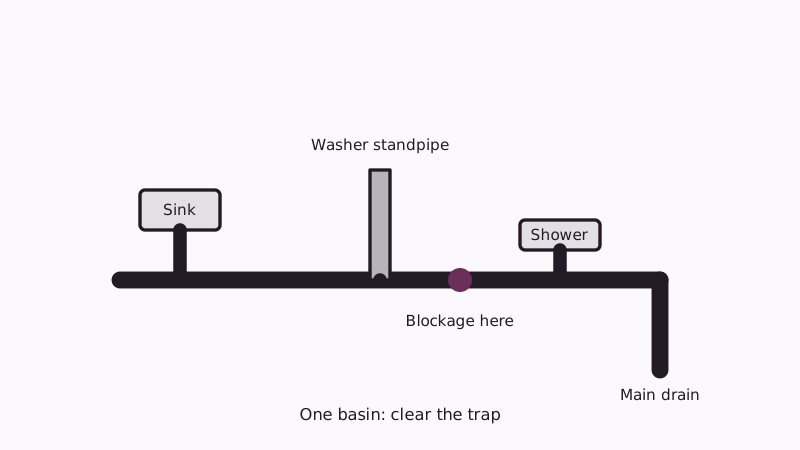
Clues include one fixture gurgling when another empties, water surfacing in a low shower or tub, and odor from a floor drain. Older Anaheim, Fullerton and Orange houses may still carry cast iron or galvanized drain pipe that narrows from rust, so a repeat slowdown can be the pipe itself. The city lists hardness around 18 grains per gallon, and soap plus scale builds a sticky coat inside lines. Sluggish sink causes are explored in their own guide.
Which signs mean rung five, the phone?
Dial when plunger and trap have both failed, when two or more fixtures misbehave, when water rises in a different fixture, when chemical cleaner has failed, or when old pipe joints look corroded or cracked. Forcing old fittings apart can start a leak that costs more than the clog did.
Nothing in California law stops you from clearing your own sink; a contractor license becomes a requirement only from $1,000 of labor plus parts, and one clog sits far beneath that. For hands-on help, use the quote page. Companion reading covers a kitchen sink, a toilet that will not clear and a leak beneath the vanity.
What keeps the basin from clogging again next month?
A hair-catching screen over the drain does most of the work. Brush hair into the wastebasket, clean the stopper every month or two, run very hot tap water through now and then, and keep oils, wax and grease out of every drain. Early attention matters, since the first week of a slow drain is the easiest to fix.
Added tips: an occasional pot of hot, never boiling, water helps keep soap from setting inside plastic pipe. Treat heavy chemical cleaners as an emergency measure, not routine upkeep, and fix slowness while it is mild.
Common questions
I cleaned the stopper and it still crawls. Next step?
Probably the blockage lives further down, in the bend or the pipe beyond. Plunge with the overflow stopped up, then take the trap apart. If both come up clean and flow stays poor, the line inside the wall may be narrowed or plugged, which a plumber's longer cable can reach.
Can a bottle cleaner do harm in a bathroom basin?
Yes, if misused. Labels demand gloves and eye protection, and products should never be mixed. Frequent use can wear pipes, and a caustic pool left in the bend becomes a hazard if you must open it later. Mechanical tools are the gentler first choice.
What if I own neither a plunger nor an auger?
A bent coat hanger or plastic strip pulls hair from the stopper zone, and you can pull the trap and clean it by hand. Avoid shoving wire deep into old pipe, where it can scratch the wall of the pipe or snag a joint.
Does the water need to be shut off for this job?
No. A clog sits on the drain side, so no shutoff valve is involved. Keep the faucet closed while the trap is off and use a bucket. If a joint seeps after you rebuild it, hand-tighten the slip nuts a touch more and test again.
Sources
Last updated