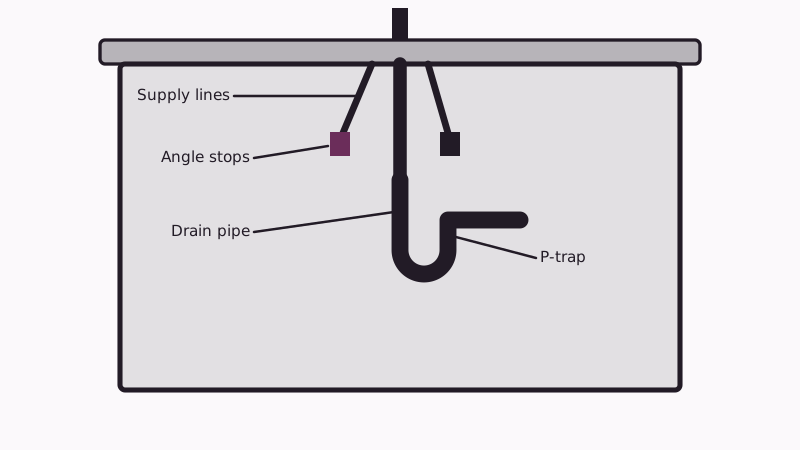
Clear out the cabinet, blot every pipe dry, then run the water and keep your eyes open for the first bead of moisture. Where it forms decides the repair. Usually the culprit is a loose slip nut on the trap, a worn braided supply line, a seam on the garbage disposal, or a drip that has run down from the faucet. Below, each suspect gets its own fix, and the garbage disposal page takes over when the disposal is the source.
Where is the water under my sink coming from?
Dry everything, lay newspaper or paper towel on the cabinet floor, and test one thing at a time: the faucet alone, then a full basin draining, then the dishwasher and disposal if you have them. Whichever step wets the paper first names the source. Test twice, since drips like to travel along a pipe.
The pattern matters. Water only while the faucet runs means the supply side or the faucet base. Water only while the basin drains means the trap, tailpiece or strainer basket. Water when the dishwasher empties means its hose or the connection at the disposal. Water with nothing running means a pressurized supply line, so close the angle stops right away.
Use a flashlight, and wipe each joint before deciding. A joint that looks wet may just be sweating, because a cold supply line collects condensation on a humid day.
What stops a dripping trap or drain pipe?
Tighten the slip nuts by hand, then give plastic ones a further quarter turn with pliers. Still dripping? Take the joint apart, confirm the washer sits flat and is not cracked, and reassemble it. A cracked trap or stripped nut means a new part, which costs little.
The U-shaped trap holds a little standing water that stops sewer gas. Plastic traps join with slip nuts and a rubber or nylon washer, and they weep when knocked out of line or when a washer hardens. Set a bucket underneath, back off the nuts, and note the washer's bevel: the tapered edge faces the fitting. Realign, tighten, then fill the basin and test.
Skip Teflon tape on slip joints, because the washer does the sealing. Metal traps in older homes can corrode through, so if a nut is stuck or the metal flakes, swap in a whole trap kit. Where the drain disappears into the wall, a plumber should handle that; the page on mending a pipe joint shows why.
What if the water starts at a supply line or angle stop?
Shut the angle stop, unscrew the old braided line and fit a new one. Hand-tight plus a quarter turn generally does it, and cranking harder can crush the seal. A stop valve that seeps around its handle or will not close needs replacing, and an old or corroded one is when a plumber should step in.
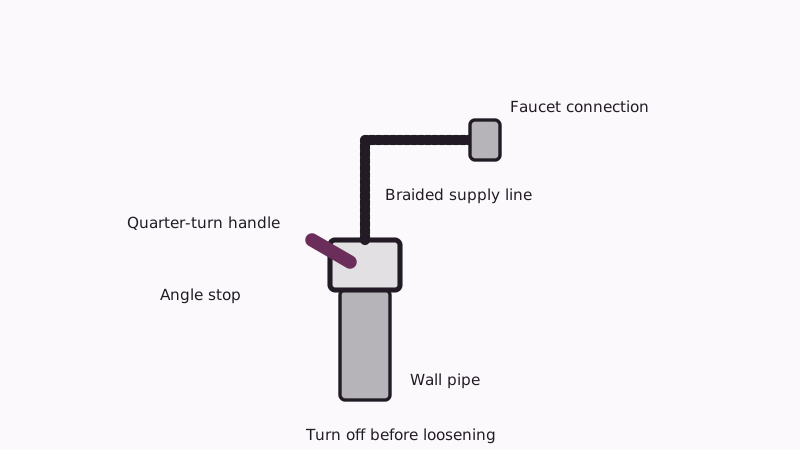
Braided lines wear out, usually at the crimped ends, so many people renew them whenever a faucet changes. Buy the correct length and matching connection sizes. Afterward open the faucet to push out air, look for drips, and recheck over several days.
In older Anaheim and Fullerton houses a stop valve may not have moved in decades, and forcing it can snap the pipe behind. If the handle resists, stop and have the valve replaced. A drip that survives your fix could be a hairline split; repairing a leaking water pipe picks that up.
Could the faucet itself be dripping onto the cabinet?
Yes. A worn cartridge, loose base nut or cracked sprayer hose can drip downward and pass for a pipe leak. Run a fingertip under the faucet body while water flows. If moisture starts there, the repair belongs to the faucet, and a cartridge or hose swap can fill an afternoon.
Our guides go through the common cases: fixing a leaky kitchen faucet, a bathroom sink faucet and the general rundown, stopping a leaky faucet. If you are replacing the fixtures, faucet installation cost shows what a plumber charges.
Bathroom vanities follow the same logic. If a shower or tub shares the wall behind the cabinet, check its valve and drain too, since that water can end up in the cabinet.
Is the garbage disposal or dishwasher causing it?
Often. Disposals weep at the sink flange, the body seams or the drain outlet, and dishwasher hoses weep at the clamp where they meet the disposal. Unplug the unit before touching it. Water from a body seam means the unit is finished, while a flange leak can be resealed with plumber's putty.
The dishwasher drain hose should loop high under the counter with a snug clamp, and the hose itself should have no cracks. On an old disposal a replacement may beat a repair; the dishwasher connection page walks through that job. A slow drain with a leak at the trap may be a clog backing up, which unclogging a kitchen sink addresses.
When is this beyond a do-it-yourself fix?
It is beyond DIY when the water originates inside the wall or floor, a shutoff will not close, pipes are corroded or flaking, seepage continues after your fix, or the cabinet base has gone spongy or moldy. The state contractor board sets $1,000 as the licensing threshold and requires a license for permitted work, which covers major pipe changes.
Small under-sink repairs fall below that line, so they are fair game for a homeowner. Do not shrug off a slow drip, though: the EPA's household figure for leak losses is above 9,300 gallons a year, and a damp cabinet floor rots and grows mold. Dry it out, and set a tray under the joint while you wait.
Common questions
How long do under-sink repairs take?
A slip nut or supply line is a matter of minutes, and a trap can be done within the hour. A faucet cartridge or disposal swap takes longer. For a plumber, the slow cases are leaks in a wall and corroded shutoffs, which need access and testing.
Does plumber's tape belong on a drain connection?
Only on threaded joints, such as a supply connection. Slip joints on drains seal with a washer, and tape adds nothing there. Epoxy putty can quiet a drip for a while, but a leaking joint should be redone, not coated over.
What should I look at before buying a new trap?
Check for cracks, a missing or flipped washer, a nut that is cross-threaded, or a pipe that sits out of alignment. Realigning the pieces often stops the drip without new parts. If the metal is thin or flaking, replace the trap.
Could a sink leak hurt anyone?
Rarely, but water near an outlet or a disposal plug is an electrical risk, so cut the power or unplug first. Long-term dampness rots the cabinet and grows mold. If water has reached the floor or the wall, treat it as a bigger leak.
Want a plumber to look? Start with the quote page, or head back to the Citrus Belt Plumbing home page.
Sources
Last updated