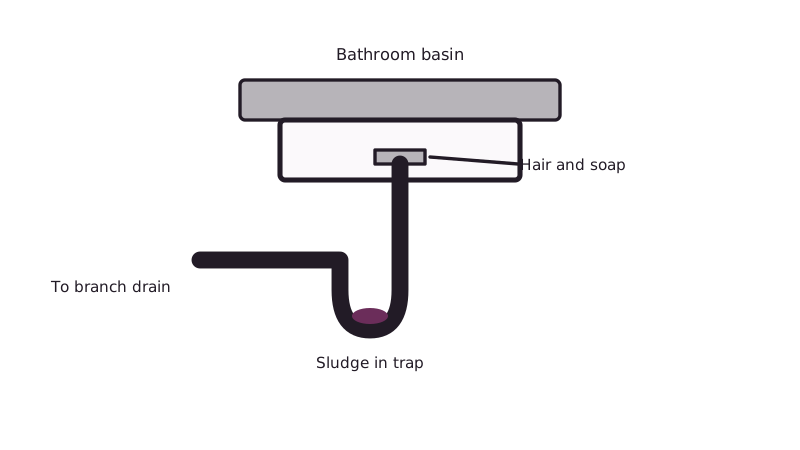
Three things account for most slow sinks: a hair-and-soap lining in a bathroom drain, a grease-and-food paste in a kitchen drain, or sludge packed into the trap right beneath the basin. All three sit close to the fixture, so you can often deal with them yourself. When several drains slow down together, the cause lies deeper and a plumber should look; the Citrus Belt Plumbing home page shows how a visit gets set up.
What actually narrows the pipe?
Residue does. Upstairs bathrooms collect hair glued together with soap scum and toothpaste; kitchens collect fat that cooled on the pipe wall, plus starchy scraps and coffee. Dissolved minerals leave a rough crust that gives all of it a grip. The channel never shuts, it simply thins, a little more every week, until the basin takes minutes to empty.
The city's own hardness page gives Anaheim tap water about 18 grains per gallon, which makes mineral crust a bigger factor locally than in a soft-water town. Where it tends to start:
- Bathroom basin: the pop-up stopper, lint and hair snagged on its pivot arm.
- Kitchen sink: the elbow after the strainer, especially with a disposal attached.
- Laundry tub: lint and fabric softener, plus a washer hose that dumps into the same line.
Is only this one drain affected?
Open a second tap, flush a toilet, and run the tub for a minute. Just one sluggish fixture puts the clog somewhere between it and the junction with the next pipe. Two sluggish fixtures, or a gurgle in one drain while another runs, implicate a pipe serving several fixtures, and a plunger will not reach it.
Sorting this first saves an afternoon. A lone clog gives way to a plunger plus a cleaned trap. A house-wide slowdown, particularly with a bubbling toilet or a filling floor drain, calls for a longer cable and maybe a camera. Some older streets in Orange, Fullerton and central Anaheim may still run clay or cast iron pipe to the sewer, where roots and scale can accumulate underground.
How do I revive a lazy bathroom basin?
Begin with the stopper: lift it out, wipe away the hair and slime, and rinse. That alone revives many basins. Next try a cup plunger while a damp rag plugs the overflow slot. If the water still crawls, put a bucket under the sink, open the trap and empty it by hand.
- Free the stopper. A horizontal rod behind the drain pipe often holds it in place.
- Plunge a dozen times, firmly and evenly.
- Let hot tap water run half a minute and see how it behaves.
- No change? Back off the two big nuts on the curved trap and let it drop into the bucket.
- Scrape out the sludge, rinse, hand-tighten everything, then run water and inspect each joint.
Stubborn basins get extra attention in clearing a bathroom sink.
What about a kitchen sink, particularly a double bowl?
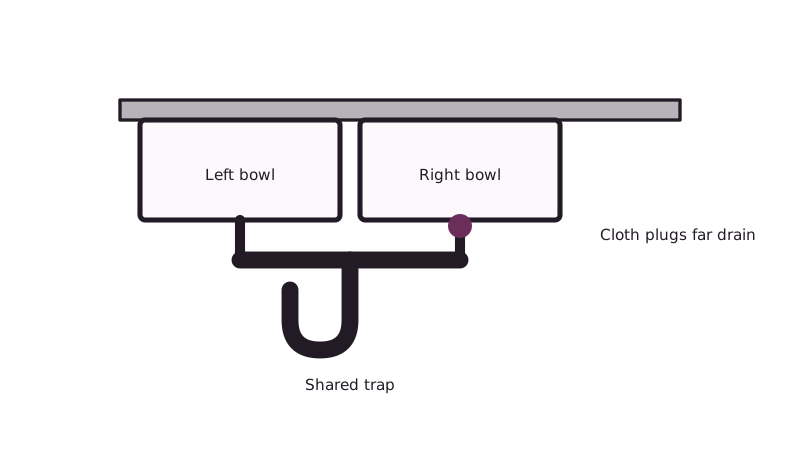
Very hot tap water with dish detergent softens fat; follow with a plunger, then the trap if needed. With a double bowl on one trap, jam a damp cloth into the far drain before plunging, otherwise the pressure escapes sideways and nothing shifts. If a disposal is fitted, run it with cold water beforehand to clear loose residue.
Leave boiling water out of plastic plumbing, because it can soften joints. A spoonful of baking soda chased with vinegar bubbles and lifts a thin film yet cannot melt a fat plug, so expect modest results. Keep it away from any commercial cleaner you used earlier. A full routine for kitchens lives at clearing a kitchen sink.
Are store-bought drain chemicals a good idea?
Usually not. Poison Control describes many drain cleaners as highly concentrated corrosive chemicals that can cause serious burns, and it warns that mixing some household cleaners releases toxic fumes. When the product fails, a pipe of caustic liquid waits for whoever opens the trap next. A plunger or a hand-cleaned trap is the lower-risk route.
Already poured some in? Hold off plunging, since splashes burn. Mention the product and timing to the plumber. For any contact, the minimum is gloves, goggles and an open window. Pouring more into a sink that is fully blocked and full of water only compounds it.
There is also a performance problem: chemicals can punch a narrow channel through a hair-and-soap clog without removing it, so the slowdown comes back within weeks.
Why does a shower back up with no clog, or a toilet fill and drain lazily?
Both point past the fixture. A shower that backs up without a visible clog, or a toilet bowl that rises and then sinks slowly, usually reflects a partial clog in a pipe that several fixtures share, or a plugged vent pipe that stops air replacing the water leaving. Expect more than one fixture to misbehave, and expect a cable or camera to be needed.
Clues pointing at the vent: gurgling, a sewer smell, a drain that works after one flush and then drags again. Fixing a vent means getting on the roof, which is professional work. Should water bubble up through a low drain, or the tub climb whenever the washer drains, hold back on water use and schedule drain cleaning.
When does this stop being a homeowner job?
Make the call once plunging and a cleaned trap have both failed, if any drain backs up or smells of sewage, if several fixtures drag together, or if the same sink clogs again inside a month. Repeat blockages hint at a sagging pipe, roots or poor slope. A camera run reveals the culprit before you spend on repairs.
A cable visit generally costs less than the $1,000 mark where California starts requiring a contractor license. Agree the price first, and whether a camera is bundled in; what plumbers charge gives the typical bands. For an urgent backup, our emergency plumber page is the better start, and for anything less pressing, use the quote page.
Common questions
The basin drains slowly yet nothing seems stuck. Why?
Something is, just not entirely. A coat of hair and soap lining the trap or tailpiece lets water squeeze past slowly, and a hair-laden stopper does the same. Clean both and normal flow usually returns. When the sluggishness comes and goes, a partly blocked vent could be involved, and a plumber can check.
Does plunging help a sluggish drain?
Often. The cup drives water against the obstruction and shakes it loose, provided the overflow is sealed and water covers the rubber. Soft material like soap and fat responds well. A hard item, for instance a child's toy or a ring, will not shift that way and may mean opening the trap.
Could the washing machine be to blame for a slow sink?
Yes, when both share a branch. Lint and detergent residue pile up there and slow the fixtures upstream. A sink that gurgles as the washer empties gives it away. Clearing the common line cures both, and a lint filter on the washer hose cuts the recurrence.
Is baking soda enough to open a clogged sink?
Only against a light film. The fizz loosens thin residue but cannot dissolve a hairball or a lump of fat. Treat it as a follow-up once the stopper and trap are clean, then let the hot tap run for a minute. Skip it if a commercial cleaner went in recently.
Sources
Last updated