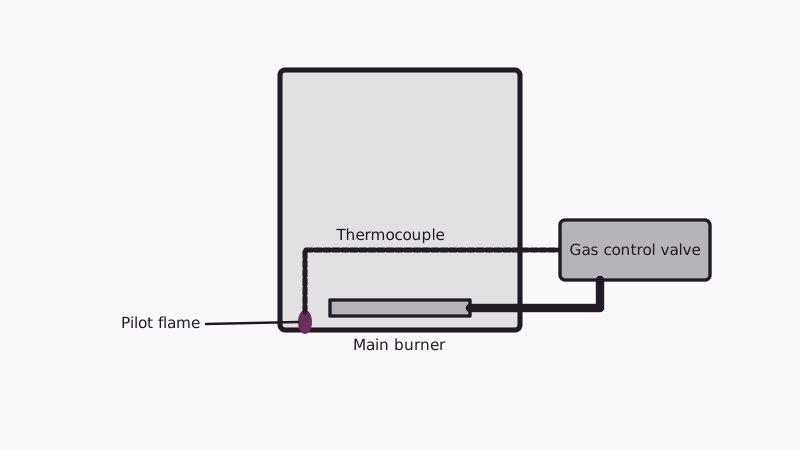
Flame at the pilot and cold water at the tap means the main burner is staying dark. A gas tank heater relies on a chain: the pilot warms a safety sensor, the sensor lets the gas control valve open, and the thermostat calls for heat. Break any link and you get a pilot with no hot water. If the whole heater is on its way out, the water heater repair page is the place to start.
Why does the pilot burn while the water stays cold?
Top of the list is a worn or dirty thermocouple, the small probe in the pilot flame that tells the gas valve it is safe to open. If it reads cold, the valve stays shut. Other causes are a failed gas control valve, a thermostat set too low, a clogged burner, a tripped safety cutoff or a heavy layer of tank sediment.
Every cause carries its own repair and price tag. A thermocouple costs little, while the gas control valve means a larger repair, and a tank packed with sediment can signal the heater's final years. Move through the checks below in order, easiest first.
What should I check first?
Begin at the temperature dial on the gas control; a bump or a vacation setting can leave it at the bottom. Then confirm the gas valve feeding the heater is open, the flame is blue, and vent and combustion air are clear. Test another gas appliance in the house too.
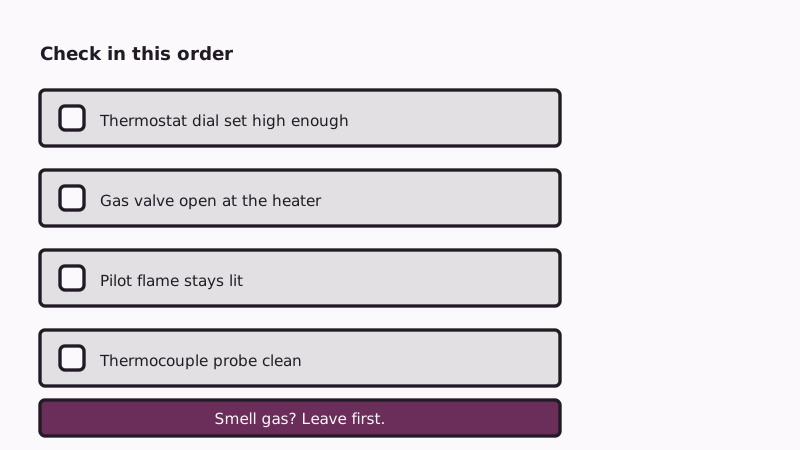
Tankless models have no standing pilot because they ignite electronically, so this page covers tank heaters only; tankless faults are on cold taps on a tankless unit. With the dial right and gas reaching the house, stop tinkering. Repeated relighting is not advised, and the label and manual on your heater give model-specific steps. After two failed tries, book a visit.
Is the thermocouple the problem?
Likely, if the flame vanishes right after the knob comes up. The thermocouple turns pilot heat into a small electrical signal, and soot, corrosion or poor positioning weakens that signal. Cleaning or replacing it frequently brings the burner back. Repair guides call it a cheap part, though the job is still gas-appliance work.
Plenty of owners hand this to a plumber, since the part sits beside the gas control and a bad fit can lock the system out unsafely. Newer heaters use a flame sensor or thermopile, with much the same symptoms; the model number tells a tradesperson which you own. Part details are under thermocouple replacement.
What happens when the gas control valve fails?
With a new thermocouple, a steady pilot and a burner that never fires, suspicion shifts to the gas control valve. It takes the thermostat's call and releases the gas. A failed one needs replacing, which is regulated gas work for a contractor and not a homeowner project.
Whether a new valve makes sense depends on the heater's age. Rheem's guideline says to replace the whole heater when the repair would cost over half a new unit, and on an old tank a valve may simply postpone a larger failure. Pricing sits on gas valve replacement.
Could sediment keep the burner off?
Sediment usually shows up as lukewarm water, noise and slow recovery rather than total silence, yet a thick layer can make the burner shut down before the water warms. Rheem explains that hard-water sediment insulates the tank floor and advises flushing yearly, or twice a year where water is hard.
The City puts Anaheim water near 18 grains per gallon, very hard by any scale, so local tanks collect scale faster than elsewhere. A rumbling or popping heater points to sediment. A flush can help a younger tank, while an old, heavily scaled one may be beyond saving. See scale prevention.
What if I smell gas or the flame looks strange?
Leave the house right now. SoCalGas tells customers to evacuate and call 1-800-427-2200 from outdoors, switching to 911 when someone is in danger or no one answers. Skip switches, flames and appliances indoors. A lazy yellow flame that leaves soot suggests poor combustion and possible carbon monoxide.
Headaches, nausea or dizziness around a gas appliance mean fresh air first and then 911. Never relight a pilot you think is leaking, and never try to stop a leak yourself. In California, gas piping and gas valves are contractor work, and replacing the heater may need a city permit.
When is a visit the right next step?
Book one if the pilot keeps dying, the burner does not ignite after the basic checks, you see rust or water at the base, or the heater is over about 10 years old. A plumber can diagnose the part, quote the repair against replacement, and handle any permit.
Use the quote form to start a visit. For other reasons the taps run cold, see no hot water at the faucet. Citrus Belt Plumbing arranges visits across Anaheim, Fullerton, Orange and neighboring cities; the home page lists them. Before anything starts, get the price in writing along with the contractor's license number.
Common questions
The pilot is lit, so why is the shower cold?
Because the burner is not igniting. Candidates are a faulty thermocouple, a defective gas valve, a low thermostat setting or sediment. A pilot that goes out on release of the knob implicates the thermocouple. A tradesperson can identify the failed part.
How can I relight the pilot safely?
Follow the label on your heater, since brands differ. Broadly: set the control to off, wait several minutes for gas to disperse, switch to pilot and hold the knob down while lighting. Smell gas and you must not relight. Give up after two failed attempts.
Is it worth fixing the heater or should I replace it?
Under roughly 8 years old with a dry tank, repair often pays. Beyond 10 to 12 years, or with a repair near half the cost of new, get a replacement priced too. Typical figures are on water heater replacement costs.
Can I replace a thermocouple myself?
It is a small part, but the job is on a gas appliance, and a bad fit can create a hazard. Many people hire a plumber. If you do try it, shut off the gas first and follow the manufacturer's instructions. Never work on gas valves or piping yourself.
How long does fixing it take?
A thermocouple swap is brief once the part is on hand. The gas valve job runs longer, and a replacement heater fills several hours. Request a time estimate in the quote before work begins, so you can plan the day around it.
Sources
Last updated