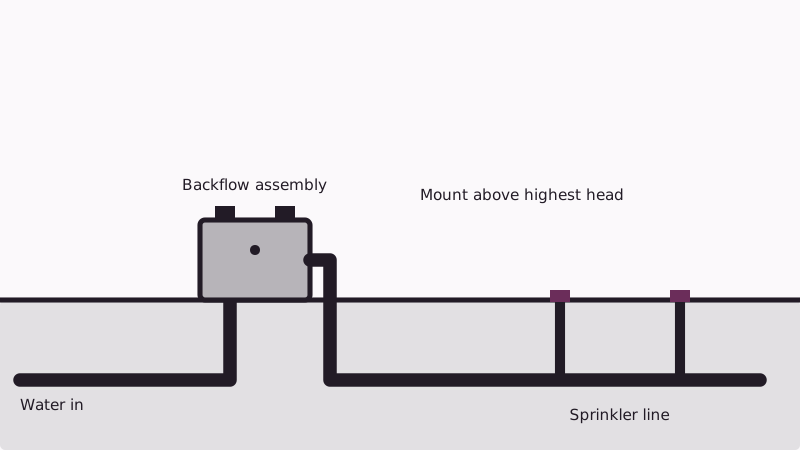
Leave this one to a specialist. Anaheim wants every backflow assembly checked annually by a tester from the county-approved roster, with the paperwork filed at the city water utility. Your part is to locate the device, answer the annual notice and pay for any repair it needs. Our overview of gas lines, codes and plumbing rules puts this in context; below is how the test works and where permits come in.
Who can legally sign off on the test?
Only a tester on the water provider's approved roster. Anaheim's cross-connection page asks for a county health agency approval plus an Anaheim business license, and it posts a list of names. A handyman, an owner or an ordinary plumber lacking that approval cannot put a signature on the report.
Neighboring cities run their own programs. Fullerton, Orange, Brea and Yorba Linda each operate through a water division or district, while the state's cross-connection handbook sets a statewide floor of one field test a year. The provider that sends your water bill can tell you which testers and forms it accepts.
What exactly is a backflow assembly, and where is mine?
Think of a valve that only lets water travel forward. The assembly stops yard water, pool water or fertilizer-laced irrigation from creeping into the public supply when street pressure sags. At a house it normally guards the sprinkler line, a pool filler or a fire sprinkler feed. Scan around the meter and the irrigation valves for a metal device, usually brass or bronze, fitted with small shutoffs and test fittings.
Pressure vacuum breakers on lawn lines stand a foot or so above the ground and have a dome on top. Reduced-pressure and double-check assemblies are sealed boxes of valves near the meter or the building entry. A sticker or tag often carries the last test date. Commercial properties may have several. Our page on commercial backflow testing covers those, and backflow prevention testing explains the basics for homes.
How is the test performed?
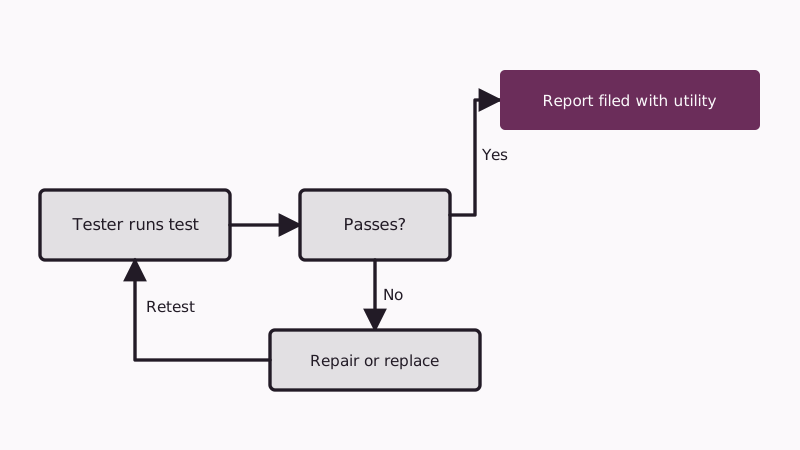
The tester closes the assembly's shutoffs, attaches a differential gauge to the test fittings and measures how well each internal check valve holds, plus the relief valve where the model has one. Readings that meet the standard for that device type mean a pass. The numbers go on a form that travels to the water provider. It is typically a short visit.
Here is how the visit unfolds:
- Water goes off briefly to the irrigation or the building feed while the assembly is isolated.
- The tester clears debris from the valves if a check is fouled, and retests.
- A report is filed with the utility, in many cases electronically.
- A tag or receipt goes to you for your records.
If you are curious about cost, the backflow assembly testing cost page gives published ranges.
What if the assembly does not pass?
It gets repaired or replaced, then tested again. Common fixes are fresh rubber seats, springs or check modules, which a tester or plumber can often swap in the same visit. A device that is badly corroded, undersized or mounted too low may need replacing outright. The water provider sets a deadline, so arrange the repair promptly.
Repair work can involve a plumbing permit if the assembly is replaced or moved, so ask your city. Hard water in Orange County can crust small internal parts, which is one reason older assemblies fail the first test in years. If your yard slopes, check that the device is installed above the highest sprinkler head, as required for many types.
Where do I start with a plumbing permit?
Start with a call or visit to the Building Division. Small, like-for-like jobs, a water heater swap being the usual example, are frequently issued at the counter on the spot. Bigger projects send plans to a reviewer for code checks first. Once approved, you settle the fee and call in inspections as the work moves along.
Steps most California cities follow:
- Ask whether the job needs one. Phone the Building Division, whether in Anaheim, Fullerton, Orange, Brea or another city.
- Fill in the application. It asks for the address, what you plan to do and the estimated value.
- Bring plans only if the city asks. When required, they are scaled drawings showing fixture layout, pipe sizes, drainage and venting. Simple like-for-like swaps often need none.
- Pay the fee and receive the permit card.
- Schedule inspections. The inspector checks the work before pipes are covered and again at the end.
An owner can sometimes pull the permit as owner-builder on a home they live in, using the city's own declaration form. Yorba Linda's FAQ on the subject is one example. Rules differ by city and trade, so ask the counter. Many owners let the contractor pull it, which is why CSLB wants the contract to say who is responsible. Heater swaps get their own treatment in water heater permit basics.
Do I have to draw the plans and fill in the form myself?
Rarely, for repairs. Drawings matter for new layouts such as an ADU or a bathroom addition, and a contractor or designer normally prepares them. The application is a short form, and counter staff will usually help you through it. If you are unsure, call the Building Division before buying materials.
Gather the address, a sentence or two on the scope, the valuation and, if you hire someone, the contractor's license number. Your city's Building Division site should show the current form and whether it takes online submissions.
Work that touches gas piping or earthquake shutoff valves carries stricter rules, so skim the gas and plumbing rules overview first. Unsure where to start? The quote page takes the job details, and a local plumber stops by to price the work.
Common questions
How often does the test come around?
Once every twelve months. The state handbook sets annual field testing, and Anaheim's program applies that to its customers. Higher-risk accounts can be put on a tighter cycle. The water provider generally mails a reminder with a deadline, so watch your mailbox.
Is there any way to run the test myself?
No, the report only counts when an approved tester signs it, using a calibrated gauge. You can prepare the ground: trim weeds around the unit, keep it reachable and make sure the shutoffs turn. Book the tester, then file the report with your records.
Does a home sprinkler system need one of these devices?
In most cases yes, since a pressure drop can pull soil water or fertilizer back into the pipes. Water providers therefore expect a device on irrigation lines, and Fullerton and neighboring cities regulate those connections through their water divisions. Not sure you have one? Follow the pipe from the meter out to the first sprinkler valve.
What does a permit inspection involve?
An inspector visits at agreed stages, checks the pipe sizes, support, venting, test pressure and any required straps, then signs the permit card. Keep it accessible during the work. If a correction is needed, you get a list and a re-inspection. Work that is covered up before inspection can be ordered opened again.
This guide is one of many on the plumber guide for Anaheim.
Sources
Last updated