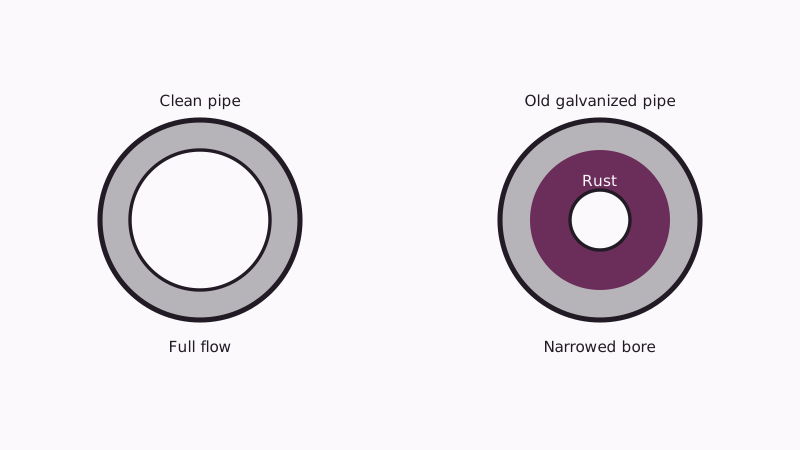
You repipe when the supply lines stop being worth repairing: repeat leaks, corroded galvanized steel, pipe types with a poor record, or flow that has dwindled until the shower is a trickle. Replacement is not a first resort. Our repiping overview covers the whole process, and this page covers only the reasons, so you can decide whether any of them is yours.
What are the real reasons to repipe a house?
Five come up again and again: leaks that keep returning, discolored or metallic water, weak flow, a pipe material with a poor track record, and a remodel that opens walls anyway. One alone is rarely enough to justify the work. Two together, such as a third pinhole in two years and brown morning water, usually are.
Patching wins while one section has failed and everything around it tests healthy. The tipping point arrives when a plumber tells you another leak is only a question of time, because the patches then add up to a sizeable bill of their own.
Does a second or third pinhole leak mean the whole system is failing?
Frequently. Copper fails from the inside, so a pinhole in one run says the wall thickness in the neighbors has been eaten away as well. Southern California homes plumbed in copper during the postwar building boom are typical cases, and after repeated leaks a plumber may propose replacing that branch, or the entire house.
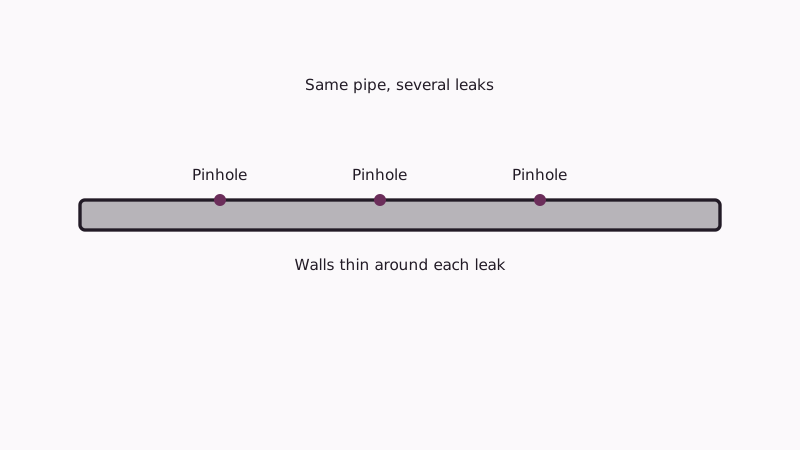
Ask where the failures cluster. Leaks all on the hot line, or all inside one wall, can justify a partial job. The write-up on copper pinhole leaks shows how plumbers read that pattern.
Why do older galvanized and lead-era pipes get replaced?
Zinc-coated steel corrodes from within. The bore narrows, pressure sags, and the water comes out orange, with the worst buildup at the joints. Pre-1986 homes carry a second concern: EPA says lead pipes and lead solder are more likely in homes built before 1986, and it lists solder among common sources of lead in household plumbing.
Houses in central Anaheim, Fullerton and Old Towne Orange include many from before that date. Unsure what runs behind your drywall? A plumber can read the material from an exposed stretch at the water heater or beneath a sink. The galvanized pipe replacement guide explains what to expect.
Should I repipe if my house has polybutylene pipe?
Many plumbers recommend it. Polybutylene is a gray plastic pipe used in homes for some years before it fell out of favor, and has a history of giving out at its fittings. A failure can happen without warning, so owners often replace it ahead of a leak rather than after one.
You can usually spot it by color and by markings on the pipe, though a plumber should confirm. The page on polybutylene pipe replacement lays out the details, and the same logic applies to any pipe type with a bad track record.
Is a repipe worth it, or is it too expensive?
It is expensive in absolute terms, and worth it only when the alternative is worse: repeat leaks, repeat drywall repair, and damage inside the walls. The sensible comparison is a repipe quote against what you have already spent on repairs and what a flood would cost, rather than the quote on its own.
We do not quote a price here, because it depends on the home size, the pipe material chosen, the bathroom count and how much of the wall has to be opened. Typical ranges sit on the repipe cost page, and a written quote comes before any pipe is cut. To begin, use the quote form. Anyone doing a job above $1,000 in California must hold a contractor license.
What is PEX, and why do repipes so often use it?
PEX is flexible plastic tubing that is used widely in new supply plumbing. Because it bends around corners, a plumber can run it through walls with fewer joints, and it does not corrode the way steel does. Copper remains an option for people who prefer metal, and each material has a different cost and feel.
There is a real debate over which is better, and the answer depends on your house and water. Read PEX compared with copper before choosing, and ask the plumber to explain why one fits your home better.
When is it not worth repiping?
When the problem is local. A single failed fitting, a bad shutoff valve, or low pressure traced to a failing regulator does not call for a new system. A weak stream is as likely to come from a gummed-up aerator or a valve left half shut as from rotten pipe.
Check the cheap causes first. Our pages on low water pressure and the broader choice between a slab repair and a repipe walk through the checks. A plumber who recommends a repipe should be able to show you the pipe that failed.
Common questions
What tells me the pipes are due for replacement?
Repeat leaks, brown or metallic-tasting water, thin flow at several fixtures, or a pipe type with a poor record are the signs. A plumber can inspect exposed runs and run a pressure test. Not every old house needs it, so ask for a reason you can see.
Does repiping help water quality?
It can, when corroded galvanized steel or parts containing lead come out of the system, and the plumber can say which you have. New pipe will not change hardness or the chemistry coming from your supplier. For what is actually in the water, read the annual quality report your supplier issues.
Will it tear up my walls?
Some access is needed, usually by cutting small openings in drywall, though the amount varies by layout. PEX needs fewer cuts than rigid pipe in many homes. Patching and paint are normally separate from the plumbing quote, so ask who handles them.
Is it a one-day job?
A whole-house repipe commonly spans several days, with the supply off for stretches of each one. The plumber sets the schedule once the layout is clear. For the usual sequence, read the how a repipe works page for the usual sequence, and the home page at Citrus Belt if you want to start a request.
Sources
Last updated