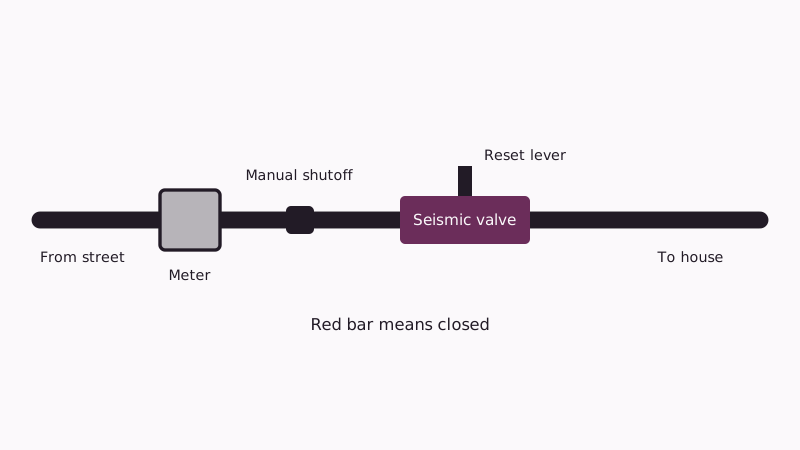
After a strong shake, a seismic valve that has dropped shut leaves the house without gas, and that is the design. Before anyone touches it, the question is whether the pipes behind it are sound. The short route: check for gas odor, follow the maker's reset steps for your model, and have a plumber or SoCalGas confirm the appliances when in doubt. Our gas line plumber page covers the wider picture of who does what with gas piping in this area.
Should I reset the valve myself or wait for someone?
The utility's guidance allows an owner to work through the maker's printed steps, yet it leans toward having SoCalGas or a qualified professional handle it, since that visit also covers leak checks on appliances and pilot relights. A gas odor changes everything: reset nothing, walk out, and phone SoCalGas from a distance.
Two things push toward waiting. First, a valve can trip when pipes are damaged, and resetting restores pressure to those same pipes. Second, following a major event crews can need days or even weeks to reach every address, and that wait can drag. If nobody has a gas odor and the valve is a type you can reset, many owners decide to do it. That is a judgment call, and a plumber can make it for you.
A meter that SoCalGas itself closed stays closed until the utility says otherwise; neither you nor a plumber should reopen it.
What does a reset usually involve?
On most meter-mounted valves, the sequence is: close the manual gas shutoff upstream, turn off the gas cock at each appliance, then move the reset lever or cam until the green indicator shows in the window. Models differ, and the maker prints exact steps for each size. Pacific Seismic Products warns that the supply must be off before any reset.
Here is the general shape, with the model sheet as the final authority:
- Look at the indicator. A red bar means the valve is closed.
- Shut the manual valve ahead of it.
- Close each appliance valve so gas cannot rush to pilots.
- Move the reset mechanism the direction the arrow shows. Hold it while pressure equalizes, if the manual says to.
- If the indicator turns green and the mechanism springs back, the valve has reset. If it will not hold, the unit may need replacing and the gas should stay off.
- Reopen the main valve gently, and bring pilots back individually.
Whether the last step is yours to do is a separate question. Pilot relighting is where many injuries start, so a plumber is a sensible helper there.
How do these valves work, and which kind do I have?
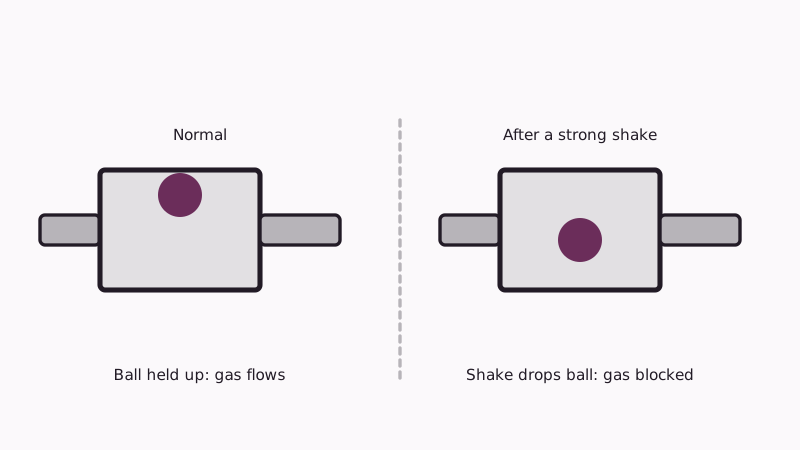
A seismic valve contains a ball or similar part that is held up by gravity. A strong enough shake knocks it loose and it blocks the pipe. Some mount on the house line just past the meter, some sit on the meter's outlet, and some are electric, tied to a motion sensor. Check your model plate and the manual.
That variety is why the search "automatic gas shutoff valve" and "earthquake actuated gas valve" lead to the same device. You may also see two other terms:
- Excess flow valve. A different device, placed on the buried service line between the street main and the meter. Installing it is limited to SoCalGas and the contractors it approves.
- Manual shutoff. The quarter-turn valve at the meter. It needs a person to be there and a wrench.
To locate the manual one before you ever need it, see the emergency gas shutoff guide.
Can I install one myself, and who is allowed to?
Putting one on SoCalGas equipment has been off the table since a 2002 CPUC decision, so the utility does not do it. The valve goes on your own piping after the meter, and you hire a contractor for it. California sorts gas piping under classification C-36, and the city decides on permits.
Practical steps:
- Call your city's Building Division: is a permit needed, and does it dictate size or make? Anaheim, Fullerton and Orange each run their own office.
- Ask your insurer, because some carriers have requirements or offer a discount.
- Pick a valve approved for use in California. Look for the State Architect approval listing on the manufacturer's literature, and confirm the current listing with the city.
- Hire a plumber for the install. A poorly seated valve can close on nothing, or stay open when it ought to close.
For the broader gas job, see how we arrange a gas line plumber, or send the request on the quote form.
What does an earthquake gas valve cost to install?
Published installed prices in California commonly land somewhere from about $250 to $750, with the valve itself a smaller part of that. Treat this as a guide only. Size, location, how much pipe must be altered and the permit fee push a real quote up or down.
Tell the plumber the pipe size and where the meter sits. A photo helps. Check that the quote names the permit, the leak test and the exact valve model, all in writing.
Why do people mention the Northridge earthquake?
The 1994 Northridge earthquake damaged gas piping across a wide stretch of Southern California, and its aftermath is part of why automatic shutoffs became a topic for cities and insurers. Valves of this kind are meant to cut gas before leaks feed a fire. We cannot give you reliable counts here, so we leave numbers out.
What matters for your house: a valve limits one risk, yet it never stands in for a manual shutoff, strapped water heaters or a family plan. Orange County has no single countywide rule that we could confirm, so your own city is the one to ask.
Common questions
Will my valve trip from a truck passing by?
Not normally. Seismic valves are built to respond to ground motion of a certain strength, not to everyday vibration. One that keeps closing with no quake in sight may be faulty or out of level, which calls for a plumber's inspection instead of a fifth reset.
Is there a fee when the utility resets it?
A fee applies, according to SoCalGas, whenever it resets a valve and relights pilots after the valve shut for a reason that was not an earthquake. Confirm the current terms with SoCalGas before you book anything, because policies and fees get revised from time to time.
Can a reset valve still leak?
Yes. The valve only stops gas from reaching the house; it does not fix a cracked fitting inside. That is why appliances and joints should be checked for leaks before gas is restored. Soapy water on joints or a plumber's detector will show a leak that your nose may miss.
How often should the valve be checked?
Follow the maker's inspection schedule and look again after any big quake. Confirm that the indicator shows the open color, that nothing leans on the body, and that the mounting remains level and solid. Write the date on a note near the meter so the next check is easy to remember.
For the wider picture, start with plumber in Anaheim.
Sources
- SoCalGas, Earthquake and Excess Flow Valves
- SoCalGas, How to Shut Off Your Natural Gas
- Pacific Seismic Products, Reset Instructions
- Contractors State License Board, C-36 Plumbing Contractor classification
- Published installed prices for seismic gas valves in California, checked November 2026
Last updated