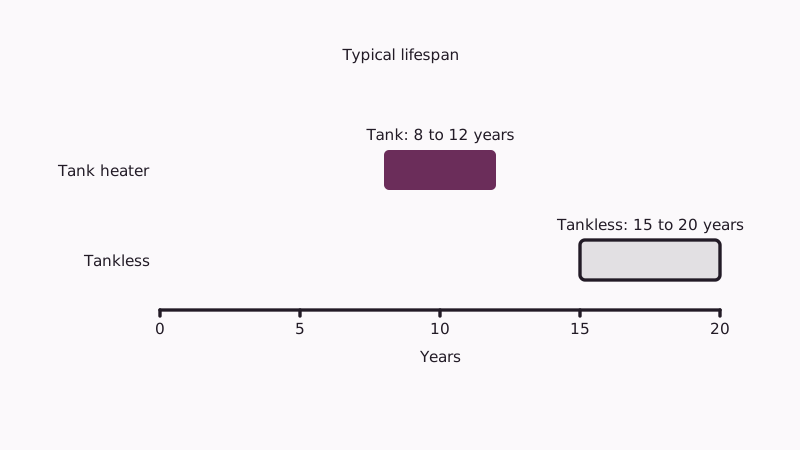
Rheem, a major manufacturer, gives tank heaters 8 to 12 years of typical life, and tankless 15 to 20 or beyond. Treat age as a hint rather than a verdict: hard water and neglect can end a heater early, while a flushed tank with a fresh anode rod sometimes passes twelve. Near the end of that range, Citrus Belt Plumbing can arrange a visit, and the water heater repair page explains how it works.
How many years should a heater run before replacement?
A tank heater typically lasts 8 to 12 years, because constant heating and storage wear down the steel and its parts. A tankless heater runs 15 to 20 years or more with proper care. Check the date code on the label to know your tank's age.
Check the rating plate: the serial number carries a code for the build month and year, and the maker's site explains how to decode it. When the label has faded, a tradesperson can often date the unit from the model number. These lifespans are averages, so an individual heater may fall short or run longer.
What signals a heater has reached the end?
Watch for pooling water around the base, hot water tinted rusty, noises of rumbling or popping in the tank, and a string of repairs on a unit older than ten years. A leaking tank shell cannot be mended; a weeping valve or fitting sometimes can.
Rheem names recurring trouble in a 10 to 15 year old unit, leaks, rusty water and sediment noise as the main warnings. With water on the floor, turn the cold-water valve over the heater closed, keep the area dry and book a visit. A gas model that smells of gas means leaving the house and phoning SoCalGas on 1-800-427-2200 once outside.
Does a repair ever beat buying new?
Fixing makes sense below roughly 6 to 8 years old, with an uncorroded, dry tank and a repair priced well under half the cost of a new heater. Dead elements, thermostats and spent anode rods are typical cases. Beyond that age, or with a leaking tank, replacing generally wins out.
Rheem's yardstick is the 50 percent test: a repair costing more than half a new heater tips the decision to replacement. Several repairs in quick succession point the same way, since the wear is probably inside the tank. Price comparisons are on replacement costs.
What upkeep should a heater get?
Flush the tank annually to clear sediment and look over the anode rod each few years. Where water is hard, Rheem suggests flushing twice a year and checking the rod every one to two years. Upkeep is cheap by comparison with a new heater and buys extra years.
To flush, connect a garden hose at the drain valve and let the tank run until the water is clear. A seized valve, a stuck anode rod or a deep bed of sludge are reasons to hand it over. Rod details are in anode rod replacement.
How often should I flush a tankless water heater if I have a softener?
Rheem recommends professional descaling of tankless units every 6 to 12 months in hard water. With a working softener the scale load drops, so the interval can stretch, but check the installer's schedule and the manufacturer's manual. A softener that has run out of salt gives no protection.
The same goes for a softener that is bypassed or set wrong. Ask for a water hardness test of the softened water if the heater keeps scaling. The water softener installation page covers softeners in more detail.
Will Anaheim's water wear a heater out sooner?
Possibly, and the numbers explain why. The City reports Anaheim hardness near 300 parts per million, near 18 grains per gallon, and its 2025 Water Quality Report spans roughly 8 to 25 grains. The USGS classes everything over 180 mg/L as very hard, so local water sits well inside that class.
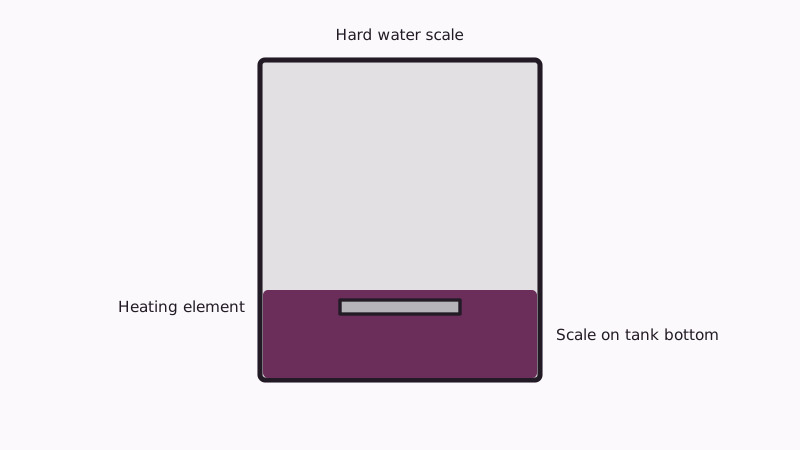
A layer of scale settles over the tank bottom and the elements. Rheem says it can reduce heating efficiency by as much as 30 percent, overheats elements until they fail, and accelerates internal corrosion. Owners in Anaheim, Fullerton and Orange should therefore favor the shorter service intervals. Prevention steps are in scale prevention.
What does replacement cost, and what rules apply?
Price depends on tank size, fuel, venting and labor. Guides summarized on water heater replacement cost list installed gas tanks near $700 to $2,700 and tankless between $1,400 and $3,900, from Angi's July 2026 national figures. California also expects replacement heaters to be strapped or braced against earthquakes.
That strapping rule sits in section 19211 of the state Health and Safety Code. A heater swap in Anaheim and neighboring cities usually brings a permit as well, covered in permits for water heaters. The plumber normally handles it and the quote should show the fee. Start a visit via the quote form.
Common questions
Should an aging heater go before it breaks?
Often yes, once a tank passes about 10 to 12 years or shows leaks, rust or rumbling. A planned swap lets you choose the unit, compare quotes and avoid flood damage. Waiting for a failure means a rushed decision, sometimes with water on the floor. A heater in good shape past 12 years can wait.
Can I make my water heater last longer?
Yes. Flush it on schedule, keep the thermostat between 120 and 130 degrees Fahrenheit, which Rheem says slows scale, replace the anode rod, and consider a softener in hard water. These steps do not make an old tank new, but they delay the failure and cost far less than early replacement.
How do I find out my heater's age?
Find the label on the tank's side and read the serial number. Makers often encode month and year in the first digits, and the brand's website explains the format. Without a legible label, a plumber can often work it out from the model number. Jot the date on the tank for next time.
Is it worth replacing a gas water heater with a tankless?
Worth it if you want unlimited hot water or the floor space. Tankless lasts longer, yet the purchase price is higher and the gas line and vent may need upgrading. Get both priced. The tank versus tankless page weighs the trade-offs.
What is the typical time to swap a heater?
A straight tank-for-tank swap is commonly done in a few hours after the right unit arrives. Relocating, re-venting or converting to tankless takes noticeably longer, at times into a second day. Expect the quote to state a time window before work starts.
Sources
Last updated