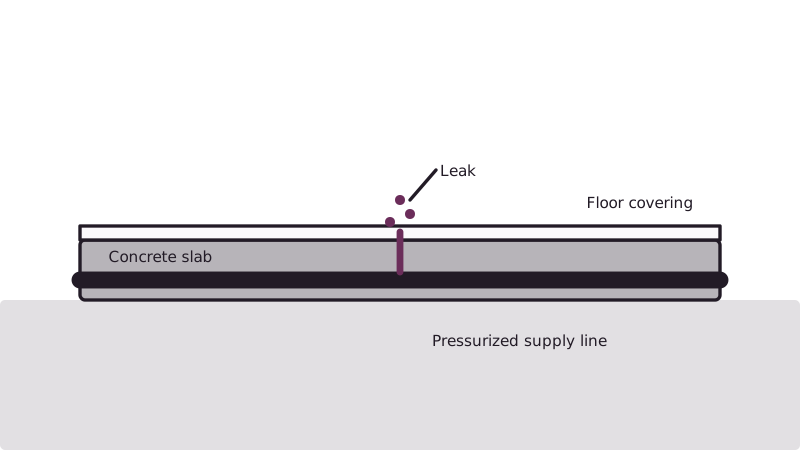
A slab leak means a pressurized water line has sprung a hole beneath or within the concrete floor. Detection comes first: a plumber locates the leak with listening gear or thermal imaging, then you pick between opening the slab at that spot and abandoning the line for a new one routed through walls or the attic. Pinpointing often costs $150 to $600, and repairs run from about $500 into the thousands. When water is already pooling indoors, the burst pipe plumber page is the better first stop.
Which clues point to a leak under the floor?
Watch for a water bill rising while habits stay the same, a hiss or trickle heard with every fixture closed, one floor patch that feels warm underfoot, carpet or baseboards that stay damp, a musty odor, or fresh cracks near moisture. Hot-line leaks tend to announce themselves as warm spots. The meter test further down confirms the suspicion.
Many Southern California homes, especially postwar tract houses in places such as Buena Park, La Habra and Placentia, are built on slabs, and the supply lines can run through or under the concrete. Copper that has aged in mineral-heavy water develops pinholes. Anaheim's water report shows hardness near 16 to 19 grains per gallon. Not every slab leak is a flood. Most are slow.
Can I confirm a leak myself first?
Use the meter test EPA describes. Confirm nothing is running, write down the meter reading, wait roughly two hours with all water off, then take a second reading. If the digits moved, water is getting out. Then close the house main and keep watching: a meter that keeps turning points to the service line from the street, not to pipes inside the house.
This test says there is a leak, not where. Rule out the easy suspects: a dye tablet in each toilet tank, a check under the sinks and around the heater's base, and a walk around the yard for soggy ground. If all of that is clean and the meter still moves, the suspect list narrows to concealed pipe, and the slab is a candidate. The test costs nothing and gives the plumber a good starting question.
How does a plumber find the exact spot?
Typically with electronic listening equipment, which hears the hiss of pressurized water through concrete, plus thermal imaging for hot-line leaks, pipe locators to trace routes, and sometimes tracer gas or pressure testing of isolated sections. The aim is a mark on the floor within a few inches, so any opening is small. Good detection saves demolition.
Fixr's guide puts leak detection at $100 to $400. The leak detection cost guide digs into those figures. Ask whether the visit fee gets deducted once you approve the repair.
What are the repair options once the leak is located?
There are three. One is a spot fix, opening the floor over the break. Another is a reroute, which retires the leaking line and feeds the fixtures with new pipe run via walls or attic space. The third is a whole-house repipe. Spot work is fastest and least costly, rerouting skips repeat slab cutting on a line that keeps failing, and repiping fits when several lines are old and thinning.
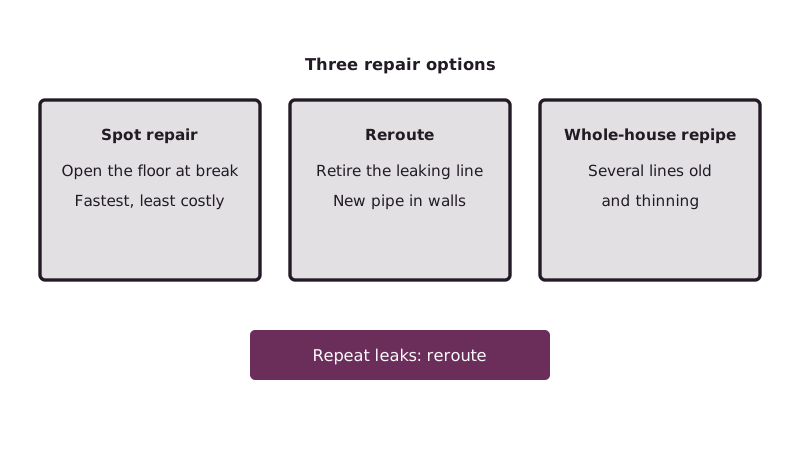
Where the leak is under the kitchen or hallway, a spot repair means cutting the floor covering and the slab, repairing the line, patching concrete and rebuilding the surface. Rerouting leaves the slab alone and cuts into drywall instead, usually with PEX. The choice depends on how many leaks the line has had and how old the rest of the copper is. The page called slab leak repair or repipe shows how owners usually decide.
What do the options cost in this area?
Fixr lists opening the slab for a spot repair at $500 to $3,000, tunneling in from outside at $900 to $2,000, and a reroute or repipe at $4,000 to $15,000. Rebuilding the floor afterward may be priced separately. Ask which of these options your leak can use before you agree to a price.
Treat these as guide numbers from contractor and cost-guide sites. After-hours calls often cost more. Plumbers differ on whether the floor restoration is included. Request an itemized quote that separates detection, the repair method, permits and the finished floor. For more on pricing, see what a slab leak repair costs; the bigger step is described under repiping the house.
Does a slab leak need a permit, and who can do the work?
New or rerouted pipe is generally permitted plumbing work, which brings in the city's Building Division. California's contractor-license requirement kicks in at $1,000 and for permitted work alike, and slab jobs clear that bar fast. Anaheim's published guidance says either an owner or a contractor may apply for the permit, but the nature of slab work points toward a contractor.
Before demolition, ask whether the concrete contains rebar, post-tension cables or radiant heating, any of which changes the plan. Post-tension cables in particular are a hazard if cut, and a plumber should identify them first. The state contractor board also advises keeping a deposit to the lesser of 10 percent or $1,000.
Will insurance pay?
Maybe, for the resulting damage, depending on the policy. The state's insurance department puts sudden, accidental water damage on the generally covered side and seepage and wear on the generally excluded side, and slab leaks are often slow ones. Cost of access varies by policy, so raise it with the insurer first. The page on homeowners insurance and slab leaks goes further.
Keep the plumber's report, photos of the exposed pipe and every receipt. Document the leak location before the floor is closed up. For a sudden failure, the closer match is insurance and burst pipes.
Common questions
How long until the floor is back?
A spot fix can be finished in one or two days, then the concrete cures and flooring is rebuilt. A reroute commonly needs one to three days of plumbing, then inspection and drywall patching. Locating the leak is a short visit by comparison, and torn-up flooring usually sets the finish date.
Will I need to leave the house?
Often not, though water service gets interrupted for part of each workday, plus dust and noise from demolition. A repair beneath a bedroom or kitchen makes that room unusable for a few days. Ask for a rundown of the disruption before the schedule is set.
Can a slab leak damage the foundation?
Long-running leaks can wash out soil beneath a slab or raise humidity, and in severe cases they affect the structure. Most are caught earlier. If you see new cracks or floors that feel uneven alongside the other signs, mention them to the plumber and consider a structural opinion.
Is this something to drop everything for?
Urgent, yes, though seldom a flood. Closing the main stops the loss while a visit is arranged, and many households leave the water off between uses until detection day. Water rising through the floor or reaching electrical equipment is different: shut the supply and call immediately. Our home page describes the way a visit gets arranged.
Sources
- Fixr, slab leak repair cost guide
- US EPA, Fix a Leak Week, finding leaks with a water meter
- California Department of Insurance, Residential Insurance guide
- City of Anaheim Building Division, when a permit is required
- Published slab leak detection and repair prices from Southern California plumbing businesses and cost guides, checked November 2026
Last updated