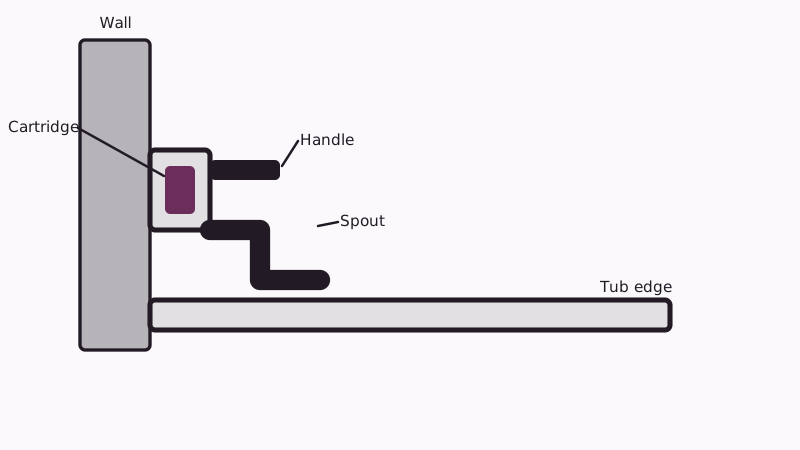
Begin by noting exactly where the wet spot is. Water from the spout even with the handle off comes from the valve behind the wall, normally a tired cartridge or hardened washer. Seepage around the handle suggests a worn seal or O-ring. A brown stain on the ceiling underneath is another matter entirely and needs a plumber. Sink and disposal plumbing sits on the faucets, sinks and disposals page.
Which kind of tub faucet do I have?
Count the handles and look at the stem. Two handles, hot and cold, usually means compression washers or ceramic discs. A lone handle that lifts and swings sideways points to a cartridge or ball valve. Remove the handle to see the inside, and photograph it before taking anything apart.
Identifying the style matters because the part differs. Compression valves use a rubber washer that squeezes shut. Cartridge valves use a plastic or brass insert with O-rings that slide inside the valve body, and many single handle tub and shower valves are this type.
How do I cut the water to the tub?
Check for stop valves behind an access panel, often in a closet or garage wall beyond the tub, or under a nearby vanity. If none exists, the house main is the fallback. Afterward, turn the tub tap on and watch the flow die, which proves the line is closed.
Cover the tub drain with a rag so a screw cannot fall in, and lay a towel on the tub floor. Taking five minutes here prevents a lost screw or a scratched surface later.
How do I replace a leaking cartridge, including a Moen?
Pry off the decorative cap, undo the handle screw (often an Allen key), and slide off the handle and its trim ring. Moen's own guide for its 1225 cartridge says to slide off the flat washer, lift the tab on the copper-colored retaining clip and pull it out, then use the plastic tool from the kit to turn the cartridge a quarter turn before pulling it free.
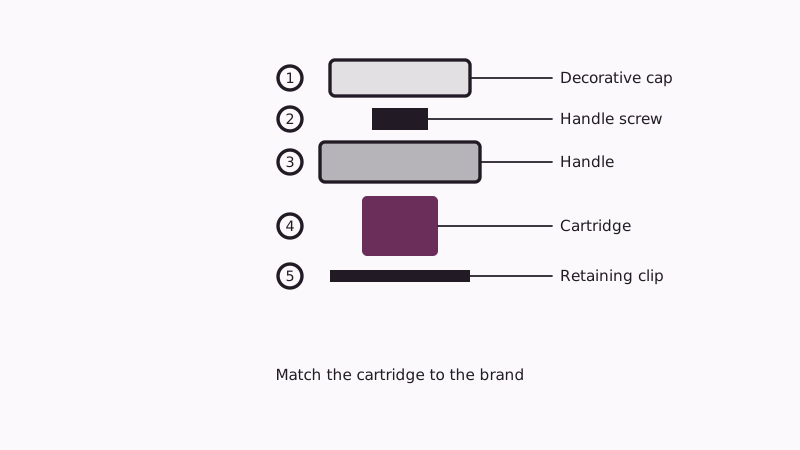
Fit the new cartridge in the same orientation, push the clip back without forcing it, and do not turn on the water if the clip will not seat. A cartridge put in 180 degrees out reverses hot and cold. Bring the old cartridge to the store, since models vary and the Moen number is printed on or near the part.
What if my tub has separate hot and cold handles?
Remove the handle, unscrew the bonnet nut with a wrench, and lift out the stem. At the bottom sits a rubber washer held by a small screw. Replace the washer, plus the O-ring if the handle leaks, and check the seat inside the valve for roughness. A pitted seat will keep eating new washers.
Match the size and shape exactly. Washers come flat or beveled, and a mismatched one leaks. Smearing plumber's grease on the stem threads lets it turn freely. Reassemble, turn the water back on slowly, and check each handle.
What if it keeps dripping after the repair?
Typical causes: a worn valve seat, a cartridge installed crooked, a missing retaining clip, or a part that is not the right model. Water chemistry plays a part too, since mineral deposits roughen seats and wear rubber faster. Your water supplier's yearly quality report lists the hardness for your area.
If the drip continues after two attempts, the valve body may be damaged or corroded, and a plumber can replace the whole valve. That means opening the wall, so get a written quote first. Our faucet installation cost page explains the pricing.
How should I deal with a wet pipe beneath the kitchen sink?
Dry the pipes and find the wet spot. Dry every pipe, then wait for the first bead to form. Typical sources: drain trap slip nuts that have crept loose, a tired washer in a supply connector, or a cracked trap. A nut needs only a gentle further quarter turn by hand, and a washer or trap should be replaced if that fails. Taping a crack is no cure.
Replace a weeping braided supply line; patching it does not last. For leaks at the faucet or disposal connections, the longer walkthrough sits under repairing a leaking pipe below the sink. A bucket under the trap goes down before any nut is loosened.
At what point is it a plumber's job?
Phone one when the shutoffs will not close, the stem is seized, the wall shows stains, or the drip comes back after a new part. Leaks inside a wall are beyond a DIY repair, and a drip you cannot trace can waste water quietly for months.
Leaks add up: EPA estimates the typical home loses over 9,300 gallons annually. If you suspect a hidden one, read about what pushes a bill up. Use the quote form and a plumber visits, with the written quote arriving ahead of any work.
Common questions
Why would only the hot side drip?
A worn seat or cartridge on the hot side is usually responsible, since heat softens or hardens rubber and wears seals over time. In a two-handle faucet, the hot washer fails sooner. Replace the washer or cartridge on the dripping side and check that the other side is not worn.
Can I fix it without turning off the water?
No. Even if the valve has built-in stops, closing the supply first avoids a spray when the cartridge comes out. If you cannot find a local shutoff, use the main valve and plan a short outage. Open a tap elsewhere to relieve pressure before starting.
How long does the repair take?
Expect an hour or two for a clean swap. A frozen stem, an obscure brand or an old valve with a chewed seat can double that, and the first parts run often turns out to be the wrong one, so add time for a second trip.
Will a faucet repair also fix a leaky shower head?
Often, yes, if the shower and tub share one valve. Water dripping from the shower head after it is shut off points at the same cartridge. For the shower side, the page on a leaky shower faucet covers it, and the broader walkthrough is fixing a leaky faucet.
For the wider picture, start with Anaheim plumber.
Sources
Last updated