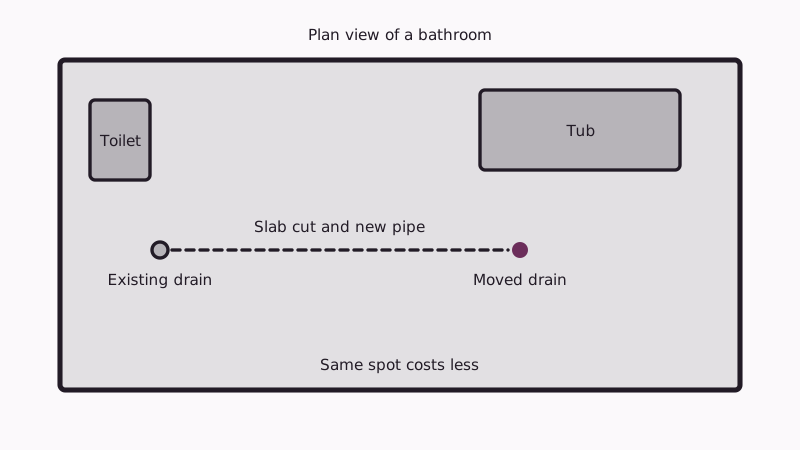
The plumbing in a remodel comes down to one question: do the fixtures stay where they are? Swapping a toilet, vanity or tub in place is a modest job. Relocating them means new drain runs, new supply lines and usually a permit. Whatever you choose, the plumber is involved twice: while the studs are bare and again at the finish. If you are starting from scratch, Citrus Belt can arrange a plumber to look at the room.
Which plumbing choices change the price of a bathroom remodel the most?
Fixture location leads, then the shower, then the age of the pipes. Keeping the toilet, sink and tub where they are keeps drains and vents untouched. A new shower with several body sprays or a thermostatic valve needs larger supply capacity. Old galvanized or corroded lines found behind the wall can add replacement work.
Insist on a written scope for the plumbing line: valves, drain relocation, shower pan, vent, shutoff, and any wall or floor opening. Two quotes cannot be compared without one. The plumber cost guide gives rate context, and the pages on toilet replacement cost and faucet installation cost price single fixtures.
Does it cost more to move a toilet or shower?
Yes, and the slab is a big reason. In houses built on a concrete slab, a drain in a new position means cutting the concrete, setting new pipe and patching. A raised wood floor is easier, since the drain runs under the floor. Distance matters too, because a drain needs a steady downward slope.
For a house on a slab, the cheapest layout is usually the existing one. If you must relocate, the plumber works out how far the drain can travel before it needs a vent or a deeper cut, and whether the existing waste line is sound enough to extend.
What happens at rough-in and at final, and who does what?
Rough-in is the stage when walls are open and the plumber sets drains, vents, supply lines and the shower valve. It happens after demolition and before wall board and tile. The final stage comes after tile and cabinets, when fixtures are connected and everything is tested.
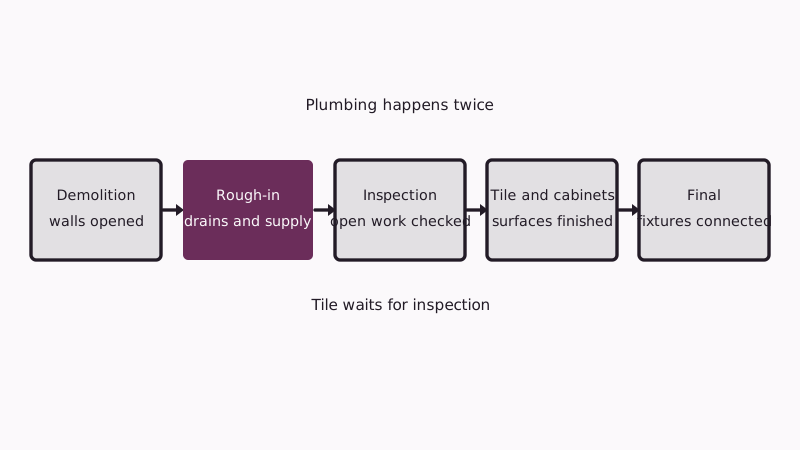
In between, an inspector normally looks at the open work if a permit was pulled. Tile crews wait for that approval, so schedule the plumber early. Other trades follow in a predictable order: framing, rough electrical, inspection, waterproofing, tile, then fixtures.
Does a bathroom remodel in Anaheim, CA need a city permit?
Often. Anaheim's guidance names remodels, and adding, replacing or moving plumbing lines or fixtures, as permit work handled by the Building Division. Cosmetic work such as paint, flooring or cabinet swaps is generally exempt. Whether a like-for-like fixture swap needs one is a question for the Building Division.
Permits protect you when you sell, since unpermitted bathrooms can surface in an inspection. Ask your contractor who pulls the permit, since California contract rules require the contract to state who obtains permits. Anaheim's Building Division is the office to call about your exact scope.
What valves and fixtures should I choose with the plumber?
Choose the shower valve first, since the rest of the wall depends on it. Pressure-balancing and thermostatic valves protect against sudden temperature swings and are the usual choice. Decide handle style and any hand shower before the wall closes, because a valve cannot be changed later without opening the wall.
Then choose the shutoff valves, a toilet that suits the rough-in distance, and faucets whose supply connections fit the vanity. Buy fixtures before the plumber arrives for rough-in, or at least have the model numbers, since each has its own rough-in dimensions.
How do older Anaheim, Fullerton and Orange houses affect the work?
Central Anaheim, Fullerton and Old Towne Orange include plenty of pre-1960 houses, where galvanized supply pipe and thinned cast iron or clay drains are common. Postwar tract homes in Buena Park and La Habra often have copper, which can pinhole. Opening a wall is the moment to inspect these and decide whether to replace a section. Budget context is in replacing galvanized pipe and in what it takes to replumb an old house.
Hillside lots in Anaheim Hills can mean longer supply runs and different drain slopes, so pressure and fall should be checked before the layout is locked in (see the Anaheim Hills page). Ask the plumber to photograph pipes before the wall is closed, and keep the photos with your records.
How do I choose and pay a contractor for the plumbing?
Expect the quote in writing, showing a contractor license number. Contractor licensing in California kicks in at a thousand dollars of labor plus materials, and a written contract is needed for anything above $500. The state caps a deposit at a tenth of the price, or $1,000, if that is smaller.
Payments should track completed work, and changes should be written and signed before they happen. If your remodel is bigger than the plumbing, the general contractor may sub it out, so ask who the plumbing contractor is. For a plumbing-only quote, you can request one here.
Common questions
Does the plumber need several visits?
A fixture swap takes hours, while a full remodel is split into rough-in, inspection and final connections, each a day or two. The calendar gets longer from waiting on inspections and trades. The plumber can sequence it once the plan is fixed and fixtures are chosen.
Can I keep using the bathroom during the remodel?
Usually not for the room being rebuilt, and water is often shut off for part of rough-in. Lean on a second bathroom, or plan for hours without water on rough-in day. Ask when the supply will go off, so containers get filled and showers happen elsewhere.
What are the key questions before hiring for the plumbing?
Ask who files the permit, and whether the quote takes in the shower valve and drain work, how wall and floor openings are patched, and what the price becomes if worse pipe turns up. Check too whether the last fixture hookup is billed apart.
Is it cheaper to remodel the plumbing in the same room as the old one?
Almost always. Keeping fixtures in their present locations lets the plumber reuse drains and vents, cutting labor and wall damage. If the layout truly needs to change, the extra cost buys function. A plumber can compare both layouts on paper before you commit to either.
Sources
Last updated