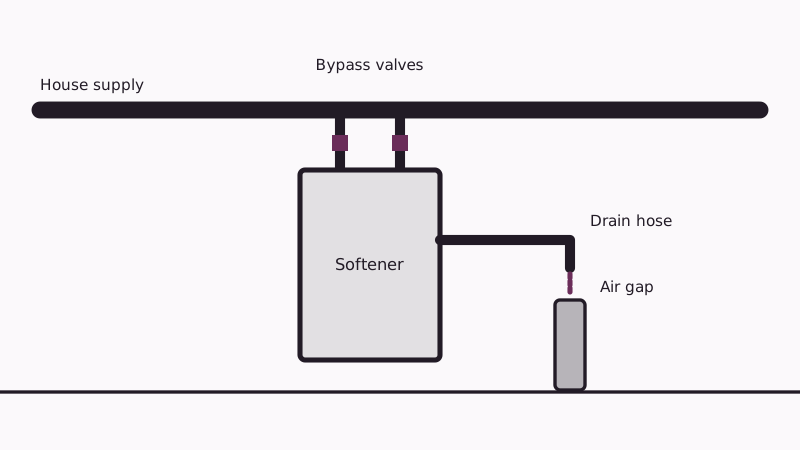
Short version: shut off the water, add a bypass valve and connections on the main line after the hose bibs, run a drain line to the sewer through an air gap, plug the unit in, fill it with salt, set the hardness and start a regeneration. If that sentence already feels like too much, the hub for having a plumber set up the softener covers the other route.
What are the steps to put in a softener yourself?
Mount the unit near the main line, close the supply, cut in an inlet and outlet with a three-valve bypass, route the drain hose over an air gap into a standpipe or floor drain, plug in the control head, load salt, enter your hardness, start a manual regeneration and look over every joint for weeping. Budget half a day if it is your first.
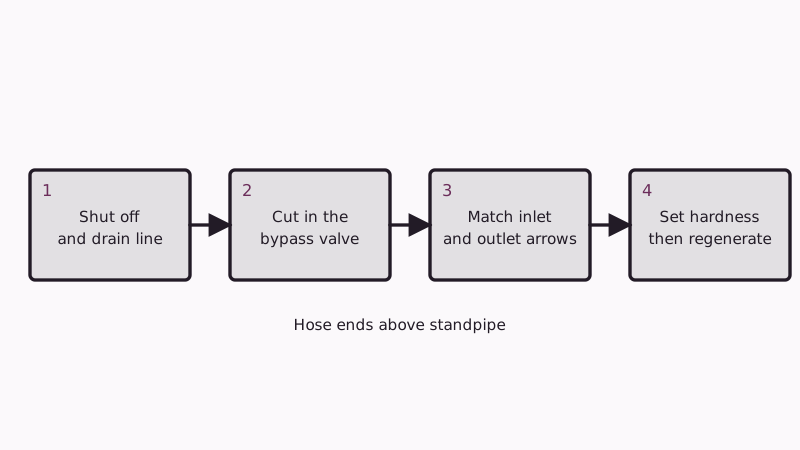
The order matters:
- Choose the spot. Pick flat ground close to the main's entry point, with an outlet and a drain both in reach. Plenty of Anaheim garages qualify.
- Shut off and drain the line. Close the house main and open a low faucet.
- Cut in the bypass. Servicing the unit later will not cut off house water, because the bypass isolates it. Keep outdoor spigots upstream of it, so the lawn does not get salted water.
- Connect inlet and outlet. The head carries arrows marking flow. Swapping the two ports is the classic beginner error.
- Plumb the drain. The hose ends above the sewer drain, never sealed into it. About an inch of open air above the rim stops wastewater being pulled back into the unit, and state softener rules call for it.
- Brine line and overflow. Attach the small brine tube and the overflow hose if your model has them.
- Power and salt. Plug in, add salt, program the time of day.
- Set hardness and regenerate. Reopen the supply slowly, bleed the trapped air, then trigger a manual cycle.
How hard is Anaheim water, and what size unit does it call for?
Anaheim's water runs about 300 parts per million, near 18 grains per gallon, which falls in the very hard band of the usual scales. The latest city report shows readings from roughly 8 up to 25 grains depending on the source. Enter the figure for your address on the control head, because that single setting drives salt use.
Sizing math, simplified: people in the house times about 75 gallons a day times your grains per gallon. For four people at 18 grains that is 5,400 grains of hardness a day. A 32,000-grain unit would regenerate about every six days; a 48,000-grain unit stretches it past a week. Bigger tanks cost more up front but regenerate less often.
Central and western parts of Anaheim lean toward groundwater and the east and south toward imported water, according to older city reports, so a neighbor's number may not be yours. Cheap test strips sold at hardware stores will give you a ballpark before you shop.
Which California rules apply before I buy?
State law and the plumbing code set minimums for residential softeners: they must empty into the sanitary sewer across an air gap, begin regeneration on demand rather than by timer alone, and meet a salt-efficiency standard of 4,000 grains removed per pound of salt. Individual cities and sewer agencies can add their own limits, and some already restrict self-regenerating units.
For Anaheim, the city's Building Division lists water softener changeouts among jobs that require a permit. Because a rule that bans a style of softener is local, call the Building Division, or the water or sewer agency serving your street, before purchasing. Some Orange County districts are strict about salt discharge, and a vendor's claim that nothing applies is not a substitute for asking.
Does a homeowner permit make DIY legal?
On your own single-family home, Anaheim guidance lets the property owner apply for a plumbing permit. That route is how an owner-installed unit gets done, and the inspector still examines it. Paying someone else brings in the state contractor license rule for work of $1,000 and up or anything permitted, which a softener hookup often meets.
Practical calls to make before you start:
- Ask whether the permit is needed and what the inspector wants to see: bypass, air gap, shutoff valves.
- Confirm the power supply is an outlet you can reach with the cord, not a new circuit. New electrical wiring is work for an electrician.
- Check how you will cut into the main. Copper needs soldering or push-fit connectors; PEX takes crimp rings. If you have never done either, practice on scrap first.
When should I hire a plumber instead?
Hand it off if the main is galvanized steel, no drain is close, the cut point is cramped, or a flooded garage is a risk you refuse. Published guides put labor for a standard install in the hundreds of dollars, and a drain that has to be created adds more. The written quote sets the price.
Honest signs the job is beyond casual DIY:
- Old galvanized pipe that crumbles when cut.
- A slab house with no nearby drain, so the discharge has to be reworked.
- Electrical work.
- A permit you do not want to pull.
The all-in numbers, including the unit itself, are on our water softener installation cost page. Local pricing departs from national averages, and only a written quote for your house settles the number.
Will a softener clear the white crust already on my fixtures?
A softener stops new scale from forming but does not strip old deposits. Minerals already baked onto faucets and shower glass need a mild acid soak, such as white vinegar, left on for a while and wiped away, and some stainless or stone finishes must not touch acid at all. Read the manufacturer's care guidance first.
For prevention beyond a softener, see stopping hard-water scale. If your bill seems to be climbing, softeners and water bills tackles whether the unit is to blame, and why the water bill runs high lists the other suspects. The Citrus Belt Plumbing home page lists the rest of the work we set up.
Common questions
How long do the steps take for a first-timer?
Plan on four to six hours for a straightforward layout, longer if you cut into the main for the first time. Leave a margin for the hardware store trip every installer makes. If the permit needs an inspection, the work is not finished until the inspector signs off.
Where does a softener's wastewater go?
During regeneration, brine and rinse water flow out the drain hose to the sewer, through an air gap. They must never go to a storm drain or the yard. Sewer agencies care about the salt in that stream, which is why some districts regulate softeners.
Can I install the unit anywhere in the house?
Not anywhere. It needs the main line, a drain, an outlet and space for salt bags. Garages and utility closets suit best. Leave outdoor taps ahead of the unit so you are not watering plants with softened water, and keep the unit out of freezing and direct sun.
Is a softener the same as a filter?
No. A softener exchanges hardness minerals (calcium, magnesium) for sodium or potassium ions, aimed at scale. Filters catch particles, chlorine taste or particular contaminants, and plenty of homes run both. Everything about sizing and Anaheim hardness on this page concerns softeners alone, not filters.
Sources
- City of Anaheim Water Hardness
- California Health and Safety Code, water softeners, sections 116775 to 116795
- City of Anaheim Building Division, when a permit is required
- Published water softener installation prices from cost guides, checked November 2026
Last updated